Free guides
The Estate Planning Checklist
Use this free checklist to collect the papers and decisions that estate planning usually requires. It helps you walk into a meeting organized and confident—especially if you’re new to the US.
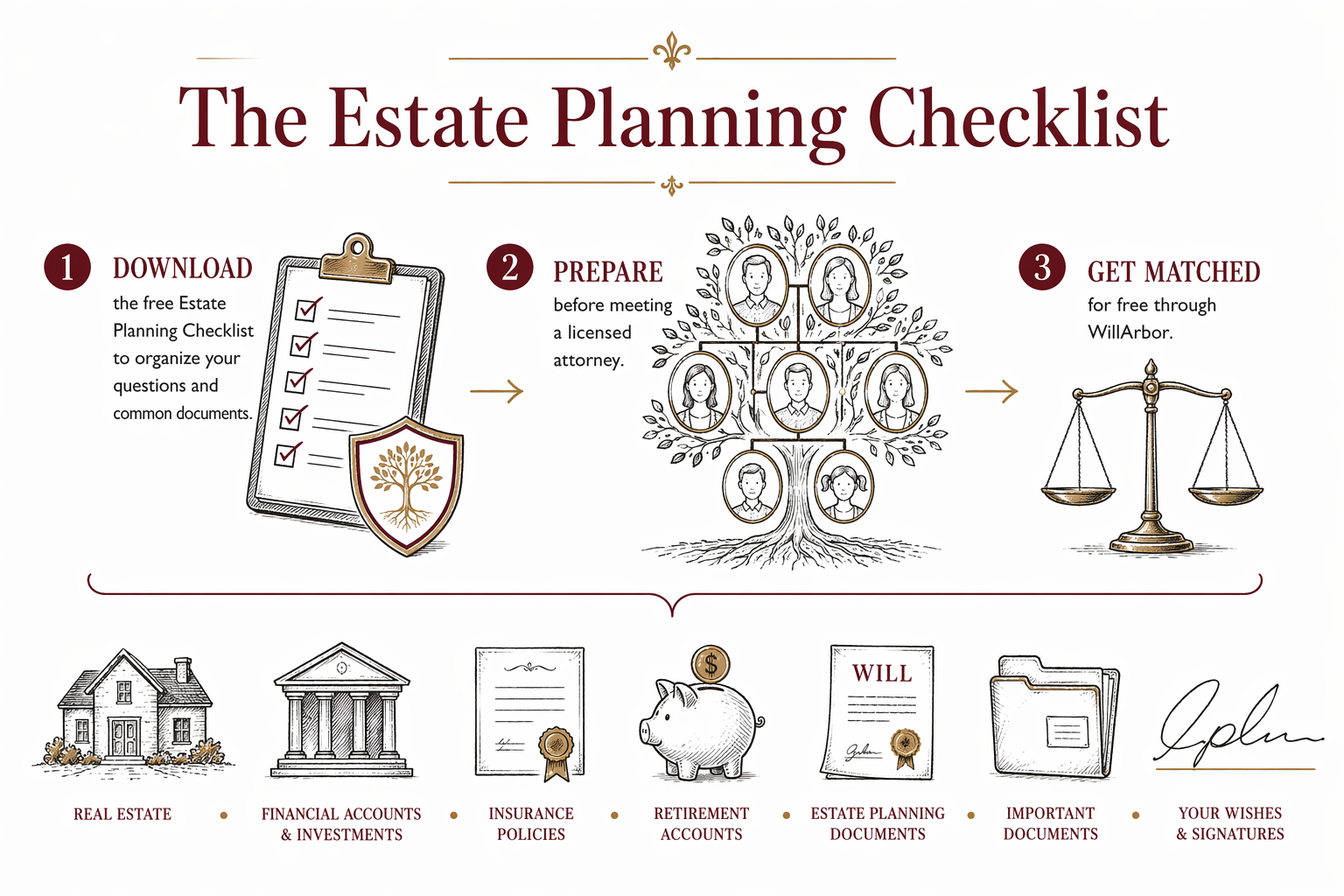
What this free PDF checklist includes
This downloadable checklist is a step-by-step guide to the common documents and choices families consider in estate planning, like wills, living trusts, powers of attorney, and advance directives.
It’s written in plain language and designed to help you notice gaps before your appointment—so you can ask better questions and avoid common mistakes.
You do not need to have everything completed before you meet an attorney. The checklist is meant to prepare you, not to replace legal advice.
Who this checklist is for
This helps families who want to protect their loved ones and make future decisions easier—whether you’re planning for the first time or updating after a life change.
It’s especially useful if you’re new to the US, speak English as a second language, or feel overwhelmed by unfamiliar paperwork.
If you’re worried about guardianship for children, inheritance questions, or what happens after a death, this checklist can help you get clarity before meeting a licensed estate planning attorney.
How to use the checklist before your appointment
Set aside 20–40 minutes to work through it at your own pace. You can leave blanks—many families do—and bring your questions to the attorney.
- Fill in what you can: write down the people you want to consider (names and basic roles, like “child,” “spouse,” or “trusted adult”).
- Mark any “not sure yet” items so you can ask about them.
- Bring any documents you already have (for example: prior wills or trust paperwork, if any).
- If you have a recent change (new baby, marriage, divorce, move to a new state), note it—state rules can matter.
When you’re done, you’ll have a clearer picture of what to cover in the meeting. If you want to start with guidance first, browse estate planning guides and learn the basics before you book.
Common issues families can catch with this checklist
Estate planning problems often come from missing or outdated documents—not from lack of good intentions.
- “Dying without a will” (sometimes called intestacy), which can send decisions to state default rules instead of your family choices
- Out-of-date beneficiary designations (for example, on accounts that pass outside probate)
- DIY forms that don’t match your state’s requirements
- A trust that isn’t funded or coordinated with other documents
- No named guardian for children (where applicable)
Using this checklist can help you spot what to confirm with a licensed estate planning attorney in your state.
After you meet an attorney: confirm the important next steps
A good meeting should end with clear, written next steps—not surprises.
Before any work begins, ask the attorney to confirm the scope of documents and the fee in writing. Many estate planning services are quoted as a FLAT FEE (not hourly). The exact number depends on what you need and how complex your situation is.
Rules vary by state and change over time, so always treat answers as general education and confirm details with a licensed estate planning attorney in your state. You can also use WillArbor services to understand how families get matched to local help.
Need an attorney in your state? Get matched (free)
WillArbor is a FREE matching service. We’re not a law firm and we don’t draft documents or provide legal advice.
To get connected, you share contact + planning intent only (your name, phone, optional email, your state, what you want to plan, and your preferred language). You do not need to share sensitive details like account numbers or SSNs.
If you’d like help finding a licensed estate planning attorney near you, start at get matched. It’s free for your family, and you stay in control—compare options and confirm the FLAT FEE in writing before any work starts.
Download the free Estate Planning Checklist to organize your questions and common documents before meeting a licensed attorney—then get matched for free through WillArbor.
Common questions
Can I use this checklist if I don’t have any documents yet?
Yes. The checklist is designed for first-time planners. You can leave unknown items blank and use the meeting to decide what to create and what to update.
Is this checklist legal advice or a substitute for an attorney?
No. WillArbor provides general, educational information only. Estate planning rules and probate procedures vary by state, so you should confirm decisions with a licensed estate planning attorney in your state.
How much does estate planning usually cost?
Many attorneys quote estate planning as a FLAT FEE, not hourly. Typical ranges can vary widely by state and by the documents you need, but a common ballpark for basic plans is often in the low hundreds to several thousand dollars. The exact number depends on complexity, number of documents, and your state—so ranges are not quotes.
What should I bring to the appointment?
Bring the completed checklist, any existing estate documents you have, and a short list of your questions. If you moved recently, changed marital status, or have children, note those changes—state-specific rules can matter.
Related help
A free worksheet to help you weigh whether a will, a trust, or both fit your family.
Open → The Executor's Duties GuideA free plain-language guide to what an executor actually has to do.
Open → The Estate Document OrganizerA free template to record where your key documents and accounts are kept — so your family can find them.
Open →