Documents
Last Will & Testament
A last will and testament says who should receive your property after you die and who should handle the process. It can also name a guardian for your minor children, but the rules and signing steps vary by state.
What a last will does
A last will and testament is a legal document that speaks after death. In simple terms, it lets you say who should receive your property, who should serve as the person in charge of your estate, and who you want to care for your minor children if both parents die.
In many states, the person in charge is called an executor or personal representative. That person gathers property, pays valid debts and taxes, and helps move the estate through probate. Probate is the court-supervised process for settling an estate after someone dies.
A will can also help reduce family confusion. Instead of relatives guessing what you wanted, you leave written instructions. That does not remove every problem, but it often makes things clearer and more orderly.
This page is general educational information only. Wills, probate, signing rules, and who can witness a will vary by state, so it is wise to speak with a licensed estate planning attorney in your state.
What a will does not do
A will is important, but it does not do everything. A will usually does not avoid probate. In fact, a will is often the document the probate court uses to guide the estate process.
A will also does not control every asset. Some property passes outside the will, such as life insurance with a named beneficiary, retirement accounts with a beneficiary, payable-on-death accounts, and some jointly owned property. If your beneficiary forms are old or do not match your will, that can create real problems.
A will does not help if you become alive but unable to manage your affairs. For that, people often need other documents too, such as a power of attorney for finances and an advance directive for health care. Many families choose a full plan so the documents work together.
A will also does not create a trust by itself unless it includes trust language, and even then, not every family needs the same structure. If your goal is mainly to avoid probate, a living trust may be worth discussing with an attorney.
Who should have a will
Most adults should consider having a will, especially if they have children, own a home, have savings, or want to choose who inherits. If you do not leave a valid will, state intestacy law decides who gets what. That may not match your wishes, your cultural expectations, or your family situation.
A will is especially important if you want to name a guardian for minor children. Courts still make the final decision based on state law and the child’s best interests, but your will is where many parents formally state their choice.
You may also want a will if your family is blended, if you support relatives, if someone in the family has special needs, or if you want to leave property to people outside your closest legal relatives. These situations often need careful drafting because simple forms can miss important details.
If you are not sure whether you need only a will or a broader plan, you can start by learning about estate planning services and then compare options with a licensed attorney in your state.
How a will gets set up
A lawyer usually starts by asking basic planning questions: who you want to inherit, who should act as executor, who should be backup executor, and who you want to name as guardian for minor children. They may also ask how your assets are titled and whether you already have beneficiary designations, because those details affect how the plan works.
Signing the will correctly matters. States have different rules about witnesses, notarization, and whether handwritten or electronic wills are valid. A will that is not signed the right way can fail when your family needs it most.
A common path looks like this:
1. Decide your goals: who inherits, who serves as executor, and who would care for your children.
2. Meet with a licensed estate planning attorney in your state.
3. Review the draft carefully and ask questions in plain language.
4. Sign it the way your state requires, with the right witnesses and any needed notarization.
5. Store the original in a safe place and tell your executor where to find it.
WillArbor can help you get matched with a licensed estate planning attorney near you. WillArbor is a free matching service for families — not a law firm, not a lawyer, and not your lawyer. We only collect contact information and planning intent, such as your name, phone, optional email, state, what you want to plan, and preferred language.
Common mistakes families make
One common mistake is having no will at all. If that happens, the state’s intestacy rules decide who inherits, and the court chooses who manages the estate. For parents, another serious mistake is not naming a guardian for minor children.
Another problem is using a DIY form that does not fit your state or your family. A form that looks simple can miss required language, witness rules, backup choices, or planning for blended families. Families also forget to update beneficiary designations on retirement accounts and life insurance, even though those may control more than the will does.
People also make wills and then never review them again. Marriage, divorce, new children, a move to another state, a home purchase, or the death of a named executor can all make an old will less useful. State law can change too.
Watch for these pitfalls:
- Dying without a will so intestacy law controls
- No named guardian for minor children
- Out-of-date beneficiary designations that conflict with your wishes
- DIY forms that fail under your state’s rules
- Naming only one executor and no backup
- Storing the original where no one can find it
What a will usually costs
In many parts of the United States, a simple will prepared by a licensed estate planning attorney is often quoted as a flat fee rather than hourly. A basic will for one person may cost about $300 to $1,000. A pair of simple wills for a couple may cost about $600 to $1,800.
If your plan includes powers of attorney, health care documents, more detailed guardian provisions, tax planning, or more complex family issues, the flat fee may be higher. A broader estate plan built around wills may run roughly $1,000 to $3,000 or more, depending on the documents, the complexity, and the state. These ranges are general information only, not quotes.
Cost often goes up when there is a blended family, a business, real estate in more than one state, concern about disinheriting someone, planning for a beneficiary with special needs, or a need for trust planning. Cost may stay lower when the plan is straightforward and the goals are simple.
Before you hire anyone, ask for the flat fee in writing and what it includes. You can also read more about estate planning costs. The family stays in control: you compare attorneys, choose who to hire, and confirm the price before any work starts.
How to find the right attorney
Because wills and probate rules vary by state, it is smart to work with a licensed estate planning attorney in your state. Ask whether they regularly prepare wills, whether the price is a flat fee, what documents are included, and how updates are handled if your life changes later.
You should also confirm the attorney’s active bar license in your state. It is reasonable to ask for plain-language explanations, an interpreter or language support if needed, and a written engagement agreement before any work begins.
WillArbor helps families find lawyers for wills and related planning. The service is free for the family. Participating attorneys pay a flat fee to take part, but WillArbor is not a law firm, does not draft documents, and does not create an attorney-client relationship.
If you are ready to compare options, you can get matched for free with a licensed estate planning attorney near you.
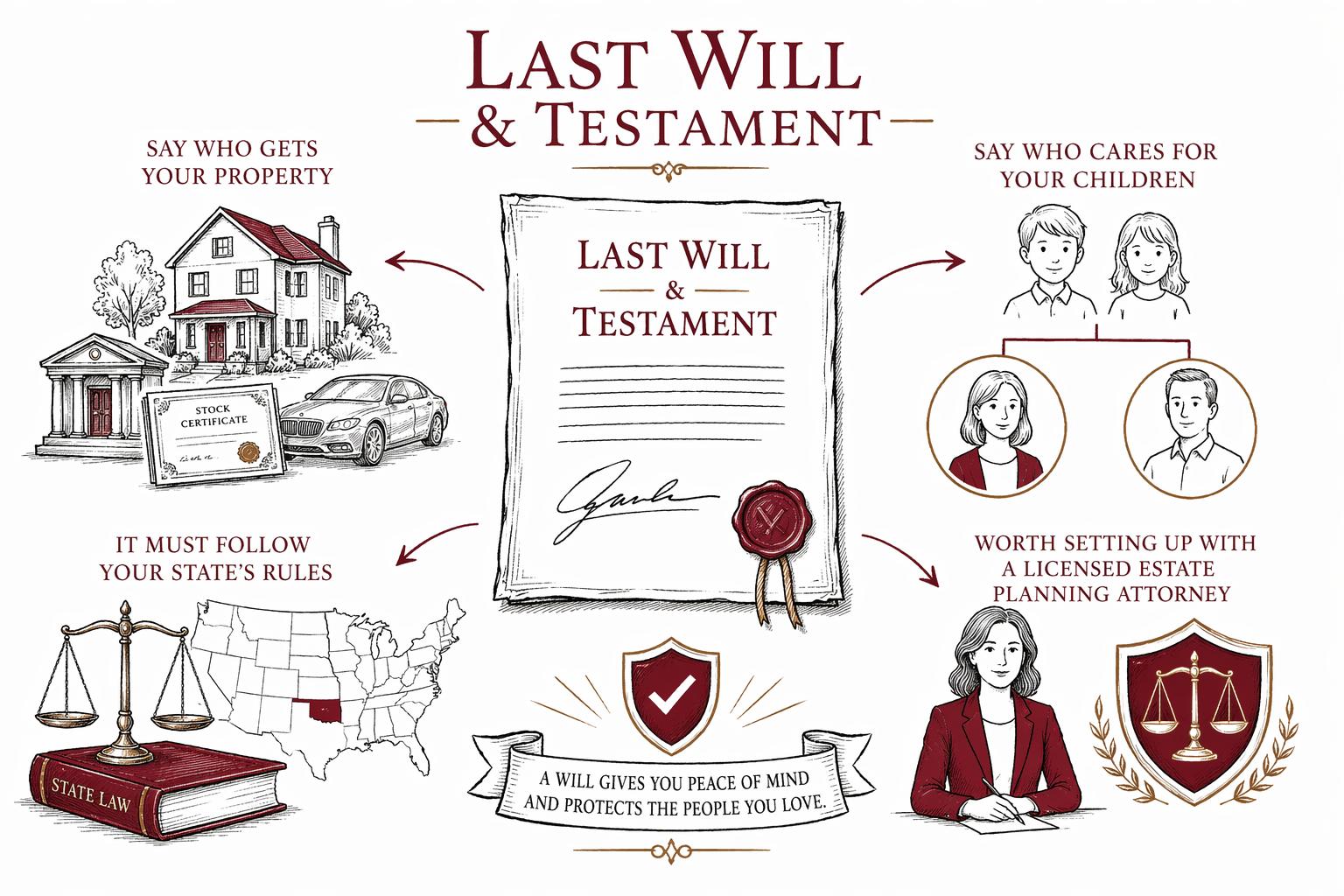
A will helps you say who gets your property and who cares for your children, but it must follow your state’s rules and is worth setting up with a licensed estate planning attorney.
Common questions
If I have a will, does that mean my family avoids probate?
Usually no. A will often guides the probate process instead of avoiding it. Whether probate is required depends on state law and the type of property you own.
Can I write my own will?
Some states allow certain DIY or handwritten wills, but the rules are strict and vary by state. A will that is signed or witnessed incorrectly can fail, so many families choose a licensed estate planning attorney.
Do married couples need separate wills?
In most cases, each spouse signs their own will. Couples often make matching plans, but each person still needs their own document.
How often should I update my will?
Review it after major life changes like marriage, divorce, a new child, a move to another state, or the death of an executor or beneficiary. Even without a big change, a regular review every few years is sensible.
What information do I need to get matched through WillArbor?
Only basic contact and planning intent: your name, phone, optional email, state, what you want to plan, and preferred language. WillArbor does not ask for asset values, account numbers, Social Security numbers, income, or detailed estate contents.
Is WillArbor my lawyer?
No. WillArbor is a free matching service, not a law firm, not a lawyer, and not your lawyer. If you hire an attorney, that relationship is between you and the attorney.
Related help
A living trust can avoid probate and add control over how and when your family receives what you leave — here is the plain version.
Open → Powers of AttorneyA power of attorney lets someone you trust act for you on money or health decisions if you can't — here is how the two main kinds work.
Open → Advance Directives & Living WillsAn advance directive states your medical wishes and who speaks for you if you can't — here is what to include.
Open →