Documents
Advance Directives & Living Wills
An advance directive tells doctors and family what medical care you want if you cannot speak for yourself. It can also name the person you trust to make health decisions for you.
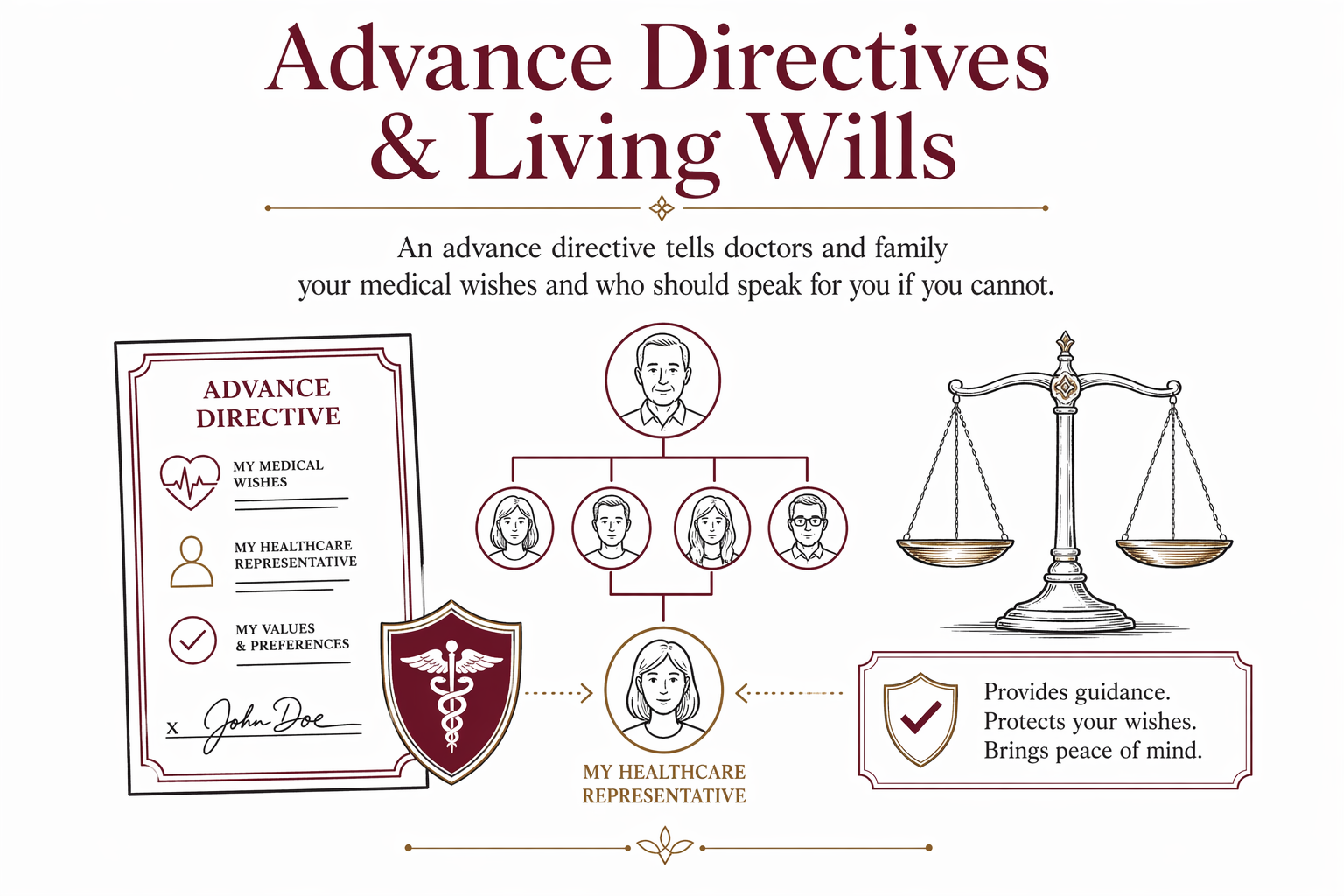
What an advance directive is
An advance directive is a group of health-care planning documents. In many states, it includes a living will and a medical power of attorney, sometimes called a health care proxy or health care surrogate. The exact names and rules vary by state.
A living will usually says what kinds of life-sustaining treatment you do or do not want in certain serious medical situations. A medical power of attorney names the person who can speak with doctors and make health-care decisions for you if you cannot speak for yourself.
These documents are about medical care, not money. They do not replace a regular financial power of attorney, a will, or a living trust. They also do not let someone change who inherits your property after death.
What it does — and what it does not do
An advance directive can help reduce confusion during a medical crisis. It gives your family and doctors a written record of your wishes, and it can make clear who should speak for you if you are unconscious, confused, or too sick to decide.
It does not solve every problem. It cannot cover every possible medical situation, and it may not control care in the exact same way in every state or health system. Doctors may still need to interpret your instructions in real-life situations.
It also does not handle inheritance, avoid probate, or name guardians for children. For those issues, families often need other planning documents too, such as a will, trust, or financial power of attorney. You can read more about common planning options on our services page.
Who should have one
Almost every adult should consider an advance directive, not only older adults. A serious illness or accident can happen at any age. If you are 18 or older, doctors may not automatically follow a parent, partner, sibling, or adult child unless the law in your state allows it or you have signed the right papers.
This document can be especially important if you are married, have children, live far from family, have strong religious or personal wishes about treatment, or want one trusted person to avoid disagreement among relatives. It can also help blended families and unmarried partners by making your choice clear.
If English is not your first language, it is worth taking extra care. You want the document to be valid in your state and your choices to be clearly understood. A licensed estate planning attorney in your state can explain the state rules and help you prepare papers that fit your situation.
What to include and how it gets set up
Most people start by choosing a health-care agent — the person who will speak for them if needed. This should be someone calm, trustworthy, and willing to follow your wishes, even under stress. You may also be able to name a backup person in case your first choice cannot serve.
You will usually think through questions like whether you want CPR in certain situations, whether you would want breathing machines or feeding tubes, how much pain relief you want, and whether you want organ donation or other specific instructions. The right choices depend on your values, your health, and your state's forms.
A licensed estate planning attorney can help you understand the language, witness or notarization rules, and who should receive copies. This is general educational information only, not legal advice, and state law varies.
- Choose your health-care agent and a backup if allowed
- Talk through your medical wishes in plain words
- Sign the document the way your state requires
- Give copies to your agent, doctor, and close family
Common mistakes families make
One common mistake is thinking a living will and a last will are the same thing. They are not. A living will is about medical treatment while you are alive but unable to speak. A last will is about property and guardians after death.
Another mistake is signing a DIY form that does not meet your state's rules. Estate planning documents vary by state, and the wrong witness or notarization step can create problems at the worst time. Families also forget to update old forms after a marriage, divorce, move to another state, or a broken relationship with the person named.
A final mistake is hiding the document in a drawer where no one can find it. An advance directive only helps if the right people know it exists and can get it quickly. Talk with your family, doctor, and health-care agent about your wishes.
Other planning mistakes can also affect a family later, including dying without a will, outdated beneficiary designations, an unfunded trust, or no named guardian for children. A full review with a licensed estate planning attorney can help you spot gaps.
What it may cost and how to find the right attorney
Cost depends on the documents you need, the complexity of your situation, and your state. Many estate planning attorneys charge a flat fee, not hourly, for this kind of work. For a basic advance directive or living will package, families often see flat-fee ranges around $100 to $500. If it is part of a broader estate plan, the total package may be higher. These are general ranges, not quotes.
Fees can go up if you want a full plan, have unusual family circumstances, want detailed custom instructions, need updates after moving states, or want several related documents prepared together. Before any work starts, ask for the flat fee in writing and what documents are included. You can learn more on our costs page.
WillArbor is a free matching service for families. We are not a law firm, not a lawyer, and we do not draft documents or create an attorney-client relationship. We simply help you get connected with a licensed estate planning attorney near you or in your state. It is always free for the family.
When you are ready, you can get matched. We only collect contact and planning intent information — such as your name, phone, optional email, state, what you want to plan, and preferred language — so you can compare attorneys, choose who to hire, and confirm the flat fee in writing yourself.
An advance directive tells doctors and family your medical wishes and who should speak for you if you cannot.
Common questions
Is a living will the same as a regular will?
No. A living will usually states medical wishes if you cannot speak for yourself. A regular will says who inherits property and who may care for minor children after death.
Do I need an advance directive if I am young and healthy?
Many adults still choose one because a medical emergency can happen at any age. It can make clear who should speak for you and what care you would want.
Can I write my own advance directive?
Some states provide forms, but the rules and wording vary by state. DIY forms can fail if they do not meet your state's requirements, so many families prefer to have a licensed estate planning attorney review or prepare them.
Does this document let someone manage my money too?
Usually no. Health-care decision papers are different from a financial power of attorney. If you want someone to handle bills or accounts, ask about a separate financial document.
How often should I update it?
Review it after major life changes like marriage, divorce, a move to a new state, a serious diagnosis, or if your chosen agent is no longer the right person. State rules can change too.
How do I find a lawyer for this?
Look for a licensed estate planning attorney in your state, and confirm the bar license before hiring. WillArbor can help you get matched for free so you can compare attorneys and choose the one that feels right for your family.
Related help
A will says who gets what and who is in charge after you die — here is what it does, what it costs, and how to set one up the right way.
Open → Living TrustsA living trust can avoid probate and add control over how and when your family receives what you leave — here is the plain version.
Open → Powers of AttorneyA power of attorney lets someone you trust act for you on money or health decisions if you can't — here is how the two main kinds work.
Open →