Free guides
The Estate Document Organizer
A simple, free PDF to help you list where important estate papers, accounts, and contacts are kept, so your family is not left searching in a crisis.
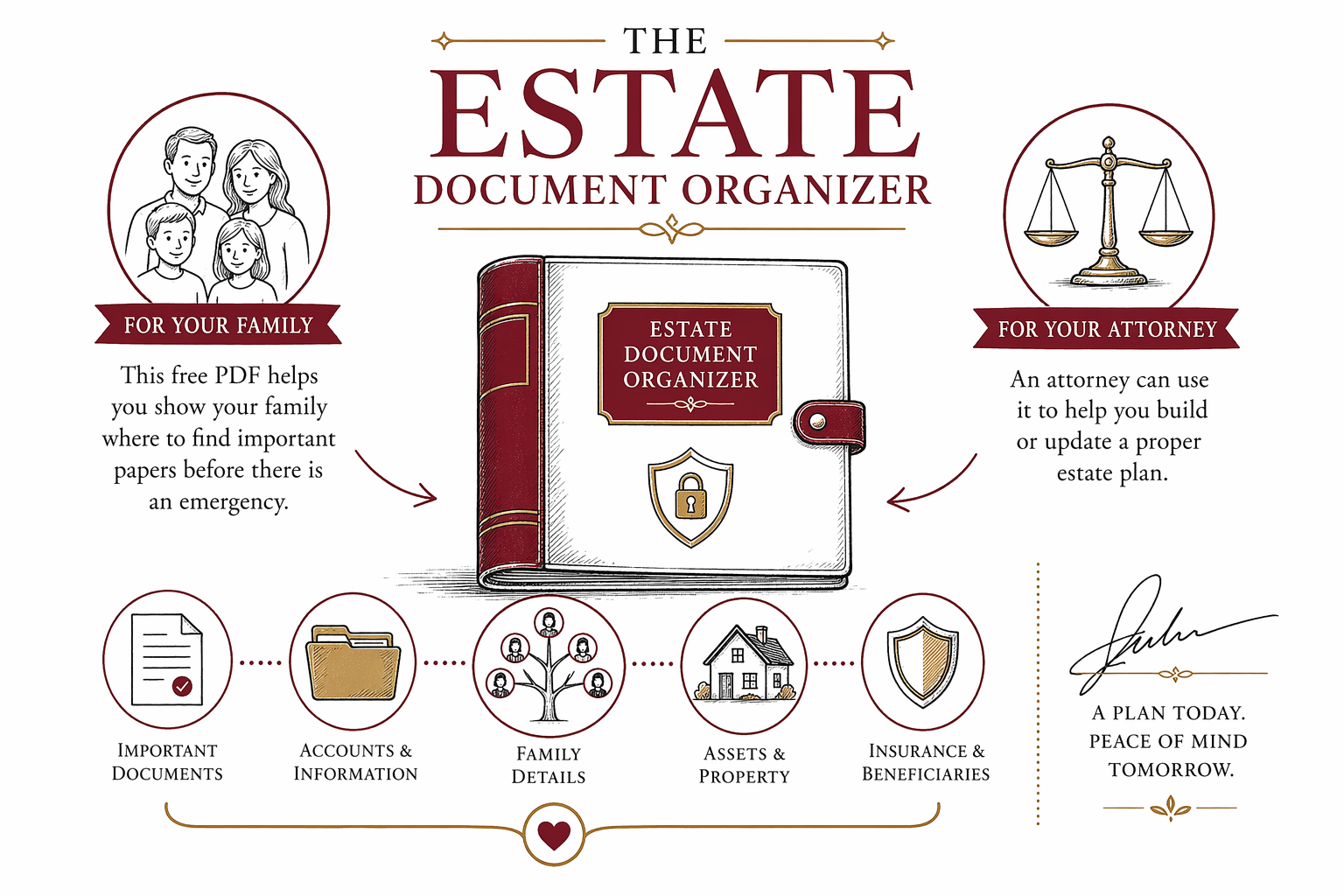
What this free organizer is for
The Estate Document Organizer is a worksheet you can download and fill out at your own pace. It helps you make one clear record of where important papers and accounts are kept — not the money in them, and not private numbers, just where your family can find what they may need.
Many families discover too late that no one knows where the will is, which bank has the main account, or how to find life insurance papers after a death. This organizer is meant to reduce that confusion. It can also help you notice gaps, like missing beneficiary forms, no named guardian for a child, or estate documents that may need review.
WillArbor is a free matching service, not a law firm and not your lawyer. We provide general educational information only. Estate planning and probate rules vary by state, so if you want advice about your situation, speak with a licensed estate planning attorney in your state.
What is inside the PDF
The worksheet is designed to be practical and easy to use before you meet with an attorney. It gives you one place to note the location of key documents, the names of important contacts, and the questions you want to ask.
You do not need to write account balances, Social Security numbers, passwords, or detailed asset information. In most cases, it is safer and more useful to record where something is kept, who helps with it, and how your family can locate the official records if needed.
Inside, you can expect sections like these:
- Personal and household information
- Where your will, trust, power of attorney, and advance directive are stored
- Bank, retirement, and insurance account locations
- Real estate and vehicle paperwork locations
- Trusted contacts, such as your attorney, accountant, or financial institution
- Notes about guardians, beneficiaries, and questions for an attorney
Who this organizer helps most
This PDF is especially helpful for parents, adult children helping aging parents, married couples, single adults with property or savings, and families who are starting estate planning for the first time. It can also be useful if English is not your first language and you want a simpler way to prepare before an attorney meeting.
If someone in the family recently died, this organizer can help survivors gather information for the probate process. If no one has died, it can still be a strong first step toward creating or updating a will, trust, power of attorney, or full estate plan.
It is also helpful if your family has moved states, had a marriage or divorce, welcomed a child, bought a home, or if your current documents are old. Estate planning mistakes are common: dying without a will, relying on DIY forms that do not meet your state's rules, forgetting to update beneficiary designations, leaving a trust unfunded, or never naming a guardian for minor children.
How to use it before meeting an attorney
You do not need to complete everything perfectly. The goal is to make your first attorney conversation easier, more organized, and less stressful.
- Download the PDF and fill in the parts you know.
- For each document or account, write where it is kept — for example, a filing cabinet, safe, online portal, or bank branch.
- Skip sensitive details like full account numbers, passwords, balances, or document contents.
- Mark anything missing or unclear, such as an old will, no power of attorney, or a life insurance policy you cannot locate.
- Bring the completed worksheet to your attorney consultation.
A licensed estate planning attorney can tell you what matters under your state's law, whether your current documents are valid, and what should be updated. If you need help finding someone, you can get matched for free through WillArbor.
What this organizer does not do
This worksheet is not a will, not a trust, and not a legal filing. It does not transfer property, name legal guardians by itself, avoid probate by itself, or replace signed estate planning documents.
It is simply a preparation tool. Think of it as a map for your family and your attorney. The legal work still needs to be done in the right way for your state.
If you decide to hire an attorney, many estate planning matters are offered for a flat fee rather than hourly billing. Very general ranges people may see are about $300 to $1,000 for a basic will package, about $1,000 to $3,500 or more for a more complete plan, and about $2,000 to $7,000 or more for a trust-based plan. These are not quotes. The real cost depends on your state, the documents you need, and how complex your family or property situation is. Before any work starts, ask for the flat fee in writing.
A safer way to get ready
Before sharing information with anyone, remember that WillArbor only collects contact and planning-intent details — your name, phone, optional email, state, what you want to plan, and preferred language. We do not ask for account balances, Social Security numbers, document contents, or other sensitive estate details.
If you want more background before downloading the PDF, you can explore our estate planning guides or learn about common estate planning services. When you are ready, you can compare attorneys, choose who to hire, and confirm the flat fee directly with them. It is always free for the family to use WillArbor's matching service.
If you hire an attorney, confirm that the lawyer is licensed in your state and ask questions until the plan feels clear. A good attorney should explain things in plain language and tell you what your family needs without pressure.
This free PDF helps you show your family where to find important papers before there is an emergency, and an attorney can use it to help you build or update a proper estate plan.
Common questions
Do I need to list my money or account balances in this organizer?
No. This worksheet is meant to record where important documents and accounts are kept, not sensitive financial details. In general, it is better to avoid writing balances, full account numbers, passwords, or Social Security numbers on a basic organizer.
Can this PDF replace a will or trust?
No. It is only a planning and record-keeping tool. A valid will, trust, power of attorney, or advance directive must be created and signed according to your state's rules.
Is this helpful if my parent already passed away?
Yes, it can still help you gather information and locate records for probate or other next steps after a death. But probate rules vary by state, so a licensed estate planning or probate attorney can advise you on what to do next.
What if I already made documents online or years ago?
Bring them to an attorney for review. DIY forms can fail if they do not meet your state's rules, and older documents may no longer match your family, your property, or your beneficiary choices.
How do I find an attorney to review my organizer?
You can get matched, free, with a licensed estate planning attorney near you through WillArbor. WillArbor is not a law firm and not your lawyer; you stay in control, compare options, and decide whether to hire anyone.
Related help
A free, printable checklist of the documents and decisions to cover before you meet an attorney.
Open → Will vs. Trust Decision WorksheetA free worksheet to help you weigh whether a will, a trust, or both fit your family.
Open → The Executor's Duties GuideA free plain-language guide to what an executor actually has to do.
Open →