Free guides
The Executor's Duties Guide
A plain-language guide to what an executor usually does after someone dies. Use it to understand the job, make a checklist, and feel more prepared before you speak with an attorney.
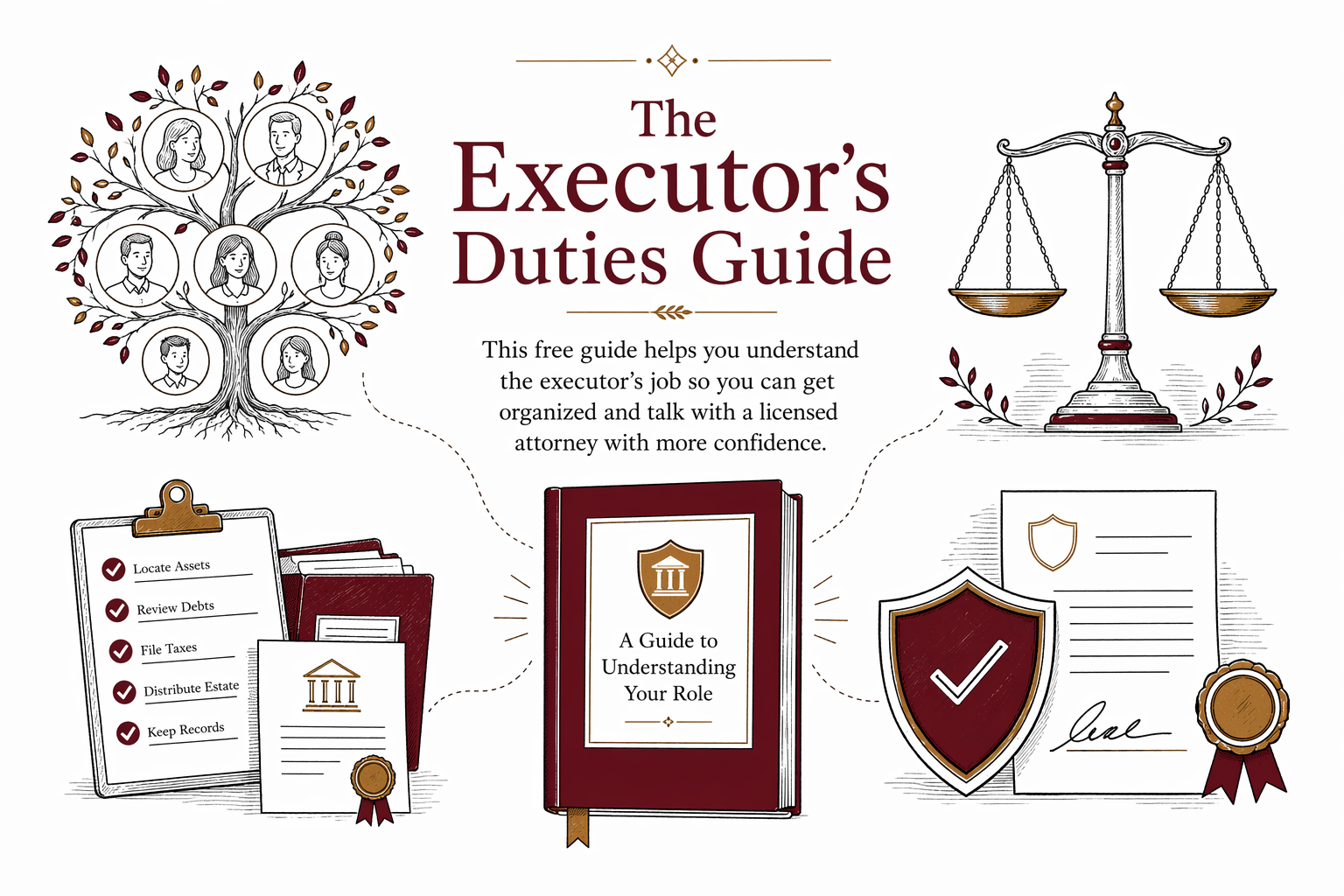
What this free PDF helps with
The Executor's Duties Guide is a simple worksheet for the person named as executor, or for a family member helping them get organized. It explains the main tasks in clear words, so you can see what comes first and what can wait.
This guide can help you think through common steps like finding the will, letting family know, gathering key papers, and learning whether probate may be needed. It is meant to reduce confusion, not replace legal advice.
Estate and probate rules vary by state, and the exact duties of an executor can be different depending on where the person lived. This guide is general education only, not legal, tax, or financial advice.
- For executors who need a simple roadmap
- For family members helping after a death
- For people who want to understand probate before meeting an attorney
What’s inside the guide
The PDF is designed to be practical and easy to follow. It focuses on the most common executor tasks, the questions to ask, and the papers to look for.
You can use it as a checklist, a note-taking sheet, or a prep tool before a first meeting with a licensed estate planning attorney or probate attorney in your state.
It does not ask you to list asset values, account numbers, income, or other sensitive estate details. It is only for contact and planning intent when you decide to get help through WillArbor.
- A plain checklist of common executor duties
- A list of documents to gather and people to notify
- Notes on common pitfalls, like missing beneficiary forms or no will
How to use it before meeting an attorney
- Read through the guide once so you understand the big picture.
- Write down what you already know about the estate, without adding private account details.
- Gather basic documents you may need, such as the death certificate, will, and any trust papers if there are any.
- Make a short list of your questions, especially if you are unsure whether probate is required.
- Bring the completed guide to your attorney meeting so you can save time and stay organized.
If you are not sure who should act as executor, or whether the named person is able or willing to serve, a licensed attorney can explain the state rules. If you need help finding one, use get matched for free through WillArbor.
- Use it to organize your thoughts, not to make final legal decisions
- Bring it to your first attorney meeting
- Keep the focus on planning intent, not private financial details
Why families use this guide
Many families feel overwhelmed after a death because the executor role can seem vague at first. A simple guide can make the next steps easier to see, especially for someone new to the US or unfamiliar with probate.
This can also help you avoid common mistakes, such as waiting too long to look for the will, missing a court deadline, or assuming all property passes through the will when some assets may transfer another way.
If the situation is urgent or unclear, a local attorney can explain what applies in your state and what paperwork matters most. WillArbor is a free matching service, not a law firm, and it does not draft documents or create an attorney-client relationship.
- Helps reduce stress and confusion
- Supports better questions at the attorney meeting
- Good for families handling a recent loss
What to do after you download it
After you review the guide, the next best step is often to speak with a licensed estate planning or probate attorney in your state. Most estate planning and probate work is quoted as a flat fee, but the exact number depends on the documents, the complexity, and your state. Any range you hear is not a quote.
The family stays in control: you can compare attorneys, ask about their bar license, and confirm the flat fee in writing before any work starts. That matters because a careful first meeting can save time and prevent misunderstandings.
If you are ready, use our matching service or browse estate planning guides and services for more plain-language help.
- Compare attorneys before you hire anyone
- Confirm the lawyer is licensed in your state
- Ask for the flat fee in writing before work begins
This free guide helps you understand the executor’s job so you can get organized and talk with a licensed attorney with more confidence.
Common questions
What does an executor actually do?
An executor usually helps carry out the instructions in the will, work with the court if probate is needed, and handle important notices and paperwork. The exact duties depend on state law and the facts of the estate.
Can this guide tell me whether probate is required?
It can help you understand the question, but it cannot decide it for your situation. Probate rules vary by state, so a licensed attorney in the state where the person lived is the right source for legal advice.
Is WillArbor a law firm?
No. WillArbor is a free matching service, not a law firm, not a lawyer, and it does not draft legal documents. It helps families connect with licensed estate planning attorneys.
Do I need to share asset details to use WillArbor?
No. We only collect contact and planning intent, such as your name, phone, optional email, state, what you want to plan, and preferred language. Do not send account numbers, asset values, SSNs, or other sensitive details.
Related help
A free, printable checklist of the documents and decisions to cover before you meet an attorney.
Open → Will vs. Trust Decision WorksheetA free worksheet to help you weigh whether a will, a trust, or both fit your family.
Open → The Estate Document OrganizerA free template to record where your key documents and accounts are kept — so your family can find them.
Open →