Your situation
Estate Planning for Seniors
Estate planning for an older parent or grandparent is often about calm preparation: making sure their wishes are written down, their care choices are clear, and the family knows what to do next. The right plan depends on the person, the state, and the documents they already have.
What seniors often need in place
For many older adults, a basic estate plan starts with a will, powers of attorney, and an advance directive or living will. Some families also use a living trust to help manage property and possibly avoid probate, depending on the state and the person’s situation.
A will can name who inherits and, if needed, who should serve as guardian for a minor child or disabled dependent. A power of attorney can let a trusted person handle money or legal tasks if the senior cannot do it themselves. An advance directive can explain medical wishes and name someone to speak with doctors.
If your loved one already has documents, it is wise to review them after major life changes such as a move to another state, a death in the family, remarriage, a new diagnosis, or a change in who should help manage care.
- Will: names heirs and can name a guardian if needed
- Power of attorney: helps with money and legal tasks
- Advance directive/living will: guides medical care choices
- Living trust: may help manage property during life and after death
Common problems families run into
One common mistake is leaving old papers in place. Beneficiary forms on retirement accounts, life insurance, and some bank or transfer-on-death accounts can override a will, so they should be checked carefully with a licensed attorney’s help.
Another problem is relying on DIY forms that were not made for the state where the person now lives. Estate planning and probate rules vary by state, and a form that looks fine online may not work as expected.
Families also run into trouble when a trust is created but never funded, which means property was never retitled into the trust. That can leave the family facing probate anyway. And if no guardian is named for a child or dependent, the court may have to decide later.
- Out-of-date beneficiary designations
- DIY forms that do not fit the state law
- An unfunded trust
- No named guardian or backup decision-maker
If you are helping an older parent or grandparent
Start with a simple conversation. Ask what matters most: staying at home, avoiding court involvement, choosing who should help with money, or making sure a spouse or adult child is protected.
Then gather the basic facts the attorney will need: the state they live in, whether they already have a will or trust, who they want to name for decisions, and whether they prefer a certain language for the meeting. WillArbor only collects contact information and planning intent — name, phone, optional email, state, what they want to plan, and preferred language.
You do not need to collect account numbers, asset values, or private document details to start the process. A licensed attorney can ask for the right information later, in a private legal consultation.
- Write down the state where the senior lives
- List the documents they already have, if any
- Think about who should help with finances and health decisions
- Note any language preferences for the meeting
How to choose the right attorney
Most estate planning work for a simple situation may fall in a lower flat-fee range, while more involved plans cost more. For example, a basic will package or simple advance directives may be less expensive than a trust-based plan, a plan for blended families, or a situation that involves multiple properties or a prior trust that needs review.
These are only general ranges, not quotes. A real fee depends on the documents needed, the person’s goals, whether there are special family concerns, and the state rules that apply.
A calm next step
If you are helping an older loved one, you do not have to solve everything at once. Start by finding out what documents already exist, what should be updated, and which family member or trusted person should help move things forward.
A licensed estate planning attorney can review the situation, explain the choices, and help the family make a plan that fits the senior’s wishes and the state law.
Use situations to see other family situations, review services to understand what planning documents are commonly discussed, or get matched to connect with a licensed estate planning attorney near you.
- Review what already exists
- Update outdated documents
- Confirm who should act for health and finances
- Get local legal help before signing anything
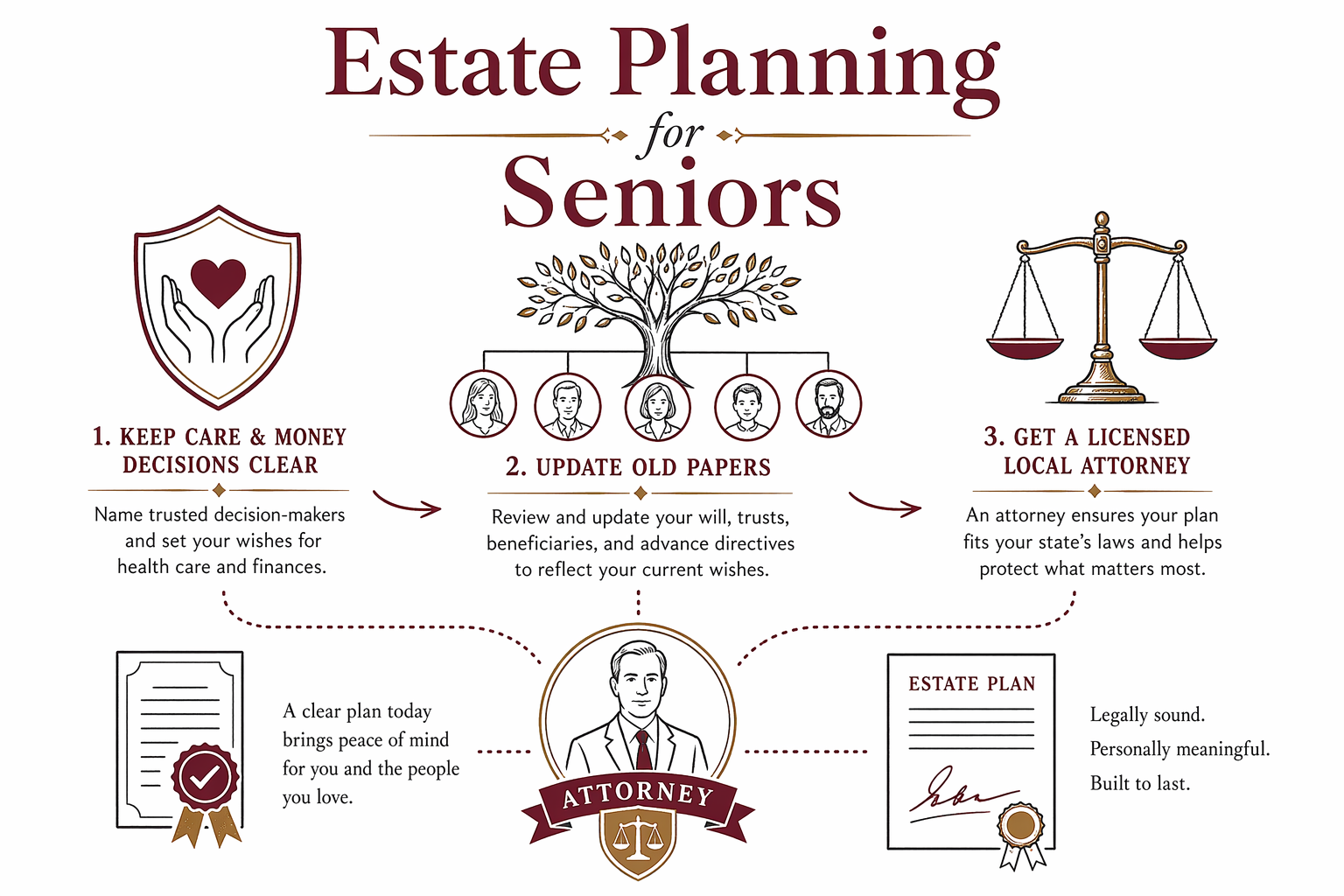
For seniors, estate planning is about keeping care and money decisions clear, updating old papers, and getting a licensed local attorney to make sure the plan fits state law.
Common questions
Do older adults still need a will if they already have a trust?
Often yes. A trust can help with some property, but many families still use a will as a backup and to cover anything left outside the trust. A licensed attorney in the senior’s state can explain how the documents work together.
What if my parent moved to a different state years ago?
That is a good reason to review the plan. Wills, powers of attorney, and advance directives can be affected by state law, so older documents may need updates to fit the new state.
Can WillArbor tell us exactly what my family should sign?
No. WillArbor is a free matching service, not a law firm, and it does not give legal advice or draft documents. It can connect you with a licensed estate planning attorney who can review the situation and recommend the right documents.
Related help
Guardians, a will, and a simple plan so your children are cared for if something happens to you.
Open → Estate Planning for HomeownersHow to keep your home out of probate and pass it to the people you choose.
Open → Estate Planning for Blended FamiliesPlans that protect a current spouse and children from a previous relationship — fairly and clearly.
Open →