Your situation
Estate Planning for Parents With Young Children
If you have young children, estate planning helps you name who cares for them and how your family will be supported if you pass away. WillArbor is a free way to connect with a licensed attorney near you.
Start with the decision that matters most: a guardian
When parents with young children don’t plan, the court usually decides who will become the children’s guardian. That can be stressful, slow, and not match your family’s wishes.
In a will, you can name a guardian (and often a backup guardian). You can also include instructions about who should make decisions for your children, like where they should live and how they should be supported.
Because states handle guardianship and timing differently, it’s important to talk with a licensed estate planning attorney in your state before you rely on a template or form.
A will is often the first step (and it’s not the same as a trust)
A will is the document that usually speaks most directly about who should care for your children and what should happen to your assets after your death. If you die without a will, state “intestacy” rules typically decide your guardianship and inheritance.
A trust is different. A living trust can sometimes help manage assets during your life and may affect how certain assets are handled after death. Not every family with young children needs a trust, and a trust can be more complex.
An attorney can explain which combination—will, trust, or both—fits your goals and your state’s rules.
Protect your plan: cover inheritance, not just guardianship
Many parents want money set aside for children’s needs, especially if the children are minors. Your estate plan may use the will (and/or a trust) to direct how and when funds are used.
There are common pitfalls that can derail well-meaning plans:
- Not naming a guardian (or only naming one, with no backup)
- Using a DIY form that doesn’t match your state’s requirements
- Forgetting that beneficiaries can be affected by how assets are owned (for example, some accounts pass outside of a will)
- Keeping a plan but not reviewing it after major life changes
A licensed attorney can help you make sure the right documents work together, rather than leaving gaps.
Other important documents for parents: powers of attorney and advance directives
Estate planning isn’t only about death. If you become unable to make decisions, you may need documents that allow a trusted person to act for you.
Common examples include:
- A power of attorney for financial matters
- A health care advance directive (sometimes called a living will) and health care proxy (naming who can make medical decisions)
These documents often prevent confusion during emergencies by clearly stating who can speak for you. Rules and names vary by state, so it’s worth confirming what your state requires.
What it usually costs (and what makes it change)
Estate planning for parents with young children is often quoted as a FLAT FEE (not hourly), but the exact number depends on what you need. Ranges can vary widely by state and by the complexity of your situation.
As a general educational guide, many families can expect flat-fee ranges that may fall roughly within:
- Basic will (including guardianship language): often about a few hundred to around the low-thousands
- Will + additional planning (such as a trust and/or more comprehensive documents): often around the low-thousands to several thousand more
What can raise the price:
- Naming guardians and setting up more detailed instructions
- Needing a trust, multiple document types, or updates for blended family situations
- Complexity in how assets are titled or how certain benefits/accounts are structured
Ranges are not quotes. A licensed attorney can confirm the fee after reviewing what documents you need—always confirm the FLAT FEE in writing before any work starts.
How to find a licensed estate planning attorney (and how WillArbor helps)
WillArbor is a free matching service, not a law firm and not your lawyer. We help families connect with a licensed estate planning attorney who can explain your options and draft or finalize documents where appropriate.
To get matched, you typically share contact information plus your planning intent and your state—what you want to plan for (for example, naming guardians, preparing a will, or updating documents). We do not need asset values, account numbers, Social Security numbers, or the contents of existing documents.
When you speak with an attorney, consider these practical questions:
1. “Which documents do you recommend for parents with young children in my state, and why?”
2. “How do you handle naming guardians and backup guardians?”
3. “Is your fee a flat fee? What’s included, and what isn’t?”
4. “How do we coordinate a will, any trust, powers of attorney, and health care directives?”
You can browse more about common situations at situations and services at services. When you’re ready, connect free at get matched.
- Tip: confirm the attorney is licensed (bar membership) in your state before signing anything.
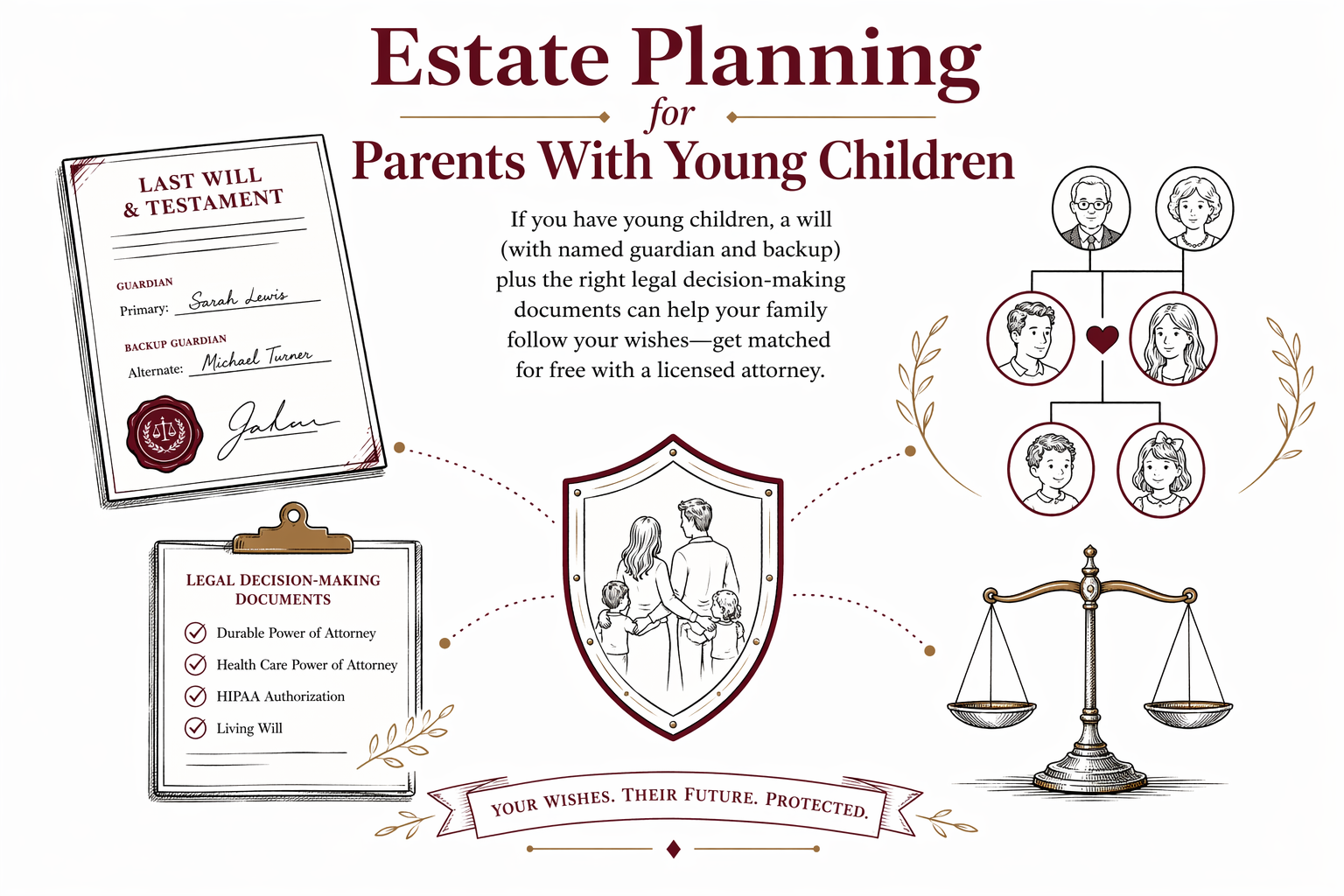
If you have young children, a will (with named guardian and backup) plus the right legal decision-making documents can help your family follow your wishes—get matched for free with a licensed attorney in your state.
Common questions
What happens to my children if I die and I don’t have a will?
Without a will, state intestacy and guardianship processes typically decide who can care for your children. That may not match your wishes and can add time and stress for your family.
Can I name a guardian in a living trust instead of a will?
Sometimes, estate plans use different documents in different ways. In many cases, guardianship for minor children is addressed in a will, but your state’s rules vary—so it’s best to confirm with a licensed attorney in your state.
Do I need a trust if I’m mainly trying to protect my kids?
Not every family needs a trust. Some parents start with a will (including guardianship language) and other documents, while others choose a trust for specific goals. A local attorney can explain what fits your state and your situation.
How often should I update my plan?
Many families review their plan after major life changes (moving to a new state, marriage or divorce, births, deaths, or big changes in circumstances). Your attorney can suggest a review schedule based on your state’s rules.
Is WillArbor a lawyer or will it draft my documents?
No. WillArbor is a FREE matching service that helps you connect with a licensed estate planning attorney. We don’t draft documents and we don’t provide legal advice or create an attorney-client relationship.
Related help
How to keep your home out of probate and pass it to the people you choose.
Open → Estate Planning for Blended FamiliesPlans that protect a current spouse and children from a previous relationship — fairly and clearly.
Open → Estate Planning for Small-Business OwnersSuccession, ownership, and keeping a business running if the owner dies or is incapacitated.
Open →