Guides
Who needs an estate plan?
You may think estate planning is only for the wealthy, but families of many sizes need it to protect loved ones. Learn who should make a plan—and how to get matched for a free consultation with a licensed attorney near you.
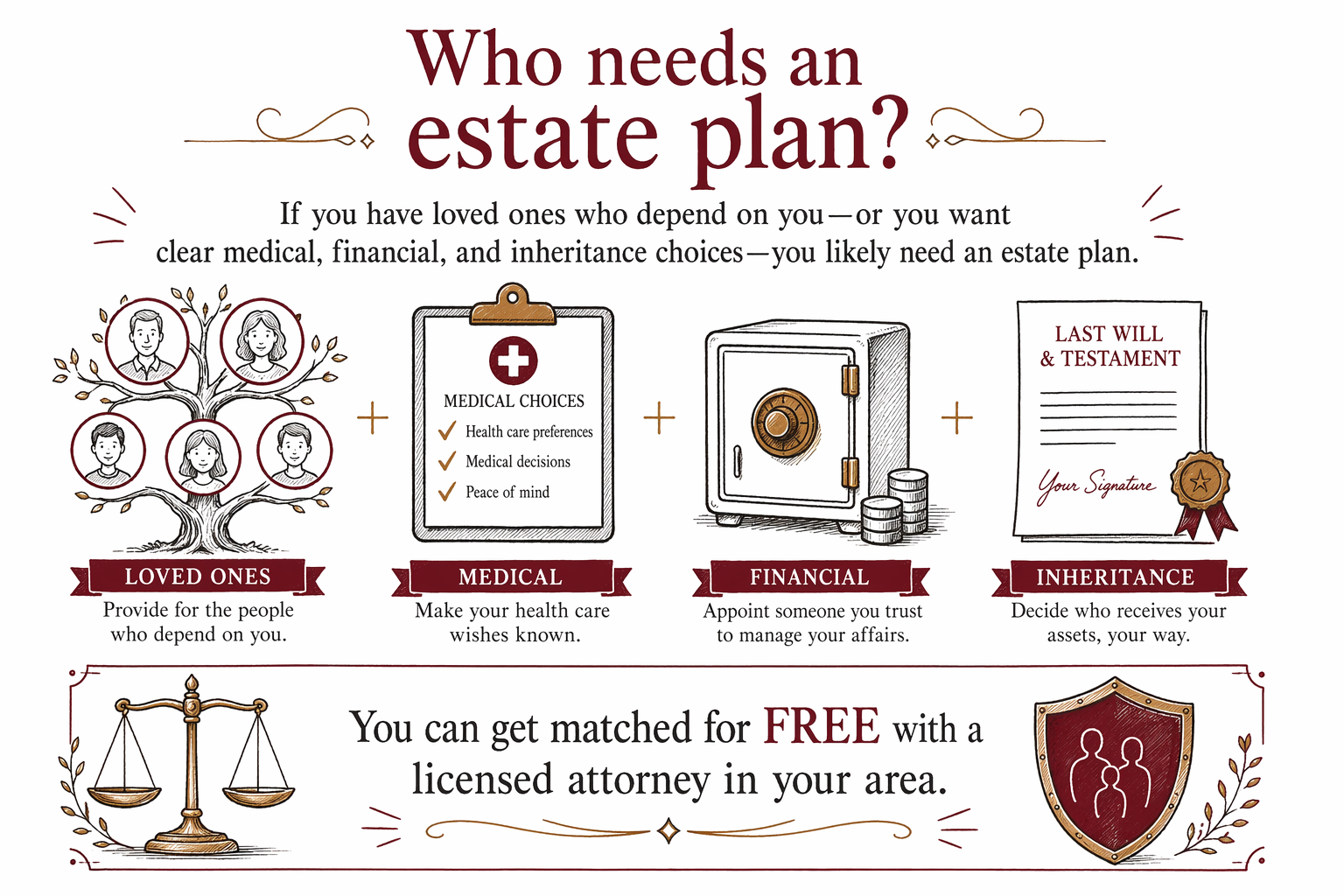
Quick answer: if you have people you love, you likely need one
An estate plan helps you decide who takes care of your family and how your property is handled after you pass away. If you have children, a spouse, aging parents, or anyone depending on you, a basic plan is often important.
Estate planning can also help you name trusted decision-makers if you become unable to speak for yourself (for example, through a health care directive and a power of attorney). The exact documents vary, but the goal is the same: clarity for the people you love.
Rules vary by state, and laws can change. This guide is general education, not legal advice—please confirm details with a licensed estate planning attorney in your state.
- If you have dependents, you may want a will and/or trust plus guardianship choices
- If you want control, you may also need planning documents for medical and financial decisions
Common situations where an estate plan matters
You do not need to own a “lot” of assets to benefit from an estate plan. Many families start because they want fewer surprises and clearer instructions.
Consider an estate plan if any of these are true:
- You have children (especially minor children)
- You are not married, or you and your partner are not legally set up the way you think
- You are divorced or have stepchildren and want guardianship and inheritance to match your intent
- You have aging parents or other family members who may need help
- You own a home, have savings, or simply want to avoid confusion
- You have certain shared assets or family property arrangements
Also consider planning if you would want one person to make medical and/or financial decisions for you during serious illness or disability.
- Even “simple” families often benefit from naming guardians and choosing what happens if you die
New to the US? Estate planning can prevent costly confusion
If you are new to the United States, you may not be aware that “what happens when someone dies” can be automatic—set by state law—when there is no will. That can lead to results that do not match your wishes.
Estate planning can help you:
- Name a guardian for minor children you leave behind
- Choose who should receive assets and personal items
- Reduce the chance that relatives fight over decisions
- Add instructions for medical decisions through advance directives
Because rules vary by state and depend on your situation, it’s important to work with a licensed estate planning attorney who practices where you live. WillArbor is a free way to get connected to one near you—without any pressure.
- If you die without a will, your state’s “intestacy” rules decide instead of you
The documents people commonly need (and why they’re different)
Many families hear the word “estate plan” and assume it means only a will. In plain terms, an estate plan is usually a set of documents that work together.
A few common building blocks:
- Will: Often used to say who should receive your assets and, if you have children, who should be the guardian. A will generally goes through probate.
- Living trust: Can help manage how assets are handled and may help avoid probate for the assets you place into the trust. A trust needs to be properly set up and “funded.”
- Power of attorney: Names someone you trust to handle financial matters if you cannot.
- Health care directive / advance directive: Helps guide medical decisions if you cannot communicate.
A licensed estate planning attorney can explain what you may need in your state. If you use DIY forms, rules may not match your state’s requirements, and a “valid-looking” form can still fail.
- Avoid the common pitfall: an “unfunded trust” that doesn’t actually control the property you think it does
Common estate-planning pitfalls to avoid
Families often run into preventable problems. Knowing these early can help you choose the right level of help.
Watch out for:
- Dying without a will (your state decides for you)
- Relying on DIY forms that don’t meet your state’s rules
- Out-of-date beneficiary designations on life insurance or retirement accounts
- Forgetting to update your plan after major life events (marriage, divorce, a child’s birth, moving states)
- Choosing guardians without considering who can realistically take on that role
- Creating a trust but not properly transferring (“funding”) assets to it
Most estate planning is quoted as a flat fee rather than hourly, but the real cost depends on the documents and complexity, and it varies by state. Ranges are helpful, but they’re not a guarantee of what you will pay.
For general educational support and next steps, start with getting matched.
- Pitfall: “I have a will” but beneficiary forms and key accounts still point somewhere else
Next step: get clear, then hire a licensed attorney (free for you)
If you’re wondering whether you need an estate plan, the safest approach is to talk with a licensed estate planning attorney who understands your state’s rules. You can bring your questions and preferences (like your preferred language), and compare options.
WillArbor is a FREE matching service—not a law firm and not your lawyer. We collect only contact details and planning intent (for example, your state and what you want to plan). We do not collect asset values, account numbers, document contents, or sensitive personal numbers.
When you meet an attorney, ask what documents they recommend for your situation and confirm the flat fee in writing before any work starts. Rules vary by state, so make sure they are licensed where you live and that you can verify their bar status.
If you’re ready, start here to learn what estate planning typically includes, or go directly to get matched for a licensed attorney near you.
- Family stays in control: you choose whether to hire and confirm the flat fee before anything begins
If you have loved ones who depend on you—or you want clear medical, financial, and inheritance choices—you likely need an estate plan, and you can get matched for free with a licensed attorney in your state.
Common questions
Do I really need an estate plan if I don’t have much money?
It can still matter. An estate plan helps you name guardians for children, choose who receives property, and set instructions for medical and financial decisions if you can’t speak for yourself. Rules vary by state, so talk with a licensed attorney in your state about what’s appropriate for your situation.
Is a will the only thing I need?
Not always. A will is important for many families, but some people also benefit from a living trust, powers of attorney, and advance directives. The right set of documents depends on your state’s rules and your family’s needs—an attorney can explain options clearly.
What happens if I die without a will?
Your state’s intestacy laws decide who receives your assets and how your estate is handled. This may not match your wishes, and it can make things harder for your family. A will is one way to reduce that risk, but rules vary by state.
I have beneficiaries listed on accounts—does that replace an estate plan?
Beneficiary designations help for the specific accounts they cover, but they usually do not replace everything. A full plan may still be needed for guardianship, medical decisions, and other assets, and it may be affected by state law. Review your choices with a licensed estate planning attorney.
How do I find the right attorney near me?
You can get matched through [WillArbor](/get-matched/), which is free for families. Then compare recommendations and confirm the flat fee in writing before work begins. Always verify the attorney is licensed in your state.
Related help
The difference between a will and a living trust, when each makes sense, and why many families use both.
Open → How to Avoid ProbatePlain-language ways families reduce or avoid probate — trusts, beneficiary designations, and joint ownership.
Open → What Happens If You Die Without a WillIntestacy explained: how your state decides who inherits when there is no will — and why that may not match your wishes.
Open →