Guides
What is a revocable trust?
A revocable trust is a legal document you can change while you are alive that lets someone manage and distribute property under rules you set. Many families use it to make things easier after a death, but it is not automatically the right choice for everyone.
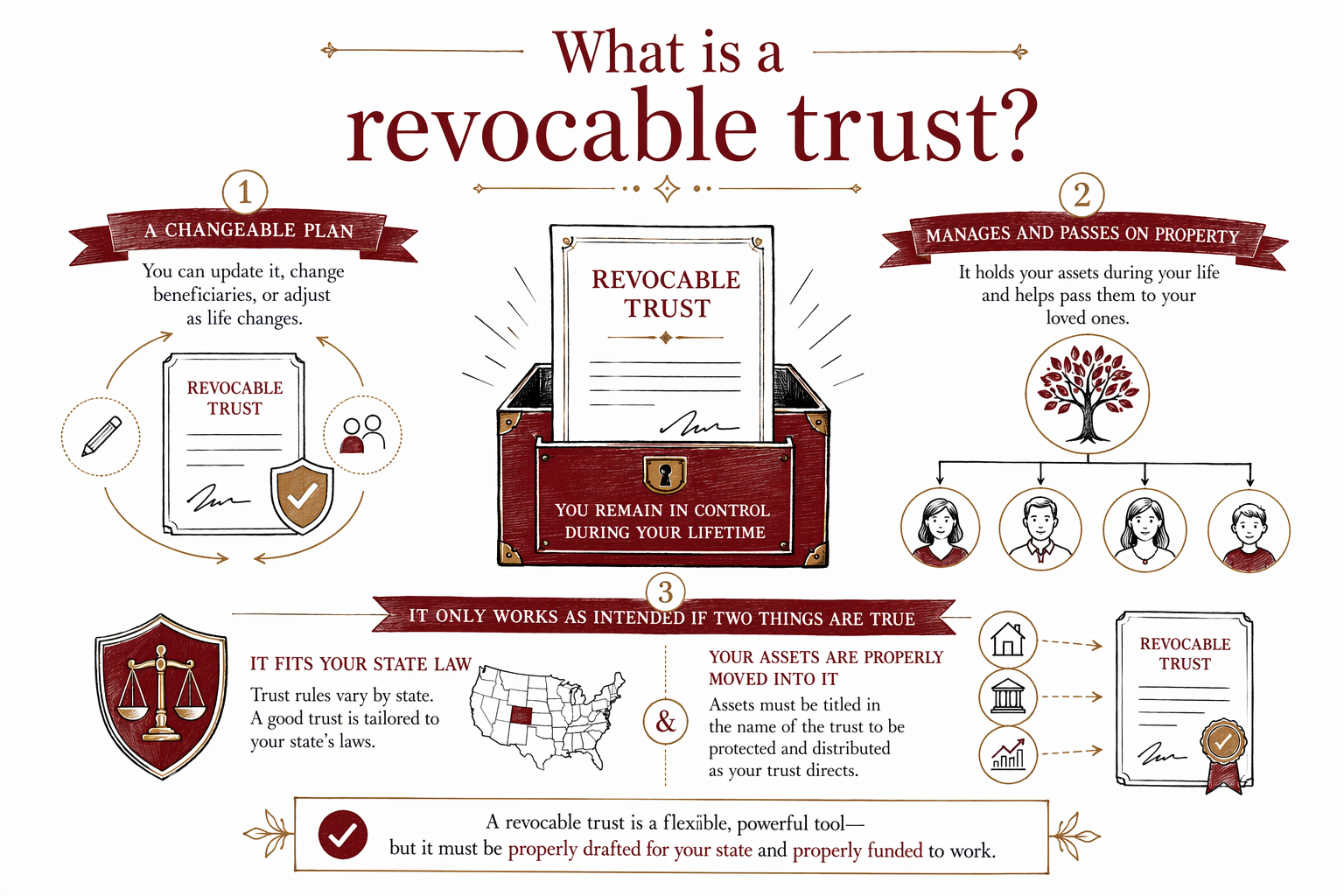
The short answer
A revocable trust, sometimes called a living trust, is a document that holds instructions for property during your lifetime and after death. "Revocable" means you can usually change it, add to it, remove things from it, or cancel it while you are alive and able to make your own decisions.
In many plans, the person creating the trust is also the first trustee, which means they still manage their own property. If they become unable to manage things later, or after they die, a backup trustee they named can step in and follow the written instructions.
People often use a revocable trust to help certain assets pass outside probate, to organize what happens if they become incapacitated, and to make things smoother for family. But a trust is only one part of an estate plan. Many people still need a will, powers of attorney, and advance directives too.
How it works in everyday life
Think of a revocable trust as a container with rules. You create the trust, choose who will manage it, name who should receive property later, and say when and how that should happen.
For example, a parent might say that if they die, the trustee should use trust property for a child's health, education, and support, and then distribute the rest at a certain age. A married couple might use a trust to say that after one spouse dies, the survivor keeps using the property, and after the second death it goes to the children.
A trust can also help during incapacity. If the person who created it can no longer manage finances, the successor trustee may be able to step in and manage trust assets without going through a full court process first. The exact effect depends on state law, the trust terms, and how assets are titled.
What a revocable trust can and cannot do
A revocable trust can help avoid probate for assets that are properly transferred into the trust during life. It can give clear instructions, name who manages things, and make administration more private in some situations because probate court filings may be public while trust administration may be less public. Rules vary by state.
But a revocable trust does not solve everything. It does not replace the need to update beneficiary designations on retirement accounts or life insurance. It does not automatically protect assets from your own creditors in the way some people assume. It also does not avoid probate for assets that were never moved into the trust.
That last point matters a lot. One of the most common mistakes is creating a trust but never "funding" it. An unfunded trust may do very little, because the property is still owned outside the trust.
Revocable trust vs. will
A will and a revocable trust can work together, but they are not the same thing. A will says who should receive your property after death and can name a guardian for minor children. A revocable trust is a separate legal arrangement that can hold property now and later distribute it under your instructions.
A will usually goes through probate. A revocable trust may help certain assets avoid probate if those assets were transferred into the trust correctly. Probate can be simple in some cases and more involved in others. The process, cost, and timeline vary a lot by state.
A trust also cannot do one important job that a will can do: naming a guardian for a minor child. Parents who use a trust usually still need a will for that reason, often called a "pour-over" will. Dying without a will, called intestacy, can leave those decisions to state law instead of your family.
Common reasons families choose one
Some families choose a revocable trust because they own a home, want a smoother transfer after death, or want a clear plan if they later cannot manage finances. Others want to leave property to children over time rather than all at once, or they want someone they trust to manage things without as much court involvement.
It can also be helpful when a family owns property in more than one state, has a blended family, wants ongoing management for a loved one, or simply wants a more organized plan. But not every family needs a trust. For some people, a will plus beneficiary updates and powers of attorney may be enough.
The best choice depends on your goals, what you own, your family situation, and your state. That is why it helps to speak with a licensed estate planning attorney in your state instead of guessing from a generic online form.
Common pitfalls to avoid
A revocable trust can be useful, but a few mistakes come up again and again:
- Creating a trust and never transferring assets into it
- Forgetting to update beneficiary designations on accounts
- Using a DIY form that does not fit your state law or family situation
- Assuming a trust replaces a will, including naming a guardian for children
- Failing to update the trust after a marriage, divorce, birth, death, or move to a new state
- Not naming a reliable backup trustee
Estate planning documents are only helpful if they match your real life now. If your family, property, or wishes have changed, your plan may need an update.
What does a revocable trust usually cost?
Many estate planning attorneys charge a flat fee, not hourly, for trust-based plans. A simple revocable trust package for one person often falls around $1,500 to $3,500. For a married couple, a common range is about $2,000 to $5,000 or more. More complex plans can cost higher than that.
These are general educational ranges, not quotes. The real price depends on your state, whether the plan includes wills, powers of attorney, and advance directives, whether there are children from different relationships, special distribution rules, real estate in multiple states, business interests, or more detailed trust planning.
Before any work starts, ask for the flat fee in writing and what is included. You should know whether the attorney's fee covers just drafting, or also signing guidance, trust funding instructions, and future updates. WillArbor is a free matching service, not a law firm and not your lawyer, and it does not draft documents.
How to move forward
If you think a revocable trust might help your family, the next step is usually a short conversation with a licensed estate planning attorney in your state. Because rules vary by state and change over time, general articles can only take you so far.
- Make a short list of your goals: children, home, probate concerns, incapacity planning, blended family, or privacy.
- Gather basic information about what kinds of property you have, without sharing account numbers or sensitive details online.
- Ask whether a will-based plan or trust-based plan fits better in your state.
- Ask what documents are included and what the flat fee is in writing.
- Confirm the attorney is licensed in your state.
If you want help finding someone, you can review our estate planning guides or get matched for free with a licensed estate planning attorney near you. WillArbor only collects contact information and planning intent, such as your name, phone, optional email, state, what you want to plan, and preferred language.
A revocable trust is a changeable plan for managing and passing on property, but it only works as intended if it fits your state law and your assets are properly moved into it.
Common questions
Can I change a revocable trust later?
Usually yes, while you are alive and have legal capacity. That is what "revocable" means, but the process for changing it should be done correctly under your state's rules.
Does a revocable trust avoid probate?
It can help certain assets avoid probate if those assets were properly transferred into the trust. Assets left outside the trust may still go through probate, and probate rules vary by state.
Do I still need a will if I have a revocable trust?
Often yes. Many people with trusts still have a will, especially because a will can name guardians for minor children and help handle assets not placed into the trust.
Is a revocable trust only for wealthy people?
No. Some families with ordinary assets use one for organization, probate planning, or incapacity planning. Whether it makes sense depends more on your goals and state law than on being wealthy.
Does a revocable trust protect my assets from creditors or nursing home costs?
Not usually in the simple way people hope. A revocable trust generally does not give the same asset protection as giving up ownership and control, so get advice from a licensed attorney in your state before relying on it for protection.
Can WillArbor make the trust for me?
No. WillArbor is a free matching service, not a law firm and not your lawyer. It gives general educational information and can help you connect with a licensed estate planning attorney.
Related help
The difference between a will and a living trust, when each makes sense, and why many families use both.
Open → How to Avoid ProbatePlain-language ways families reduce or avoid probate — trusts, beneficiary designations, and joint ownership.
Open → What Happens If You Die Without a WillIntestacy explained: how your state decides who inherits when there is no will — and why that may not match your wishes.
Open →