Your situation
Estate Planning After a Divorce
After a divorce, old estate planning documents can leave the wrong person in charge or inheriting by accident. A careful update can help protect your children, your wishes, and your peace of mind.
Why divorce is a major estate planning update
Divorce changes more than your marital status. It can affect who inherits, who can make medical or financial decisions for you, who is named for your children, and who receives money from insurance or retirement accounts.
Many people assume a divorce decree automatically fixes everything. Often, it does not. Some documents or account designations may still name a former spouse, and state law does not treat every asset or every document the same way.
That is why estate planning after a divorce is worth doing on purpose, not later. A licensed estate planning attorney in your state can review what you have now, explain what changed under your state's rules, and help you update what still points to the past.
- Rules about wills, trusts, probate, and beneficiary designations vary by state
- A divorce judgment does not always update every account or document
- Old forms can create conflict, delay, and costly court problems later
What to update first
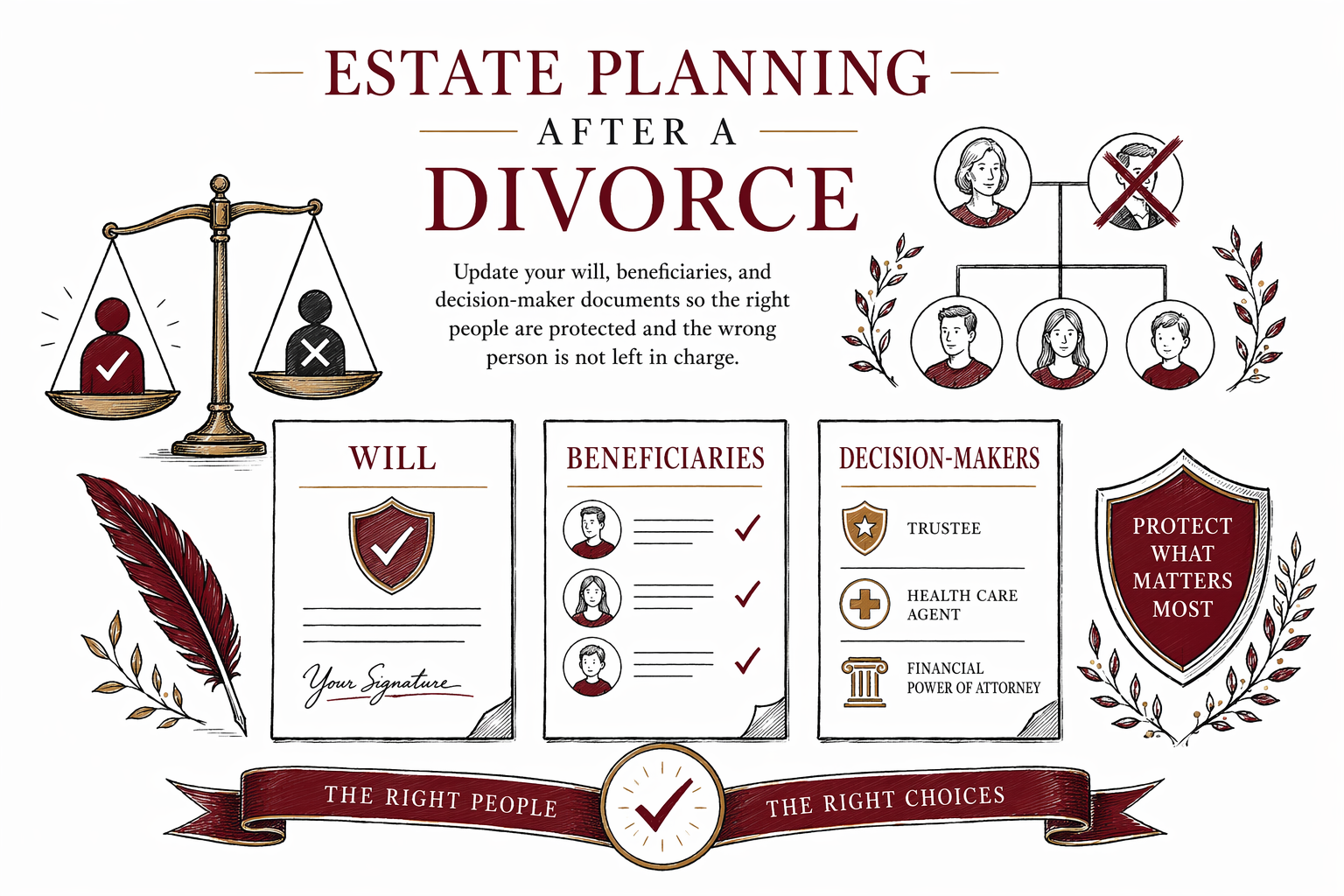
A good first step is to make a simple list of every document and account where your former spouse may still appear. This often includes your will, revocable living trust, financial power of attorney, health care directive, life insurance, retirement accounts, payable-on-death bank accounts, and transfer-on-death deeds if your state allows them.
If you have minor children, review guardian nominations in your will and any trust terms that control money for them. After a divorce, many parents want to name a trusted backup person, choose the age when children receive money, and decide who should manage funds if both parents are gone.
Be careful with beneficiary forms. These are common trouble spots because the form on the account often controls who gets the money, even if your will says something different. Out-of-date beneficiary designations are one of the most common estate-planning mistakes after a divorce.
If you are not sure where to begin, you can explore services or get matched, free, with a licensed estate planning attorney through WillArbor. WillArbor is not a law firm, does not draft documents, and does not create an attorney-client relationship.
- Will or living trust
- Financial power of attorney
- Advance directive or health care directive
- Life insurance and retirement beneficiaries
- Guardians and trustees for children
Documents many divorced parents and adults need
A basic estate plan after divorce often includes a new will, updated beneficiary designations, a financial power of attorney, and an advance directive or living will. Some people also consider a revocable living trust, especially if they own a home, want privacy, have children from more than one relationship, or want to make probate simpler for family.
A will can name who should inherit property that passes through your estate and who should care for minor children if both parents die. A power of attorney lets you choose someone you trust to handle finances if you cannot. An advance directive lets you name who can speak for your medical care and explain your wishes.
A living trust may help some families avoid probate for assets properly transferred into the trust. But a trust only works as planned if it is funded. An unfunded trust is a common pitfall: people sign the trust but never retitle the house or other assets into it.
If your divorce involved a blended family, special concerns about children, or property in more than one state, this is even more important. DIY forms can fail if they do not meet your state's signing rules or do not fit your family situation.
- Will: names heirs and guardians
- Power of attorney: names a trusted financial helper
- Advance directive: names a medical decision-maker
- Trust: may help avoid probate if properly funded
Common problems to watch for after a divorce
One risk is doing nothing because the divorce already felt overwhelming. If you die without a valid will, state intestacy rules decide who inherits. That may not match what you want, especially if you have children, a new partner, or family members who depend on you.
Another risk is leaving old names in place. An ex-spouse may still appear as beneficiary, agent under a power of attorney, health care decision-maker, trustee, or personal representative. In some states, divorce cancels certain ex-spouse rights automatically; in others, it may not apply the way people expect. The details matter.
There can also be timing issues. If your divorce is not yet final, changing some documents or account designations may affect court orders or temporary restrictions. This is one reason it is smart to get state-specific guidance from a licensed attorney before making major changes.
Common pitfalls include no named guardian for children, outdated beneficiaries, relying on DIY forms, and assuming a trust is finished when it has not been funded. These mistakes can lead to confusion, family conflict, probate delays, or property going to the wrong person.
What estate planning after divorce may cost
Most estate planning work is priced as a flat fee, not hourly. The total depends on the documents you need, how complex your family and assets are, and the state where you live. These are general education ranges only, not quotes.
A simple post-divorce update with a will, financial power of attorney, and advance directive may cost roughly $300 to $1,200 in some areas. A more complete plan with a revocable living trust may be around $1,200 to $3,500 or more. If there are blended family concerns, special needs planning, business interests, real estate in multiple states, or significant trust changes, fees may be higher.
You should ask for the flat fee in writing before work starts. The family stays in control: you compare attorneys, choose who to hire, and decide whether the scope and price feel right for you.
WillArbor is free for families. Participating attorneys pay a flat fee to take part. We only collect contact information and planning intent — such as your name, phone, optional email, state, what you want to plan, and preferred language — so you can be matched with a licensed estate planning attorney near you.
How to find the right attorney and what to ask
Look for a licensed estate planning attorney in your state, because state law controls many of these rules. You can also confirm the attorney's bar license before hiring. That extra step is simple and worth doing.
When you speak with an attorney, explain that you are updating your estate plan after a divorce. Ask which documents should be replaced, which beneficiary forms must be updated directly with each account, whether a trust makes sense, and whether anything in your divorce orders affects timing or choices.
A simple way to start:
1. Gather your current will, trust, powers of attorney, and health care documents.
2. Make a list of life insurance, retirement accounts, bank accounts, and property deeds.
3. Note any children, support obligations, or blended family concerns.
4. Ask for the attorney's flat fee in writing and what documents are included.
5. Confirm the attorney is licensed in your state.
If you want help taking that first step, visit situations for related guides or get matched to connect, free, with a licensed estate planning attorney. WillArbor is a free matching service, not a law firm and not your lawyer.
After a divorce, update your will, beneficiaries, and decision-maker documents so the right people are protected and the wrong person is not left in charge.
Common questions
Does divorce automatically remove my ex-spouse from my will?
Sometimes state law changes how parts of an old will are treated after divorce, but not always in the way people assume. Rules vary by state, so it is safest to have a licensed estate planning attorney review and update your documents.
Do I need to change beneficiary forms too?
Yes, often you do. Life insurance, retirement accounts, and payable-on-death accounts usually pass by beneficiary form, and those forms may control even if your will says something else.
If I have children, what should I focus on first?
Many parents start with a will that names guardians, plus a plan for who would manage money for the children. A licensed attorney can help you decide whether a simple will is enough or whether a trust would better protect the children.
Should I make a trust after a divorce?
Maybe. A trust can help some people avoid probate and manage how assets pass to children, but it is not right for every family. The best choice depends on your goals, your property, your family situation, and your state.
How much does it cost to update estate planning after divorce?
Many attorneys charge a flat fee. A basic update may be a few hundred to around $1,200 in some areas, while a fuller trust-based plan may be around $1,200 to $3,500 or more, depending on complexity and state. These are not quotes.
What does WillArbor do?
WillArbor is a free matching service that helps families connect with a licensed estate planning attorney near them. It is not a law firm, does not draft documents, and does not create an attorney-client relationship.
Related help
Guardians, a will, and a simple plan so your children are cared for if something happens to you.
Open → Estate Planning for HomeownersHow to keep your home out of probate and pass it to the people you choose.
Open → Estate Planning for Blended FamiliesPlans that protect a current spouse and children from a previous relationship — fairly and clearly.
Open →