Your situation
Estate Planning When You're New to the US
If you're new to the United States, estate planning can feel unfamiliar fast. A simple plan can help protect your children, your money, and your wishes here while you get clear guidance in a language you understand.
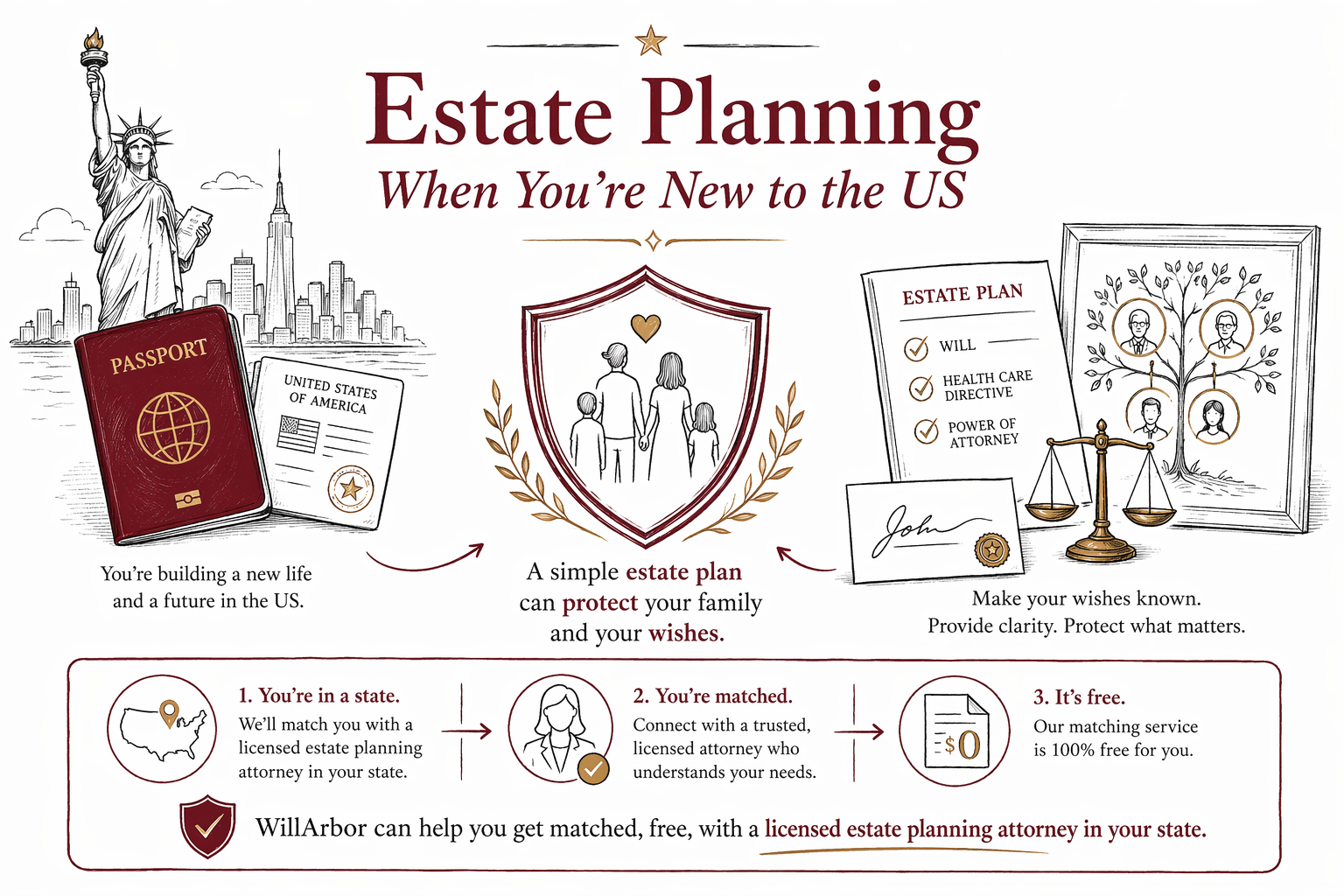
Why estate planning matters when you're new to the US
Many families arrive in the US with accounts, property, or close relatives in more than one country. That can make planning more important, not less. A basic estate plan can help you name who should care for your children, who should handle money and paperwork if you cannot, and who should inherit what you leave behind.
If you die without a valid will, state intestacy rules decide who inherits. That may not match your wishes, and it can create delays, confusion, and family conflict. If you have young children, not naming a guardian is one of the biggest risks.
There are also practical US issues that surprise many people: beneficiary forms on life insurance and retirement accounts may override a will, a trust only works if it is properly funded, and online DIY forms may fail if they do not meet your state's rules. Probate and estate planning laws vary by state and can change over time, so this page is general education only, not legal, tax, or financial advice.
What documents many new US families should consider
The right plan depends on your family, your state, and what you own in the US and abroad. For many people, the starting point is a will. A will can name beneficiaries, name an executor, and name guardians for minor children.
A financial power of attorney lets you choose someone to handle certain money and legal matters if you cannot act for yourself. A health care directive or advance directive can explain your medical wishes and name someone to speak for you. These documents are often just as important as a will.
Some families also use a living trust. A trust may help with privacy, probate avoidance for certain assets, and management of property over time, but it is not automatically better than a will for everyone. An unfunded trust can fail in practice, so it is important to understand what must actually be moved into the trust.
You can learn more about common plan types on our services page, but a licensed estate planning attorney in your state can tell you what fits your situation.
If you have assets or family in another country
This is where careful legal help matters most. A US will may not fully control property in another country, and a foreign will may not work the way you expect in a US state. Real estate, bank accounts, business interests, inheritance rights, tax rules, and marriage rules can be treated differently across borders.
That does not mean planning is impossible. It means you should tell the attorney, early, that you may have overseas property, family members living abroad, or prior legal documents from another country. The attorney may suggest coordinating with counsel in another country if needed.
Bring a simple list of what kind of property you have and where it is located, but you do not need to share sensitive account numbers or detailed asset values with WillArbor. We only collect contact information and planning intent: your name, phone, optional email, state, what you want to plan, and preferred language.
How much does estate planning usually cost?
Most estate planning work is priced as a flat fee, not hourly. Exact pricing depends on your state, the documents you need, and how complex your situation is. These ranges are general educational estimates only, not quotes.
A simple will package often falls around $300 to $1,200 for one person, or roughly $600 to $2,000 for a couple, depending on the state and what is included. A more complete plan with wills, powers of attorney, and advance directives may be around $800 to $2,500 or more.
A living trust-based plan often costs more because it usually includes more documents and more planning work. Many trust plans fall around $1,500 to $5,000+, and complex cross-border or higher-asset situations can be higher. If probate is needed after a death, costs vary widely by state, court process, and whether the estate is contested.
Ask for the flat fee in writing before any work starts. Make sure you understand what is included, what is not included, and whether funding a trust, deed work, or extra consultations cost more.
How to find the right attorney if English is not your first language
You deserve to understand what you are signing. It is reasonable to look for an attorney who speaks your language or can communicate clearly through professional language support. What matters most is that the attorney is licensed in your state and experienced with estate planning.
WillArbor is a free matching service, not a law firm, not a lawyer, and it does not draft documents or create an attorney-client relationship. We help families connect with a licensed estate planning attorney near them. It is always free for the family.
When you compare options, stay in control:
1. Ask whether the attorney is licensed in your state and confirm the bar license yourself.
2. Ask whether they regularly handle wills, trusts, powers of attorney, advance directives, and probate.
3. Ask whether they can communicate in your preferred language or explain documents in plain English.
4. Ask for the flat fee in writing and what documents are included.
5. Ask what information they need from you and what the next step will be.
If you want, you can start with our situations page or get matched to be connected, free, with a licensed estate planning attorney.
Common mistakes to avoid
A little planning now can prevent expensive problems later. These are some of the most common issues attorneys see:
- No will at all, which leaves inheritance decisions to state intestacy law
- No named guardian for minor children
- Beneficiary designations that are outdated or do not match the rest of the plan
- DIY forms that are not valid in your state or do not fit your family
- A living trust that was signed but never funded
- Old documents from another state or country that may not work as expected where you live now
If you are unsure whether your existing documents still work after moving to a new state or coming to the US, that is a good reason to have them reviewed by a licensed estate planning attorney in your state.
If you're new to the US, a simple estate plan can protect your family and your wishes, and WillArbor can help you get matched, free, with a licensed estate planning attorney in your state.
Common questions
Do I need a US will if I already have a will from another country?
Maybe. A foreign will may still matter, but it may not work smoothly for property or court procedures in your US state. A licensed estate planning attorney can review how your existing documents may interact with US law.
Can one plan cover assets in the US and another country?
Sometimes, but cross-border planning needs care. In some cases families use coordinated documents, and in others they may need advice from lawyers in more than one country. Rules vary by state and by country.
If I do not own much yet, is estate planning still worth doing?
Yes, often for reasons beyond money. Naming a guardian for children, choosing someone to make medical or financial decisions, and avoiding confusion for family can matter even if your assets are modest.
WillArbor is free, so how does it work?
WillArbor is a free matching service for families. It is not a law firm or your lawyer, and it does not draft legal documents. Participating attorneys pay a flat fee to take part, and it is always free for the family.
What information do I need to give WillArbor?
Only basic contact and planning-intent information: your name, phone, optional email, state, what you want to plan, and preferred language. We do not ask for account numbers, Social Security numbers, income, asset values, or document contents.
How do I know if an attorney is really licensed?
Ask for the attorney's full name and the state where they are licensed, then verify the bar license with that state's official attorney directory or bar authority. It is smart to do this before you hire anyone.
Related help
Guardians, a will, and a simple plan so your children are cared for if something happens to you.
Open → Estate Planning for HomeownersHow to keep your home out of probate and pass it to the people you choose.
Open → Estate Planning for Blended FamiliesPlans that protect a current spouse and children from a previous relationship — fairly and clearly.
Open →