Guides
What is a trustee?
A trustee is the person (or company) responsible for managing trust property and carrying out the trust’s instructions. This guide explains what trustees do, common roles, and what to check so your family is protected.
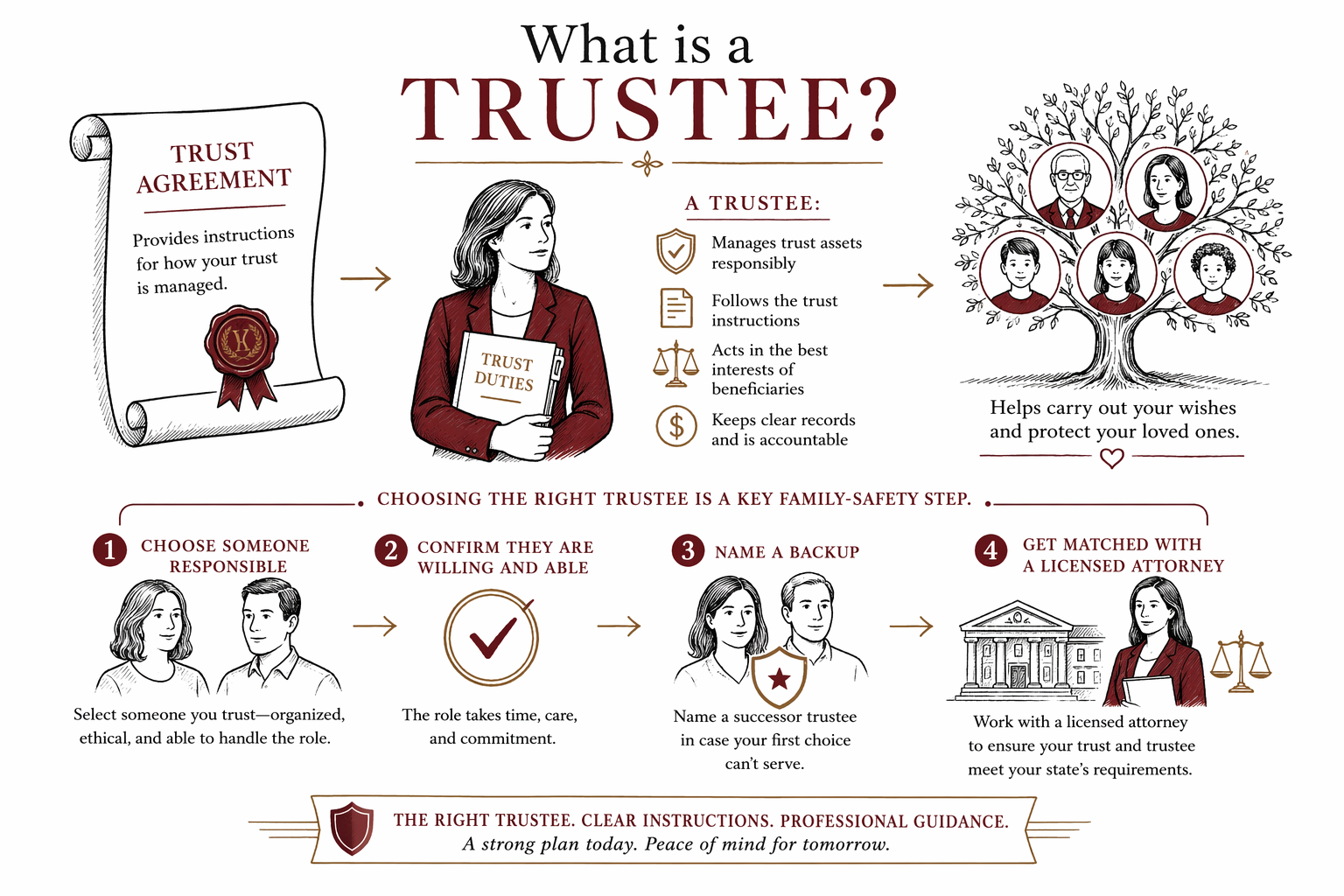
A trustee is the person who manages a trust
In plain terms, a trustee is the “manager” of a trust. The trust is a legal arrangement that holds certain assets and follows specific rules you set in the trust documents.
The trustee’s job is to follow those rules—paying bills from trust funds, investing if allowed, and delivering benefits to the people you named (often called beneficiaries).
- Trustee = the decision-maker for the trust (within the trust’s rules)
- Beneficiaries = the people the trust benefits
- Trust document = the “instructions” the trustee must follow
What a trustee actually does (day-to-day and over time)
A trustee’s responsibilities depend on what your trust says and what assets are in the trust. In many family trusts, common tasks include:
1) Managing trust property according to the trust rules.
2) Paying ongoing expenses and handling routine administrative tasks.
3) Keeping records of trust activity and reports where required.
4) Distributing money or property to beneficiaries when the time (or conditions) comes.
If the trust is for minor children, the trustee may also be involved in following the timing and conditions you set for when distributions can happen. The trustee does not get to “change the plan” just because circumstances change—unless the trust allows it or the court/legal process says it can.
- A trustee may handle paperwork, payments, and distributions—but cannot ignore the trust instructions
- Rules and required reporting can differ by state
Who can be a trustee?
You can choose different kinds of trustees. The best option depends on your family’s situation and how complex the trust is.
Common trustee choices include:
- A trusted family member or friend (an “individual trustee”)
- A professional trustee (often an attorney or trust company)
- A bank/trust company (in some cases)
- Sometimes, more than one person (co-trustees), depending on the trust design
When people hesitate to name a family trustee, it’s often because they worry about time, conflict, or paperwork. Those concerns are valid—and are exactly why many families talk with a licensed estate planning attorney about fit, backups, and boundaries.
- You can build in backups (so there’s a plan if a trustee can’t serve)
- Make sure the trustee is willing and able to do the job
Trustee vs. executor: a common mix-up
This is a really common point of confusion.
- A trustee manages a trust during your lifetime and after (if the trust continues).
- An executor (sometimes called a personal representative) handles the estate process under a will—this is the role that typically shows up after someone dies.
In other words: a trust can reduce or avoid some probate steps, but the trustee role is not the same as probate work. Your state’s rules matter a lot here, so it’s best to confirm how trusts and wills work where you live.
- Trustee manages trusts; executor/personal representative manages an estate from a will
- State law affects how these roles work in practice
Common trustee-related pitfalls to avoid
Families usually run into trouble when the plan isn’t clear or isn’t prepared for real-life problems. Here are pitfalls to watch for:
- No clear backup trustee. If your first choice can’t serve, the trust can get stuck.
- Choosing someone who isn’t willing or isn’t organized. The trustee job often includes paperwork and timing decisions.
- Confusing “trusting someone” with “giving them authority.” A trustee needs authority that matches the trust’s instructions.
- Out-of-date decisions. If family situations change (moves, deaths, new children, divorce), trustee choices may need updates.
- DIY documents that don’t fit your state. Forms that looked fine online may not follow your state’s requirements.
Rules vary by state and trust language can change what a trustee must do. That’s why families should review their plan with a licensed estate planning attorney in their own state.
How to get help choosing a trustee (free matching available)
Because trustee duties and the “right” trust structure depend on your state and goals, it’s smart to get professional guidance. Estate planning is often quoted as a FLAT FEE (not hourly), but the actual cost depends on which documents you need and how complex your situation is.
WillArbor is a FREE matching service, not a law firm and not your lawyer. We match you with a licensed estate planning attorney near you so you can ask questions, compare options, and confirm any FLAT FEE in writing before work starts.
To get matched, share contact details and your planning intent (for example: you want a trust and you’re deciding who should be trustee). We do not collect asset values, account numbers, document contents, or SSNs.
If you want more general guidance, you can explore guides or learn about services, then start at get matched.
- Confirm the attorney is licensed in your state
- Ask how trustee duties are handled in your specific trust plan
A trustee manages your trust and must follow its instructions, so picking a responsible, willing person (with a backup) is a key family-safety step—get matched with a licensed attorney for state-specific guidance.
Common questions
Does a trustee get paid?
Sometimes. It depends on what the trust says and what local rules allow. If a professional trustee is used, the cost is typically built into the arrangement—ask a licensed estate planning attorney about how trustee compensation works in your state and trust type.
Can a family member refuse to be a trustee?
Yes. A trustee usually must accept the role, and some people may not be able to serve due to time, conflict, or other reasons. Planning for a backup trustee can help avoid delays if your first choice can’t serve.
Is a trust the same as a will?
No. A trust generally manages assets according to its terms, while a will typically directs what happens to the rest of your estate through the estate process after death. The best fit depends on your goals and your state’s rules—an attorney can help explain the differences for your situation.
What happens if there’s no trustee or the trustee can’t serve?
It depends on how the trust is written and your state’s rules. Some trusts have successor trustee instructions; others may require legal steps to appoint someone. This is one reason to include clear backup options.
Related help
The difference between a will and a living trust, when each makes sense, and why many families use both.
Open → How to Avoid ProbatePlain-language ways families reduce or avoid probate — trusts, beneficiary designations, and joint ownership.
Open → What Happens If You Die Without a WillIntestacy explained: how your state decides who inherits when there is no will — and why that may not match your wishes.
Open →