Guides
Estate Planning For Homeowners
If you own a home, estate planning is not just about who gets the house. It is also about who can manage it if you become ill, how ownership passes after death, and how to avoid expensive mistakes for your family.
The short answer: homeowners usually need more than just a basic will
For many homeowners, a simple will may not be enough on its own. A will can say who should inherit your home, but in many states a will alone does not avoid probate, which is the court process used to settle an estate after death.
A fuller plan often includes a will, powers of attorney, and advance directives. Some homeowners also use a living trust, transfer-on-death deed where allowed, or other state-specific tools to help the home pass more smoothly. The right choice depends on how the property is titled, whether you are married, whether you own the home with someone else, and the law in your state.
This is general educational information, not legal, tax, or financial advice. Estate planning and probate rules vary by state and change over time, so it is smart to talk with a licensed estate planning attorney in your state before you sign anything.
Why owning a home changes your estate plan
A home is often a family's biggest asset, but it is also different from a bank account or car. Real estate has a title, possible mortgage debt, insurance issues, taxes, maintenance costs, and sometimes more than one owner. If your plan does not match the way the home is legally owned, your family can face delays and confusion.
For example, if you die without a will, your state's intestacy law decides who inherits. That may not match what you want. If you have young children, a will is also where many parents name a guardian. If you become unable to manage your affairs, a financial power of attorney may help someone you trust handle mortgage payments, insurance, taxes, or repairs.
Homeowners also need to think about practical questions. Who will pay the mortgage? Who can access records? Does a surviving spouse have clear rights to stay in the home? Should one child inherit the house, or should it be sold and divided? These are family decisions, but the legal documents need to be done correctly for your state.
The main tools homeowners should know
A will says who should receive your property after death and can name guardians for minor children. But a will usually does not let someone manage things while you are alive and incapacitated, and it often does not keep the home out of probate.
A revocable living trust is sometimes used by homeowners who want more privacy, easier management during incapacity, or a better chance of avoiding probate for the home. But a trust only works for property that is actually transferred into it. An unfunded trust is a common and costly mistake: people sign the trust but never retitle the home.
A financial power of attorney lets a trusted person act for you during life, if allowed by the document and state law. An advance directive or living will covers medical wishes, and a health care power of attorney names someone to make medical decisions if you cannot. For many families, these are just as important as the documents about inheritance.
Some states allow transfer-on-death deeds or other simplified ways to pass real estate. Some married couples also hold title in a way that changes what happens automatically at death. Because these rules vary by state, title, and family situation, a licensed estate planning attorney should review the deed and explain your options.
Common mistakes homeowners make
A few mistakes come up again and again. They are easy to miss, especially when families use old forms, online templates, or documents made for another state.
- Dying without a will, so the home passes by intestacy instead of your wishes
- Naming no guardian for minor children
- Assuming a will avoids probate for the house
- Creating a trust but never transferring the home into it
- Using a DIY form that does not meet your state's signing or witness rules
- Forgetting to update the plan after marriage, divorce, remarriage, a new child, or buying a new home
- Ignoring beneficiary designations on life insurance or retirement accounts, which may not match the rest of the plan
- Not checking how the deed is titled, including joint ownership rights
Another common problem is leaving unclear instructions to children. One child may want to live in the home, another may need money, and a third may want to sell. A clear plan can reduce family conflict later.
What estate planning for homeowners may cost
Many estate planning attorneys charge flat fees, not hourly rates, for common planning work. Exact pricing depends on the documents, your family's complexity, the value and type of planning involved, and your state. These ranges are general educational estimates only, not quotes.
A basic will-based estate plan for one person may be around $300 to $1,200. For a couple, a basic pair of wills with powers of attorney and health care documents may be around $600 to $2,500. A trust-based estate plan for a homeowner is often higher, sometimes around $1,500 to $5,000 or more, especially if it includes deed work, multiple properties, blended-family planning, tax concerns, or special needs planning.
The price may go up if you own property in more than one state, want detailed inheritance rules, need business planning, or need help funding a trust. It may be lower for a simpler household with one home and straightforward wishes. Before hiring anyone, ask for the flat fee in writing, what documents are included, whether deed transfer work is included, and whether future updates cost extra.
WillArbor is a free matching service for families. We are not a law firm, not a lawyer, and do not draft documents or create an attorney-client relationship. We can help you get matched with a licensed estate planning attorney, and you stay in control of who to hire.
A practical next step for homeowners
If you already own a home, now is a good time to review your plan. If you do not have any plan yet, start with the basics and then ask whether a trust or deed-based option makes sense in your state.
- Find a copy of your deed and confirm how the home is titled.
- Make a simple list of who you want to inherit, and who should manage things if you cannot.
- If you have children, decide who you would want as guardian.
- Gather your current will, trust, power of attorney, and health care documents, if any.
- Note major life changes: marriage, divorce, remarriage, new children, home purchase, move to a new state, or death in the family.
- Ask an estate planning attorney whether your plan avoids the problems you most care about, such as probate delays or uncertainty about the house.
When you are ready, WillArbor can help you explore services or return to our guides and then get matched, free, with a licensed estate planning attorney in your state. We only collect contact and planning intent information like your name, phone, optional email, state, what you want to plan, and preferred language — never asset values, account numbers, document contents, Social Security numbers, income, or other sensitive estate details.
However you begin, confirm the attorney's bar license in your state, compare your options, and make sure the flat fee is clear in writing before work starts.
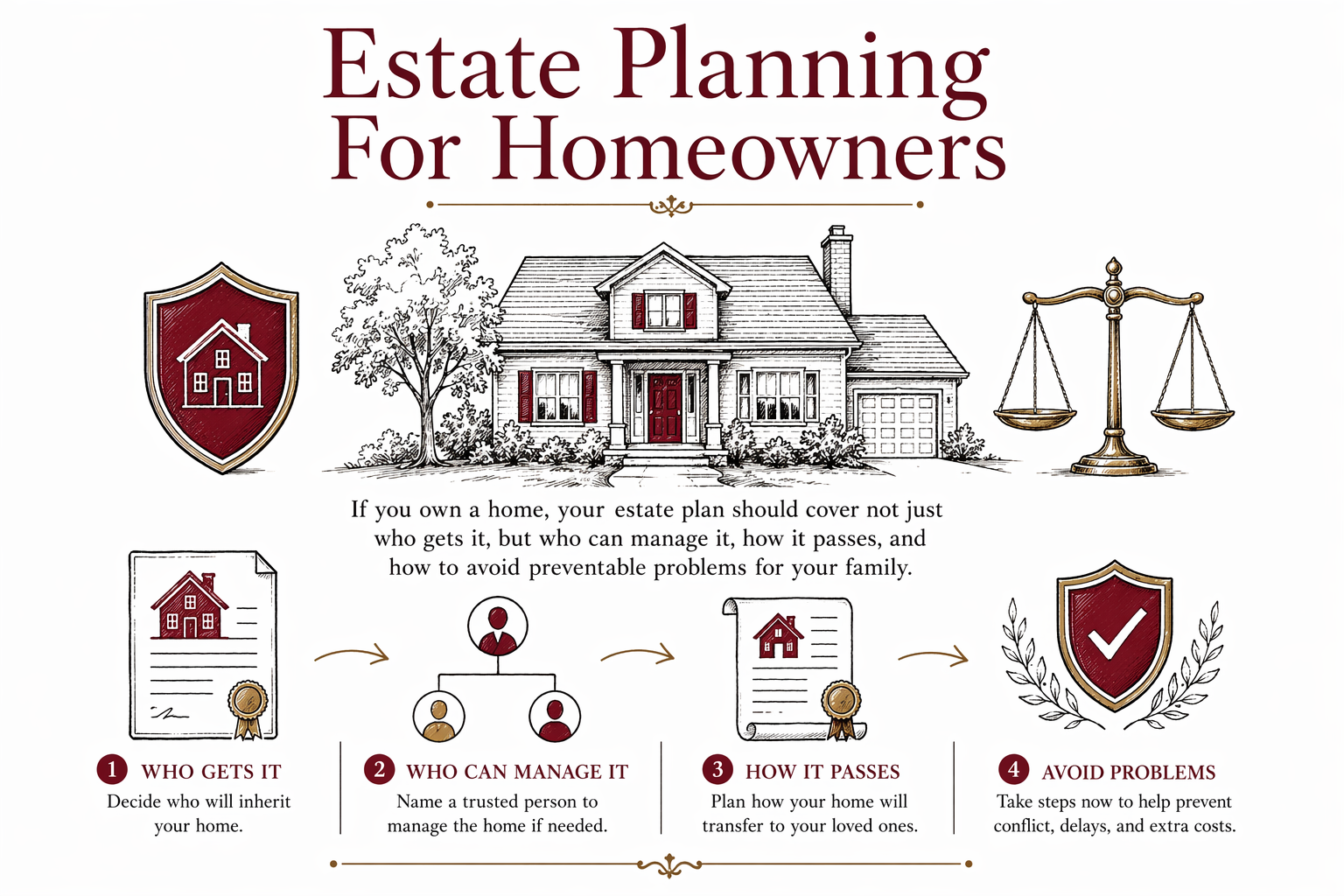
If you own a home, your estate plan should cover not just who gets it, but who can manage it, how it passes, and how to avoid preventable problems for your family.
Common questions
If I have a will, does that mean my family avoids probate for the house?
Usually not. In many states, a will says who should inherit, but the home may still go through probate unless another legal tool applies, such as certain joint ownership rules, a trust, or a state-specific deed option.
Do homeowners always need a living trust?
No. Some homeowners do well with a will-based plan, while others benefit from a trust. It depends on your state, how the home is titled, whether you own property in more than one state, and your goals for probate, privacy, and management during incapacity.
What if I own the home with my spouse?
That may change what happens at death, but the answer depends on exactly how the deed is titled and your state's law. Do not assume the home passes the way you want without having the deed and your estate plan reviewed together.
Can I use an online form for my house and estate plan?
Be careful. DIY forms often miss state-specific signing rules, deed issues, or trust funding steps. A document that looks complete can still fail when your family needs it most.
How often should I update my estate plan as a homeowner?
Review it after major life events and every few years. Buying or selling a home, moving to a new state, marriage, divorce, a new child, or a death in the family are all good reasons to check whether your documents still fit.
How does WillArbor help?
WillArbor is a free matching service, not a law firm and not your lawyer. We provide general education and can help connect you with a licensed estate planning attorney in your state so you can compare options and decide who to hire.
Related help
The difference between a will and a living trust, when each makes sense, and why many families use both.
Open → How to Avoid ProbatePlain-language ways families reduce or avoid probate — trusts, beneficiary designations, and joint ownership.
Open → What Happens If You Die Without a WillIntestacy explained: how your state decides who inherits when there is no will — and why that may not match your wishes.
Open →