Your situation
Estate Planning When You Just Got Married
Getting married is a good time to put your plans in writing, even if you do not own much yet. The right documents can help protect your spouse, name decision-makers, and reduce confusion later.
Why marriage changes your estate plan
A wedding does not automatically solve estate planning. In many states, marriage can change some rights, but it does not replace a will, a trust, or signed health and money decisions.
If you are newly married, this is a good time to think about who should inherit, who can speak for you if you are sick or injured, and who should handle things if one of you dies. State law controls many of these details, and the rules vary a lot from state to state.
A licensed estate planning attorney in your state can explain what your marriage changes and what still needs to be put in place. WillArbor is a free matching service, not a law firm, not a lawyer, and it does not draft documents or create an attorney-client relationship.
Documents many newlyweds should review
Most newly married couples should at least ask about these basics:
- A will, to say who inherits and who should be in charge of the estate.
- A durable power of attorney, so someone can help with money matters if you cannot.
- An advance directive or living will, to set out health care wishes.
- A health care proxy or medical power of attorney, so someone can speak with doctors.
- A trust, if you want privacy, easier management of property, or help avoiding probate.
You may also need to update beneficiary forms on life insurance, retirement accounts, and similar assets. Those forms can override a will in many cases, so they matter a lot.
Common mistakes right after a wedding
One common mistake is assuming the marriage certificate is enough. It is not. Another is leaving old beneficiary forms in place after a marriage, especially if a parent, ex-spouse, or former partner is still named.
Other common problems include using DIY forms that do not meet state rules, not signing the documents correctly, or creating a trust and never funding it with the right assets. If you want a guardian plan for future children, a trust, or special instructions for separate property, a lawyer can help you do it carefully.
A newly married couple should also think about what happens if one spouse dies first. Without clear documents, probate can take time and create stress when the family is already grieving.
How to find the right attorney
Look for a licensed estate planning attorney in your state who regularly handles wills, trusts, powers of attorney, and probate. It is reasonable to ask whether they are licensed in your state, how they charge, and whether they offer a flat fee.
Most estate planning is quoted as a flat fee, not hourly. The cost depends on how many documents you need, whether you want a trust, how complex your family or property situation is, and your state. As a general educational range, a simple will-based plan may sometimes be a few hundred to around $1,500, while a trust-based plan is often higher, sometimes around $1,500 to $5,000 or more. These are not quotes, and the real number depends on the lawyer and the state.
Before any work starts, the family should compare options, choose who to hire, and confirm the flat fee in writing.
What WillArbor does
WillArbor helps families connect with a licensed estate planning attorney near them. We collect only contact information and planning intent, such as name, phone, optional email, state, what they want to plan, and preferred language.
We do not ask for asset values, account numbers, SSNs, or document contents. We do not charge the family. Participating attorneys pay a flat fee to take part, but the service is always free for the family.
If you just got married and want to make sure your plan fits your new life, you can start with situations, review services, or get matched with a licensed estate planning attorney.
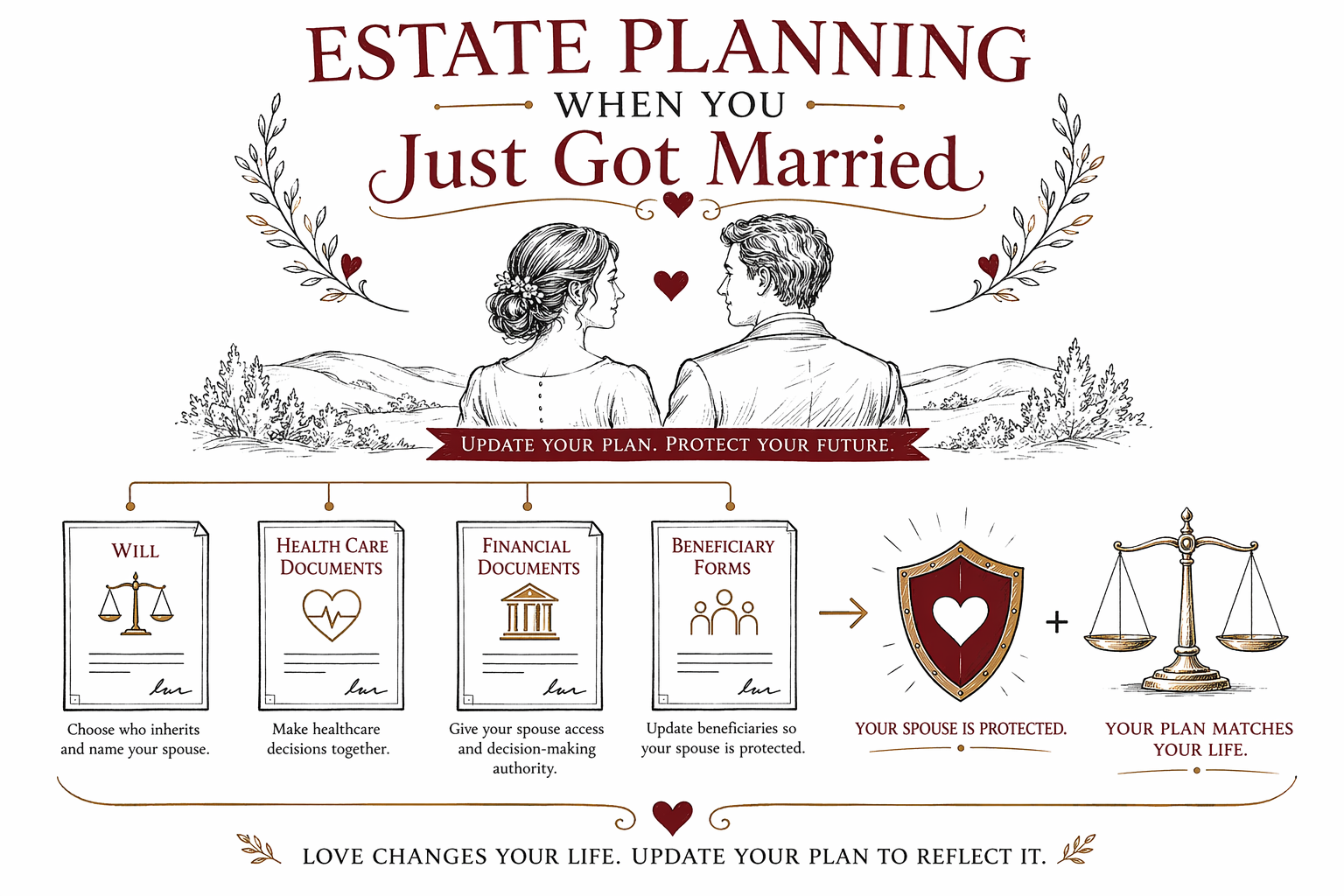
After you get married, it is wise to update your will, health and money documents, and beneficiary forms so your new spouse is protected and your plan matches your life.
Common questions
Do I need a new will after getting married?
Often, yes, or at least a review. Marriage can change how your plan should work, and old documents may not reflect your spouse or your new wishes. A lawyer in your state can tell you what needs to be updated.
Should both spouses have the same documents?
Not always. Many couples coordinate their plans, but each spouse may need separate documents, especially if they have separate property, children from earlier relationships, or different wishes.
Do beneficiary forms matter more than a will?
For many accounts, yes. Beneficiary forms can control where the money goes, even if the will says something different, so they should be checked carefully after marriage.
Can WillArbor tell me what my state law is?
WillArbor can give general education, but it is not a law firm and cannot give legal advice. Estate planning rules vary by state, so a licensed attorney in your state should review your situation.
Related help
Guardians, a will, and a simple plan so your children are cared for if something happens to you.
Open → Estate Planning for HomeownersHow to keep your home out of probate and pass it to the people you choose.
Open → Estate Planning for Blended FamiliesPlans that protect a current spouse and children from a previous relationship — fairly and clearly.
Open →