Your situation
Planning for a Loved One With a Disability
If a loved one lives with a disability, a good plan can protect their future care and help reduce stressful surprises. We’ll explain common tools, key questions, and how to get matched with a licensed attorney near you.
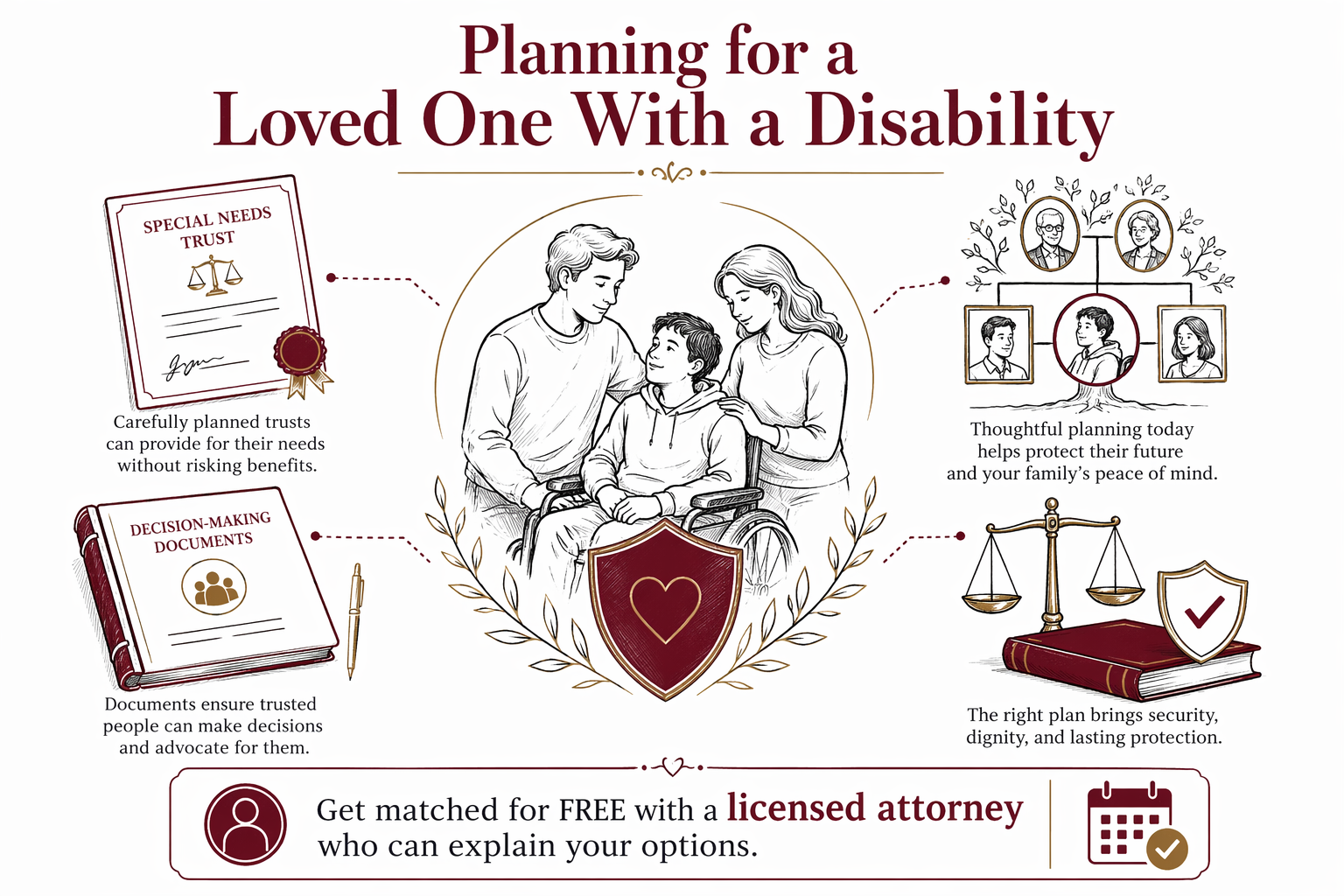
Start with care goals—and the benefits that may matter
When a family member has a disability, estate planning is often less about “who gets what” and more about “who pays for care, and how.” In the U.S., many people rely on public benefits, and planning can need to work around those rules.
This page is general education. State laws and benefit rules change, so your attorney will confirm what fits your situation in your state and for your loved one’s benefits.
WillArbor is a free matching service. We don’t draft documents or provide legal advice, and we’re not a law firm. Our role is to help you connect with a licensed estate planning attorney who can guide you.
Key documents that often matter in disability planning
Different families need different tools, but disability planning commonly involves a few document types.
1) A will and/or a trust: A will explains what happens to your assets after death and can name guardians. A trust can help manage assets in a structured way. Which one is right depends on your goals and your state’s rules.
2) A Special Needs Trust (sometimes called an SNT): In many situations, families use a special needs trust to help provide support for a person with a disability without automatically disrupting certain needs-based benefits. There are different types of special needs trusts, and eligibility details matter.
3) Powers of attorney and advance directives: These can help with medical decisions and financial matters if your loved one (or you, as a caregiver) becomes unable to manage them. Names and requirements vary by state.
4) Guardianship planning (if needed): Some families may need a court process to appoint a guardian for a disabled adult or for a child with special needs. An estate plan and guardianship plan often work together.
Because benefits rules and trust types are easy to get wrong, it’s important to speak with a licensed estate planning attorney experienced in disability planning in your state.
Common pitfalls families want to avoid
Families often do “the right thing,” but still run into problems. Here are a few common ones to watch for:
- Relying on a generic DIY form that doesn’t follow your state’s requirements.
- Creating a trust but not funding it (an “unfunded trust” may not do what you hoped).
- Naming people as beneficiaries in a way that conflicts with benefit goals.
- Forgetting updates after life changes (new address, marriage/divorce, new caregiving needs, updated benefits).
- Assuming that any “trust” automatically works for disability benefits—special needs trusts can be very specific.
If any of these sound familiar, that’s not a failure—it’s a normal sign you’re ready for professional guidance.
What to ask an attorney (and what to bring)
A good first consultation should focus on care goals, family structure, and the practical “who will do what” plan. You can ask questions like:
- “What trust tools do you recommend for my loved one’s disability and benefits situation in our state?”
- “How do we protect benefits while still providing for extras like transportation, therapies, or housing help?”
- “Do we need guardianship, or can we handle decisions with powers of attorney and advance directives?”
- “Who will manage the plan (trustee/guardian), and what responsibilities are involved?”
- “How will the documents be coordinated—will, trust, POA, and directives?”
What to bring depends on your case. In general, it helps to bring:
- Your loved one’s state of residence
- A list of key people in the family (who may be involved in care)
- Your main care goals (for example, who will make decisions, what kind of support matters)
If you’re new to the U.S. or more comfortable in another language, ask whether the attorney can communicate in your preferred language or work with an interpreter.
If you want a starting point on estate planning basics, you can explore services and our situations hub to find related guides.
What it may cost (flat-fee ranges) and how to stay in control
Cost varies by state and by what you need. Most estate planning work is quoted as a flat fee, not billed by the hour. For disability planning, complexity can increase depending on the number of documents, whether a special needs trust is recommended, and how coordinated the plan needs to be.
General flat-fee ranges you may see (not quotes):
- Basic will + power of attorney/advance directives: often a few hundred to a few thousand dollars
- More involved planning (such as adding a trust and coordination across documents): often in the low thousands to several thousand dollars
- Disability-focused planning involving a special needs trust and related documents: often higher than basic planning, commonly in the several-thousand range
These are rough ranges so you can budget responsibly. The real price depends on the exact documents, the complexity, and your state.
No matter what, stay in control:
- Ask for the flat fee in writing before work starts
- Confirm what’s included (for example, whether document updates or follow-up steps are included)
- Avoid anyone who promises a guaranteed outcome
WillArbor helps you get matched with a licensed estate planning attorney in your state. It’s free for the family—participating attorneys pay a flat fee to take part, and you won’t pay WillArbor or any percentage.
How to get matched with a licensed attorney (free for families)
If you’re planning for a loved one with a disability, it’s smart to find an attorney who understands disability planning and can explain options clearly.
To get started, use get matched. You’ll share contact information and your planning intent (for example: “need help with a special needs trust / incapacity planning / guardianship questions”). We do not ask for asset values, account numbers, Social Security numbers, or sensitive document contents.
After you’re matched, you’ll choose who to contact. Before hiring, you should:
- Confirm the attorney is licensed in your state
- Ask about their experience with disability planning and special needs trusts
- Discuss the flat-fee cost for the documents you need
If you’d like to learn more about the overall process, you can also review services and explore other family situations at situations. Take your time—your goal is a plan that feels understandable, coordinated, and protective.
For a loved one with a disability, the “right” estate plan often includes carefully planned trusts and decision-making documents, so get matched for free with a licensed attorney who can explain options in your state.
Common questions
Do we need a special needs trust for a disabled adult?
Not always. Some families use different tools depending on the person’s disability, age, and whether they receive needs-based benefits. A licensed estate planning attorney in your state can explain which trust type (if any) fits your situation.
Will a trust automatically protect my loved one’s benefits?
No. Benefits rules can depend on the trust’s exact language, funding, and other details. This is why special needs trusts are often specifically drafted and coordinated with benefits considerations—your attorney should review the details for your state.
What’s the difference between guardianship and estate planning documents like a power of attorney?
Guardianship usually involves a court order that gives decision-making authority. Powers of attorney and advance directives can help with decisions if someone becomes unable to act, but they don’t always replace the need for guardianship. Your attorney can tell you what applies in your situation.
Can we do this with DIY forms?
Many DIY forms don’t match the requirements of your state or the specific rules for disability planning. A small drafting or funding mistake can cause big problems later, especially with needs-based benefits. For disability planning, professional legal help is often the safest path.
How do flat-fee costs usually work?
Most estate planning is quoted as a flat fee, but the total depends on which documents you need and how complex the plan is in your state. Ask the attorney for the flat fee in writing before any work starts, and use the rough ranges as budgeting guidance—not as a promise.
Related help
Guardians, a will, and a simple plan so your children are cared for if something happens to you.
Open → Estate Planning for HomeownersHow to keep your home out of probate and pass it to the people you choose.
Open → Estate Planning for Blended FamiliesPlans that protect a current spouse and children from a previous relationship — fairly and clearly.
Open →