Your situation
Estate Planning After a Serious Diagnosis
After a serious diagnosis, estate planning can feel urgent and overwhelming. This page explains what families often set up first, why it matters, and how to get matched with a licensed estate planning attorney—free—for plain-language help.
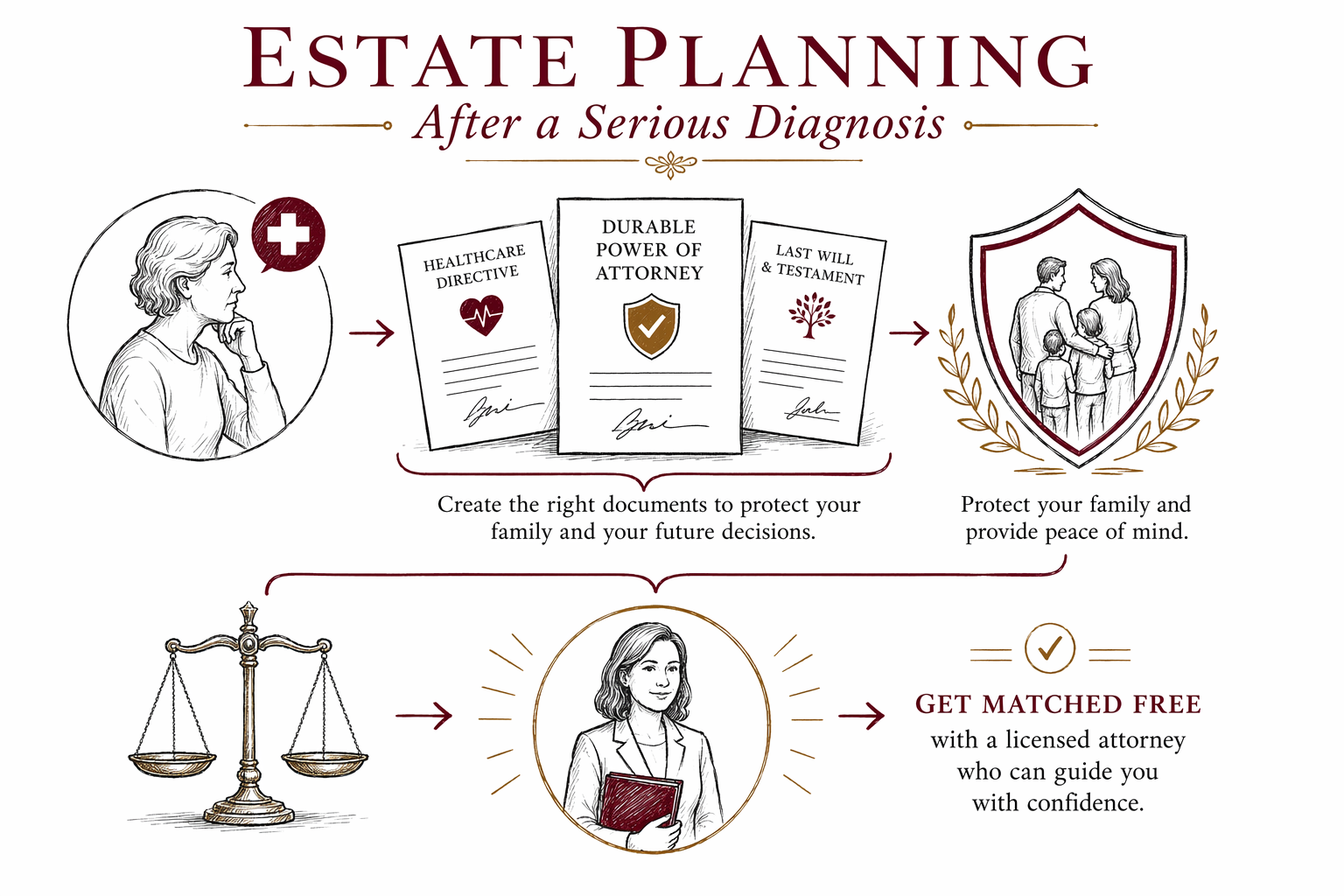
When you’re facing a serious diagnosis, planning can bring peace for your family
A diagnosis can change everything quickly. Estate planning is not about “expecting the worst”—it’s about making sure the people you love are protected and decisions are easier for your family if you can’t speak for yourself later.
WillArbor helps you understand the documents that may be needed and connects you with a licensed estate planning attorney near you. WillArbor is a free matching service, not a law firm and not your lawyer.
Estate planning rules—including timelines and what documents are recognized—vary by state. A licensed estate planning attorney in your state can confirm what applies to you.
Start with the documents that help your family immediately
Families often prioritize documents that (1) direct what happens if someone dies, and (2) handle medical and financial decisions if someone becomes unable to make them.
Common “first steps” include:
- Name a guardian for minor children (if you have kids who would need care)
- Create a will and/or a trust, depending on what fits your situation
- Set up a durable power of attorney for finances
- Set up advance directives (often called a living will and a health care proxy/medical directive)
- Decide who should receive your assets and review beneficiary designations
Will vs. trust (plain English): what’s the difference?
A will is a document that usually takes effect after death. It can name guardians, state who inherits, and tell the court how to handle the estate.
A trust is a legal arrangement where a trustee manages assets according to the trust’s instructions. Trusts can be used to help reduce delays and court involvement for some families, but they don’t automatically solve every situation by themselves.
In many real families, attorneys discuss both—sometimes you’ll use a will, sometimes a trust, and sometimes a combination. The best approach depends on state law, family needs, and how your assets are titled.
Key choices to make now (especially if time feels tight)
When a serious diagnosis affects your day-to-day life, the “who decides” and “who receives” questions become especially important. Your attorney can help you think them through calmly and clearly.
Things many families decide early:
- Who should be your decision-maker for health care if you can’t speak for yourself (and what values or limits matter most)
- Who should manage finances and bills if you can’t (and whether you want broad or limited authority)
- Who should receive inheritances, and how (some families use specific gifts, others use percentages or categories)
- Who should serve as executor (for a will) or trustee (for a trust)
- Who should be the guardian for children, and who would be a backup if needed
Important: beneficiary designations on accounts (like life insurance or retirement accounts) are often separate from a will. If those designations are out of date, it can change who receives assets even if your will says something else.
Avoid common pitfalls that can make an already hard time harder
Estate planning mistakes can lead to delays, conflict, or the wrong people being asked to make decisions. Some common pitfalls families run into include:
- Dying without a will (this is called intestacy) so the state decides who inherits
- Relying on DIY forms that don’t match your state’s rules
- Having a trust that was never properly funded (the trust exists, but assets weren’t titled into it)
- Not updating beneficiary designations after major life changes
- Leaving children without a named guardian
- Choosing decision-makers who aren’t able or willing to serve
Because state rules vary, a licensed estate planning attorney can help you avoid issues that look small now but become big later.
How much does this cost, and how do you find the right attorney?
Many estate planning matters are quoted as a flat fee (not hourly), but the exact cost depends on the state, the documents, and how complex your family situation is. Typical flat-fee ranges can vary widely—for example, some straightforward plans may cost a few thousand dollars, while more involved plans (such as certain trust plans or more complex family situations) may cost more.
These ranges are not quotes. Your attorney should confirm the flat fee in writing before work begins. If someone guarantees outcomes or pressures you to decide immediately, that’s a red flag.
To find a licensed attorney, you can:
1. Tell WillArbor what you want to plan and what language you prefer using the get matched form
2. Choose an attorney to contact and ask questions
3. Confirm the attorney is licensed to practice in your state (and ask how they handle urgent or time-sensitive situations)
4. Review the planned documents and the flat fee in writing before signing anything
For more about what estate planning can include, see services. To browse other family situations, visit situations.
If you’re dealing with a serious diagnosis, the most important next step is setting up documents that protect your family and your future decisions—then getting matched free with a licensed attorney in your state.
Common questions
I’m worried about time. Can estate planning be done quickly after a diagnosis?
Often, yes—many states allow estate planning documents to be prepared and signed while someone is competent. However, the exact timing and what can be completed safely depends on your state’s rules and your medical and capacity situation. A licensed estate planning attorney can guide you based on what’s possible in your state.
Do I need a trust, or is a will enough?
Some families do well with a will, while others benefit from a trust. The right choice depends on state law, how your assets are titled, whether you’re trying to reduce probate for certain assets, and your family needs. An attorney can explain options in plain language for your state.
If I already have documents, should I update them now?
It depends, but many families review documents after serious diagnosis or major life changes. You may need to update decision-makers, guardians, inheritances, or beneficiary designations. A lawyer in your state can help you confirm what should be changed and how.
Will a will stop probate?
A will generally does not prevent probate in the same way a trust might. However, probate rules vary by state and by how assets are owned. An attorney can explain how your specific plan would likely work in your state.
What information should I share with WillArbor?
WillArbor collects contact information and your planning intent (like what you want to set up, your state, and your preferred language). We do not ask for asset values, account numbers, document contents, or sensitive details like SSNs.
How can I be sure I’m hiring a qualified attorney?
Confirm the attorney is licensed to practice in your state and ask about their experience with wills, trusts, powers of attorney, and advance directives. You should also ask for the flat fee and review it in writing before any work starts.
Related help
Guardians, a will, and a simple plan so your children are cared for if something happens to you.
Open → Estate Planning for HomeownersHow to keep your home out of probate and pass it to the people you choose.
Open → Estate Planning for Blended FamiliesPlans that protect a current spouse and children from a previous relationship — fairly and clearly.
Open →