Guides
What is a special needs trust?
A special needs trust is a legal plan that can help someone with a disability pay for “extra” needs while protecting their eligibility for certain public benefits. Rules vary by state—get paired with a licensed estate planning attorney to discuss your situation.
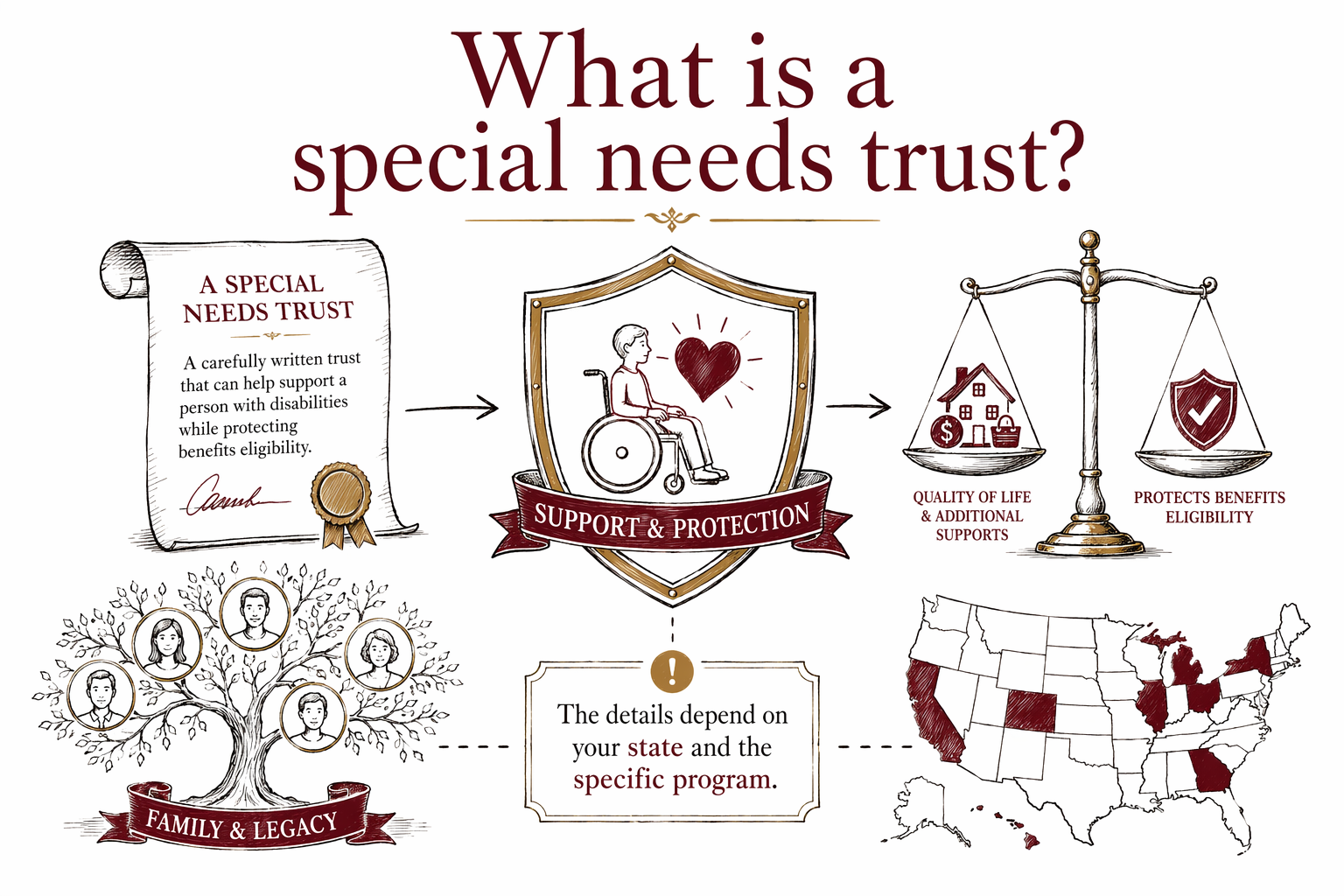
A special needs trust, in plain words
A special needs trust (sometimes called an SNT) is a type of trust created to help pay for certain expenses for a person with disabilities.
The key goal is usually to allow the person to receive support without reducing or risking eligibility for needs-based government benefits (like Medicaid or Supplemental Security Income/SSI), which have strict rules.
Because the rules are very specific, you’ll want to talk with a licensed estate planning attorney in your state—especially if you’re planning now or after a diagnosis.
WillArbor is a FREE matching service. We help families connect with a licensed estate planning attorney near them, but we don’t draft documents or give legal advice.
What a special needs trust can pay for (and what it tries to avoid)
A special needs trust is generally meant for expenses that improve quality of life—things that go beyond basic care that benefits may cover.
Common examples (varies by program and state):
- Therapies and medical-related supports not covered by benefits
- Education, training, or job support
- Housing supports or in-home help when structured appropriately
- Transportation
- Assistive devices or equipment
Special needs trusts try to avoid making payments in ways that could count as “support” or resources under benefit rules. That’s why language in the trust and how bills are paid matters a lot.
For the most accurate guidance, ask an attorney how benefits rules apply in your state and to the specific program(s) you’re concerned about.
Types of special needs trusts (and why the differences matter)
There are a few common kinds of special needs trusts. The “right” one depends on where the money is coming from and the timing (for example, during life vs. after someone passes).
In many discussions, attorneys separate them into two general categories:
- Trusts funded with the beneficiary’s own assets (often called “first-party” trusts)
- Trusts funded with others’ assets (often called “third-party” trusts)
Rules can also differ based on whether the person is a minor, whether the trust is created during life or through an estate plan (like a will), and whether the trust includes required provisions.
Because using the wrong type can create problems later, treat this as a “get it right with a lawyer” topic—not a DIY form project.
Common pitfalls families run into
Special needs planning is an area where small mistakes can cause big consequences. Here are common pitfalls to watch for:
- Dying (or planning) without a clear plan: If there’s no trust structure in place, benefits rules may treat assets differently.
- Using DIY forms that don’t match your state’s requirements: Trust language and administration steps must fit local practice and program rules.
- Setting up a trust but not funding it properly: An “unfunded” plan often won’t protect anything when it’s time to use it.
- Leaving beneficiaries to “receive directly”: Direct inheritance or direct payments can count as resources and affect eligibility.
- Out-of-date information: Benefits rules change, and what worked before may not work the same way today.
These are educational examples, not a complete list. Estate planning law and probate rules vary by state, so confirm details with a licensed estate planning attorney in your state.
How the process usually works (what to ask an attorney)
A good attorney will help you understand (1) the right type of trust, (2) how it should be written, and (3) how it should be administered over time.
When you meet with an attorney, consider asking questions like:
- “Which special needs trust type fits our situation, and why?”
- “How will the trust be funded, and what happens if we change plans later?”
- “What expenses are considered allowable, and who decides?”
- “Who should serve as trustee, and what are the responsibilities?”
- “How might this affect Medicaid/SSI eligibility rules in our state?”
If you also need broader planning (wills, powers of attorney, guardianship planning, or a full estate plan), ask the attorney how the special needs trust fits into the overall strategy.
If you’re not sure where to start, explore estate planning basics or get matched with a licensed attorney.
Cost and next steps (what to expect honestly)
Most estate planning work is quoted as a FLAT FEE, not hourly. The real cost depends on the documents needed, the complexity of the trust, the state, and whether you also need related planning documents (like a will, powers of attorney, or other trust documents).
As a broad range, special needs trust planning is often quoted somewhere around a few thousand dollars, but it can be higher depending on complexity and the number of documents. These ranges are not quotes—your attorney will confirm a specific FLAT FEE in writing after reviewing your situation.
Because rules vary by state, it’s smart to get a licensed estate planning attorney in your state to explain what’s required and what options you have.
WillArbor is FREE for families: share your contact and planning intent, choose a preferred language if you want, and get connected with a licensed estate planning attorney near you through WillArbor services and get-matched.
A special needs trust is a carefully written trust that can help support a person with disabilities while protecting benefits eligibility, but the details depend on your state and the specific program—get matched with a licensed estate planning attorney to discuss your options for free.
Common questions
Is a special needs trust the same as a regular trust?
Not usually. A special needs trust is drafted and administered with disability benefits rules in mind, so the wording and how funds are used can be very different from a standard living trust. The rules vary by state and by the specific benefits involved, so an attorney can help you choose the correct structure.
Can I set up a special needs trust myself with a form?
You can sometimes find templates, but special needs trust rules are highly specific and can be unforgiving. DIY forms may not match your state’s requirements or the benefits program you’re trying to protect. For peace of mind, it’s best to work with a licensed estate planning attorney.
What if the person with a disability already receives government benefits?
That’s exactly when getting advice early matters. Eligibility rules can be affected by how assets are held and paid for, and the trust needs to be structured carefully. Ask an attorney how the trust interacts with the specific benefits and state requirements.
Who manages the special needs trust?
A trustee manages the trust’s administration and decides how payments are handled according to the trust terms. Choosing the right trustee is important—sometimes families use a professional trustee or co-trustee. An attorney can explain the responsibilities in your state.
Related help
The difference between a will and a living trust, when each makes sense, and why many families use both.
Open → How to Avoid ProbatePlain-language ways families reduce or avoid probate — trusts, beneficiary designations, and joint ownership.
Open → What Happens If You Die Without a WillIntestacy explained: how your state decides who inherits when there is no will — and why that may not match your wishes.
Open →