Guides
Beneficiary Designations Explained
Beneficiary designations on accounts (like life insurance, retirement, and some bank/transfer-on-death items) can control where money goes—even if your will says something else. This guide explains how they work and what to check.
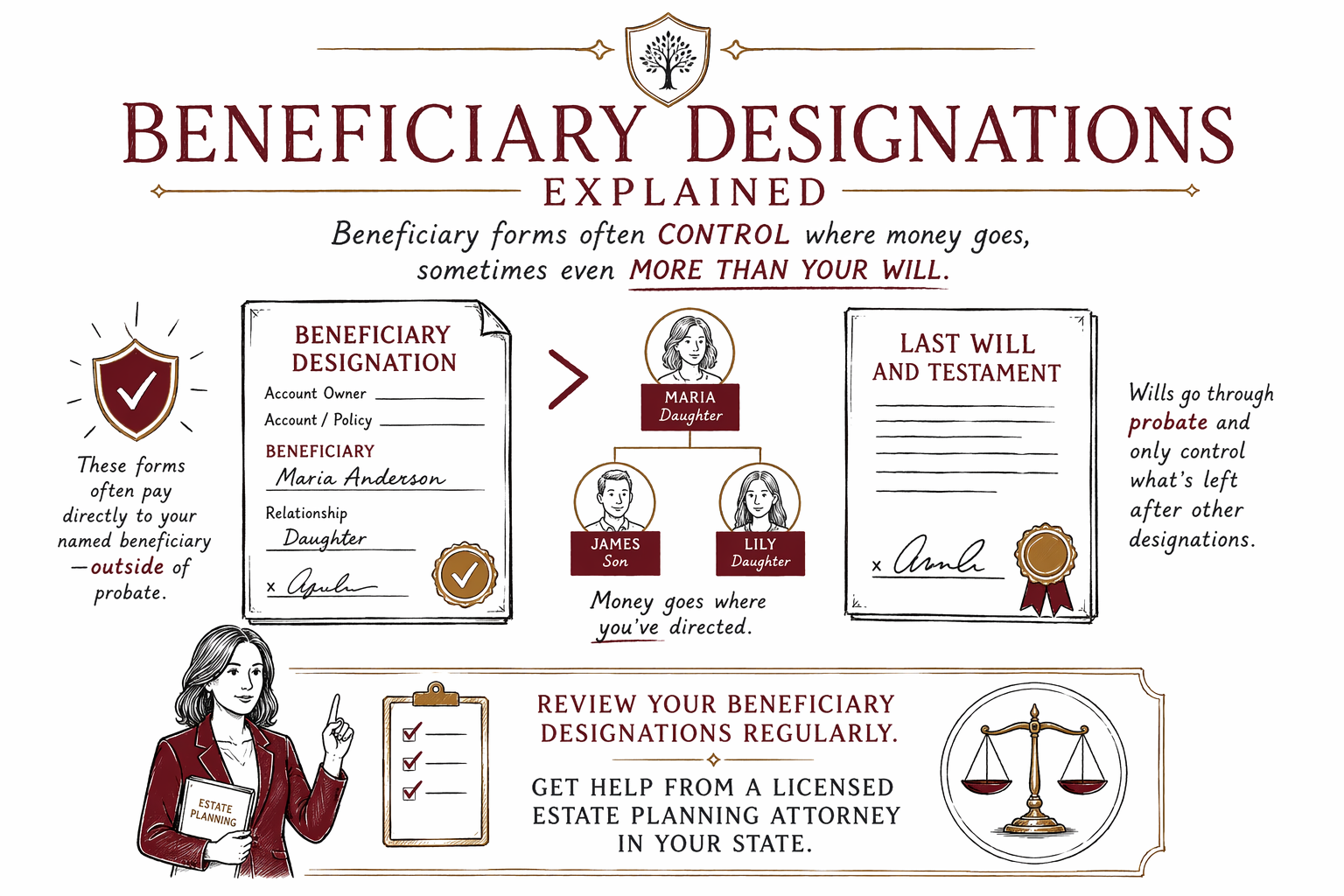
The short answer: beneficiary forms usually control, not your will
In many situations, the people you name on beneficiary forms are who receive the money through that specific account. That means your will may not control those assets, even if it says a different plan.
This is common with accounts such as life insurance and many retirement plans. It can also happen with certain bank accounts or property that uses a “transfer on death” or similar feature.
Estate planning laws and forms can be state-specific and can differ by account type, so the best next step is to review your documents and ask a licensed estate planning attorney in your state what applies to you.
How beneficiary designations fit into a full estate plan
Think of your estate plan as a set of “instructions” for different assets. A will is one set of instructions, but many accounts pass outside the will through beneficiary designations.
A living trust can help with some assets, but beneficiary forms can still matter for accounts that have their own beneficiary process. The goal is consistency—so your overall plan matches what your accounts will do automatically.
If you’re new to the US, this can feel surprising: you may have expected a will to govern everything. In reality, some assets transfer directly based on the forms you filed (and when you filed them).
What to check (and how to find it)
Start with a simple checklist: find every account where you’ve ever had an option to name beneficiaries, and confirm the current names and percentages.
Then look for “life events” that might require updates—marriage, divorce, death of a beneficiary, a beneficiary no longer being the right person to receive, or major account changes.
Because rules vary by state and by account type, you can use this list to guide what to ask an attorney about (without needing to share sensitive details with anyone else).
- Collect the account list (from statements, online portals, or paperwork)
- Locate the beneficiary section for each account
- Record the beneficiary names and the date of the last update you can see
- Compare them to what your will or trust says
- Plan updates with a lawyer if you’re unsure what controls
Common pitfalls that surprise families
Many families run into the same problems. These issues can lead to outcomes they didn’t intend—confusion, delays, and sometimes family conflict.
- Dying without a will (intestacy) can decide who gets what for assets that do go through probate—but it still may not override beneficiary-driven accounts
- Out-of-date beneficiary designations (old spouses, relatives who already passed, or people you no longer want included)
- “DIY” forms that don’t match your state’s requirements or the account’s rules
- A will that names guardians, but no clear plan for how specific assets transfer to the intended people
- Not updating beneficiaries after divorce or remarriage
If you’re worried about your family, you’re not alone—beneficiary review is one of the easiest places to prevent unwanted outcomes. Even small changes can matter.
Why this can be especially important for non-native English speakers and new immigrants
Financial and legal forms often use plain labels like “beneficiary,” but the exact effect can vary. Some accounts follow a form outside the will process.
Also, translations can miss important words such as “primary,” “contingent,” “per stirpes,” or “per capita.” If anything on your forms feels unclear, it’s okay to ask for help before making changes.
A licensed estate planning attorney can explain, in plain terms, which parts of your plan control which assets in your state—so your wishes match what will actually happen.
Next step: review with a licensed attorney (WillArbor can help you find one)
WillArbor is a FREE matching service, not a law firm and not your lawyer. We connect you with a licensed estate planning attorney near you to discuss your situation and your state’s rules.
Estate planning and probate rules vary by state, and beneficiary rules can also vary depending on the account type and how the beneficiary form is structured. That’s why it’s important to confirm details with a licensed attorney in your state.
To get started, get matched and choose your preferred language. You can share your planning intent (for example, “I need to review beneficiary designations and how they interact with my will”)—you don’t need to provide asset values, account numbers, or other sensitive details.
Beneficiary forms often control where money goes, sometimes even more than your will—so review them and get help from a licensed estate planning attorney in your state.
Common questions
If my will says my spouse should inherit, will my spouse definitely receive everything?
Not necessarily. Many account types transfer based on beneficiary forms, which can override instructions in a will. A lawyer in your state can explain which of your assets are controlled by beneficiary designations versus your will.
Do I need to change beneficiary designations after marriage or divorce?
Often, yes. Many people forget to update beneficiaries after major life changes, and that can lead to unintended results. Check beneficiary forms after marriage, divorce, and after anyone named as a beneficiary passes away.
Can I use a trust to “fix” beneficiary problems?
Sometimes, but not always. Trusts and wills control different categories of assets, and beneficiary designations can still govern accounts that pass outside those documents. Your attorney can help you coordinate everything for your specific situation.
What information should I bring to a beneficiary review appointment?
Bring the list of accounts and the current beneficiary information you can access, plus your will/trust documents if you have them. Estate planning rules vary by state, so the attorney may also ask questions about your documents and how you expect assets to transfer.
Related help
The difference between a will and a living trust, when each makes sense, and why many families use both.
Open → How to Avoid ProbatePlain-language ways families reduce or avoid probate — trusts, beneficiary designations, and joint ownership.
Open → What Happens If You Die Without a WillIntestacy explained: how your state decides who inherits when there is no will — and why that may not match your wishes.
Open →