Free guides
Questions to Ask an Estate Planning Attorney
Use this free PDF checklist to prepare for a first conversation with a licensed estate planning attorney. It covers the questions that protect your family—especially around guardians, documents, and the flat-fee cost.
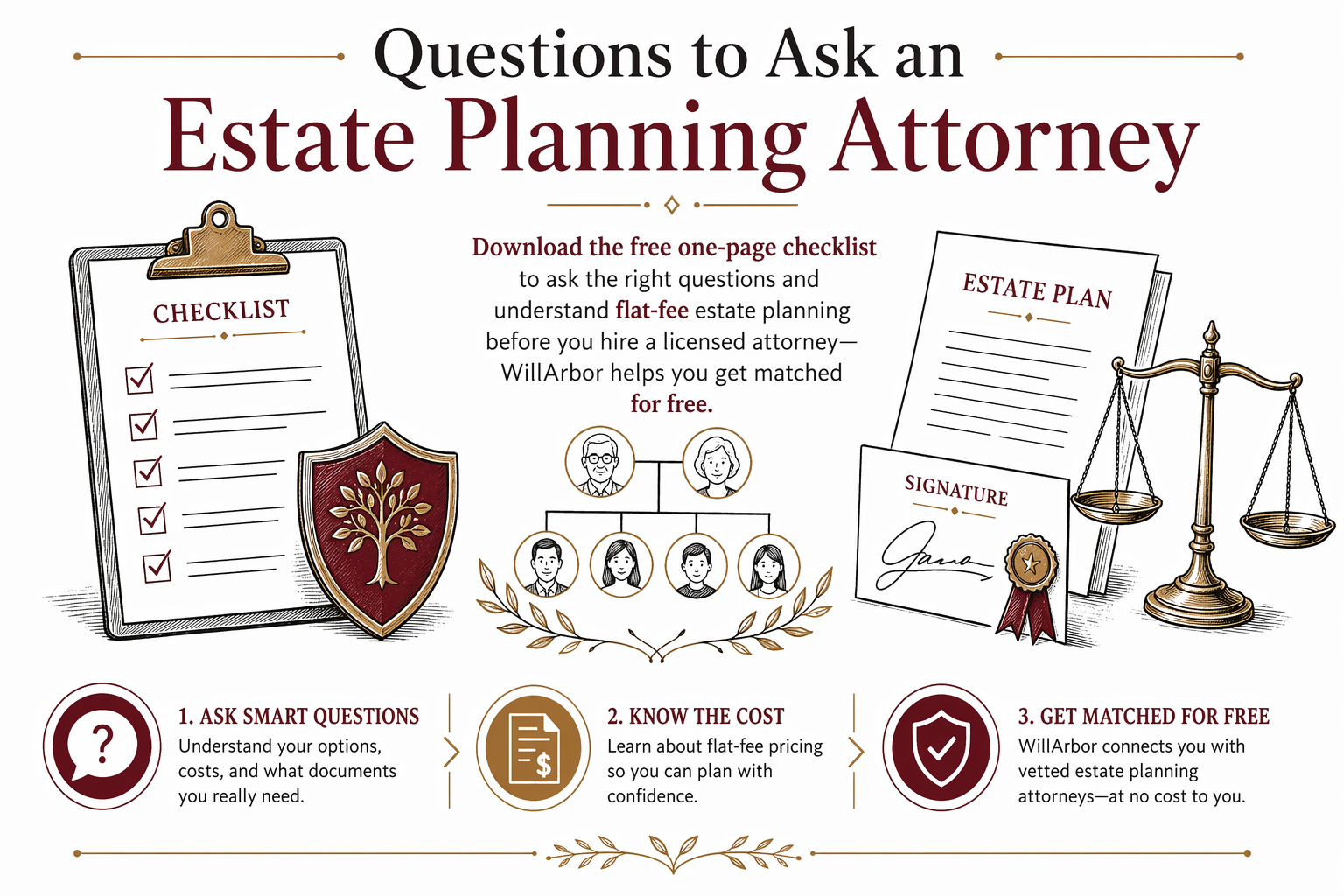
What’s inside the free one-page checklist
This download is a quick list of the questions to bring to your first meeting. It’s meant to help you understand what you need, what the lawyer will do, and what to expect—without any pressure.
The checklist includes questions about wills vs. living trusts, powers of attorney, and advance directives (sometimes called living wills). It also includes practical questions about guardianship for children, updates over time, and how probate works in your state (at a general level).
You’ll also find questions about cost and the “flat fee” process—so you know what to look for and what to confirm in writing before work starts.
If you’re new to the US, the questions are written in plain language so you can focus on your family’s goals.
Who this worksheet helps most
This checklist is for adults who want to protect family members and plan ahead—whether you’re starting from scratch or updating older documents.
It can be especially helpful if any of these are true:
- You want to name a guardian for minor children.
- You’re worried about what happens if a parent or spouse dies.
- You’re considering avoiding probate, or you’ve heard terms like “trust” and want clarity.
- You have documents from another country or old paperwork and aren’t sure if it still fits your state.
Estate planning rules vary by state and can change over time. This resource is general education, not legal advice—your best answers will come from a licensed estate planning attorney in your state.
How to use it before you meet an attorney
Use the checklist as your “meeting plan.” Don’t worry if you don’t know everything—your attorney should help you understand the options.
Before your appointment:
1. Download the free PDF and skim it once.
2. Mark the questions you’re most worried about (for example: guardians, inheritance, or what happens at death).
3. Write down your goals in a sentence or two (for example: “We want one clear plan for our children,” or “We want to reduce confusion for our family”).
4. Bring the checklist to your meeting so you can ask follow-up questions.
During the meeting, ask any “why” questions you need. Good questions include what documents are needed for your specific situation and how they work together.
After the meeting, use the answers to compare options and confirm the flat fee in writing before any work starts. If anything is unclear, ask again—calmly and directly.
Questions about flat fees (how to keep it clear)
Many estate planning attorneys quote work as a flat fee (not hourly). That flat fee depends on what you’re asking them to prepare and how complex your plan is.
Typical cost ranges in the US can vary widely, but common flat-fee ranges for individual planning often fall around:
- Basic will (sometimes with related documents): roughly $300–$1,500
- More complete will + powers of attorney + advance directive: roughly $800–$2,500
- Living trust planning (often with a trust + pour-over will + related documents): roughly $1,500–$4,500+
These are broad ranges, not quotes. The real number depends on your state, the documents you choose, and details like whether you need planning for children, whether there’s more than one family situation, and how much coordination is required.
Important: WillArbor is free for the family and does not take a percentage of attorney fees. If fee questions come up, the key is that you confirm the attorney’s flat fee in writing before any work begins.
Avoid common planning mistakes before you sign anything
A checklist can help you avoid avoidable mistakes. Here are a few common ones to watch for:
- Dying without a will (often called “intestacy”), which can send your estate through default state rules.
- Out-of-date beneficiary designations that don’t match your plan.
- DIY forms that fail in your state or don’t match your real goals.
- A living trust that isn’t “funded” or coordinated properly—meaning the trust may not work the way people expect.
- No named guardian for children, or a guardian plan that hasn’t been updated as your family changes.
An attorney can explain what matters in your state and what doesn’t. Use the checklist to ask how they make sure your plan is consistent and current.
Remember: this page provides general education only. Estate planning is state-specific, and you should rely on a licensed attorney for your situation.
Ready to get matched with a licensed estate planning attorney?
If you want to talk with a lawyer in your state, WillArbor can help you get connected. This is a FREE matching service—not a law firm and not your attorney.
When you’re matched, you’ll choose who to contact and you stay in control. Before any legal work starts, confirm the flat fee and the scope of documents in writing.
To explore options and learn more, you can also visit:
- Services overview
- Estate planning guides
- Get matched
Start with the questions in the free PDF, then get matched—free—for a licensed estate planning attorney who can answer your questions in your state and preferred language.
Download the free one-page checklist to ask the right questions and understand flat-fee estate planning before you hire a licensed attorney—WillArbor helps you get matched for free.
Common questions
Is WillArbor a law firm or will the PDF create legal documents for me?
No. WillArbor is a FREE matching service, not a law firm and not a lawyer. The PDF is a planning checklist meant to help you prepare questions; it does not draft or file documents.
What does “flat fee” mean for estate planning?
A flat fee usually means the attorney quotes a set price for specific documents and work—not an hourly rate. The exact cost depends on your state, the documents needed, and how complex your situation is, so ranges are not quotes.
Do I need a will, a trust, or both?
Sometimes people need only a will, but many families consider a living trust plus related documents. The right answer depends on your state rules, your goals, and how you want your plan to work after death—an attorney can explain options.
What should I bring to my first meeting?
Bring your downloaded checklist, your main goals for your family, and a list of questions. You should avoid sharing sensitive details unless your attorney specifically asks for them.
Can the same plan work in every state?
Not usually. Estate planning and probate rules vary by state and can change over time. A licensed attorney in your state is the best source for guidance about what your plan should include.
Related help
A free, printable checklist of the documents and decisions to cover before you meet an attorney.
Open → Will vs. Trust Decision WorksheetA free worksheet to help you weigh whether a will, a trust, or both fit your family.
Open → The Executor's Duties GuideA free plain-language guide to what an executor actually has to do.
Open →