Guides
What is an estate?
An estate is the property, money, and other things a person leaves behind after death. In estate planning, it also means the legal process of deciding who gets what and who handles the paperwork.
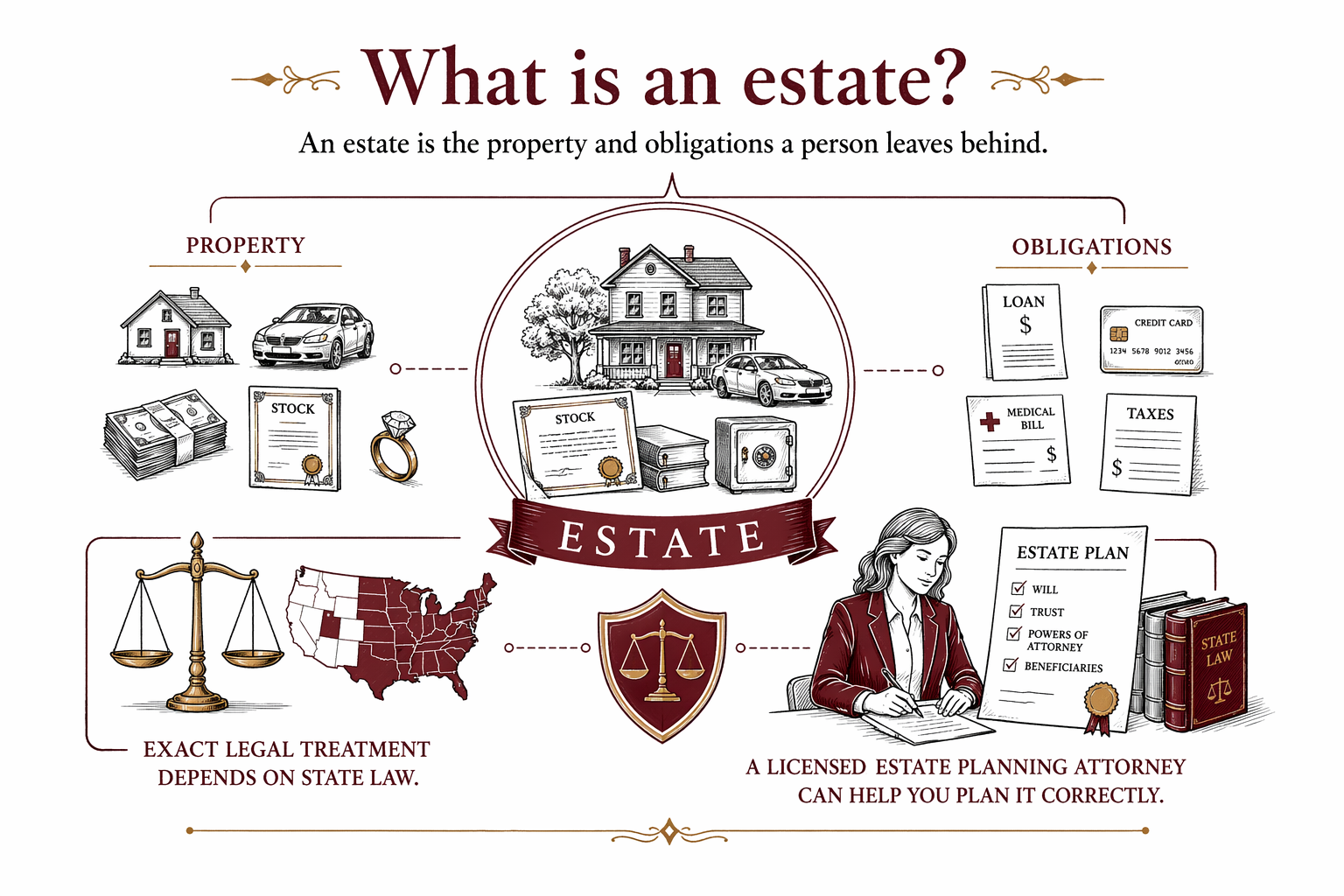
What an estate means in plain English
In everyday words, your estate is everything you own that may need to be passed on when you die. That can include a house, car, bank accounts, retirement accounts, personal belongings, and sometimes debts and final bills.
People also use the word estate to mean the legal “estate” that exists after someone dies. That is the set of assets and obligations the court, heirs, and personal representative may deal with. What counts as part of the estate can vary by state and by the type of asset.
This is one reason families often ask a licensed estate planning attorney for help. A lawyer in your state can explain what will go through probate, what may pass outside probate, and what documents can help your family avoid confusion later.
What usually is part of an estate
Usually, an estate may include:
- A home or other real estate
- Bank accounts in one person’s name
- Vehicles
- Personal items like furniture, jewelry, and family keepsakes
- Business interests
- Some debts and bills owed at death
Some things may pass outside the estate, depending on how they are titled or named. For example, life insurance, retirement accounts, and jointly owned property may transfer by beneficiary designation or ownership rules. State law controls many of these details, so the answer is not the same everywhere.
Why the word matters for wills, trusts, and probate
The word estate comes up because a will usually says who should receive property from the estate and who should serve as guardian for minor children. A trust may hold assets so they do not have to go through probate in the same way, but only if it is properly set up and funded.
A common pitfall is having a trust but never moving property into it. That is called an unfunded trust, and it can leave families with delays and extra steps. Other common problems are dying without a will, forgetting to update beneficiary forms, or using DIY forms that do not meet your state’s rules.
If you are helping a parent, spouse, or relative, the main question is often not just “What is an estate?” but “Which assets are controlled by a will, which by a trust, and which by beneficiary forms?”
What happens to an estate after death
After a death, the estate may need to be administered. In many states, that means someone collects information, pays valid debts and final expenses, and transfers property to the right people. If there is a will, the named personal representative usually helps carry it out. If there is no will, state intestacy rules decide who inherits.
The process is called probate when court oversight is involved. Probate can be simple or more complicated, depending on the state, the size and type of estate, whether there is a valid will, and whether the family agrees about what should happen. There is no single national rule.
If you are unsure what your family needs, start by getting a state-specific explanation from a licensed estate planning attorney. WillArbor is a free matching service, not a law firm, and it does not draft documents or create an attorney-client relationship.
How to get practical help without guessing
You do not need to collect sensitive account details to get started. For matching, only basic contact and planning-intent information is needed, such as name, phone, optional email, state, what you want to plan, and preferred language.
A simple next step looks like this:
1. Think about your main goal: a will, trust, power of attorney, advance directive, or help after a death.
2. Share your state and preferred language.
3. Compare licensed attorneys and confirm they are in good standing with the state bar.
4. Ask for the flat fee in writing before any work starts.
Most estate planning lawyers quote flat fees, not hourly billing, but the real number depends on the documents, the complexity, and the state. A simple will plan may cost less than a plan with a revocable living trust, guardianship planning, or a larger family situation. Any range is only a general guide, not a quote.
Common family questions to ask an attorney
Before you hire anyone, it helps to ask a few direct questions:
- What documents do I actually need for my situation?
- Does my state require anything special for a valid will or trust?
- Which property would avoid probate, and which would not?
- Do I need to update beneficiary forms too?
- What is your flat fee, and what is included in writing?
This kind of conversation can save time and reduce mistakes. It also helps you stay in control: you compare attorneys, choose who to hire, and decide whether the fee and plan fit your family.
An estate is the property and obligations a person leaves behind, and the exact legal treatment depends on state law, so a licensed estate planning attorney can help you plan it correctly.
Common questions
What is the difference between an estate and a will?
An estate is everything a person leaves behind that may need to be handled after death. A will is one document that says who should receive property from the estate and who should care for minor children, if applicable.
Does a trust mean I do not have an estate?
No. Most people still have an estate. A trust may help certain assets avoid probate, but only if it is set up correctly and funded with the right property.
Do all estates go through probate?
No. Whether probate is needed depends on state law, the type of assets, how they are titled, and whether valid beneficiary designations exist. A local attorney can explain what your state requires.
Can WillArbor tell me exactly what I need?
WillArbor can help match you with a licensed estate planning attorney, but it is not a law firm and does not give legal advice. Rules vary by state, so the right answer should come from an attorney licensed in your state.
Related help
The difference between a will and a living trust, when each makes sense, and why many families use both.
Open → How to Avoid ProbatePlain-language ways families reduce or avoid probate — trusts, beneficiary designations, and joint ownership.
Open → What Happens If You Die Without a WillIntestacy explained: how your state decides who inherits when there is no will — and why that may not match your wishes.
Open →