Guides
What does an estate planning attorney do?
An estate planning attorney helps you make a plan for who handles your affairs, who inherits, and what happens if you become sick or die. They also help your family avoid common mistakes, but the rules vary by state.
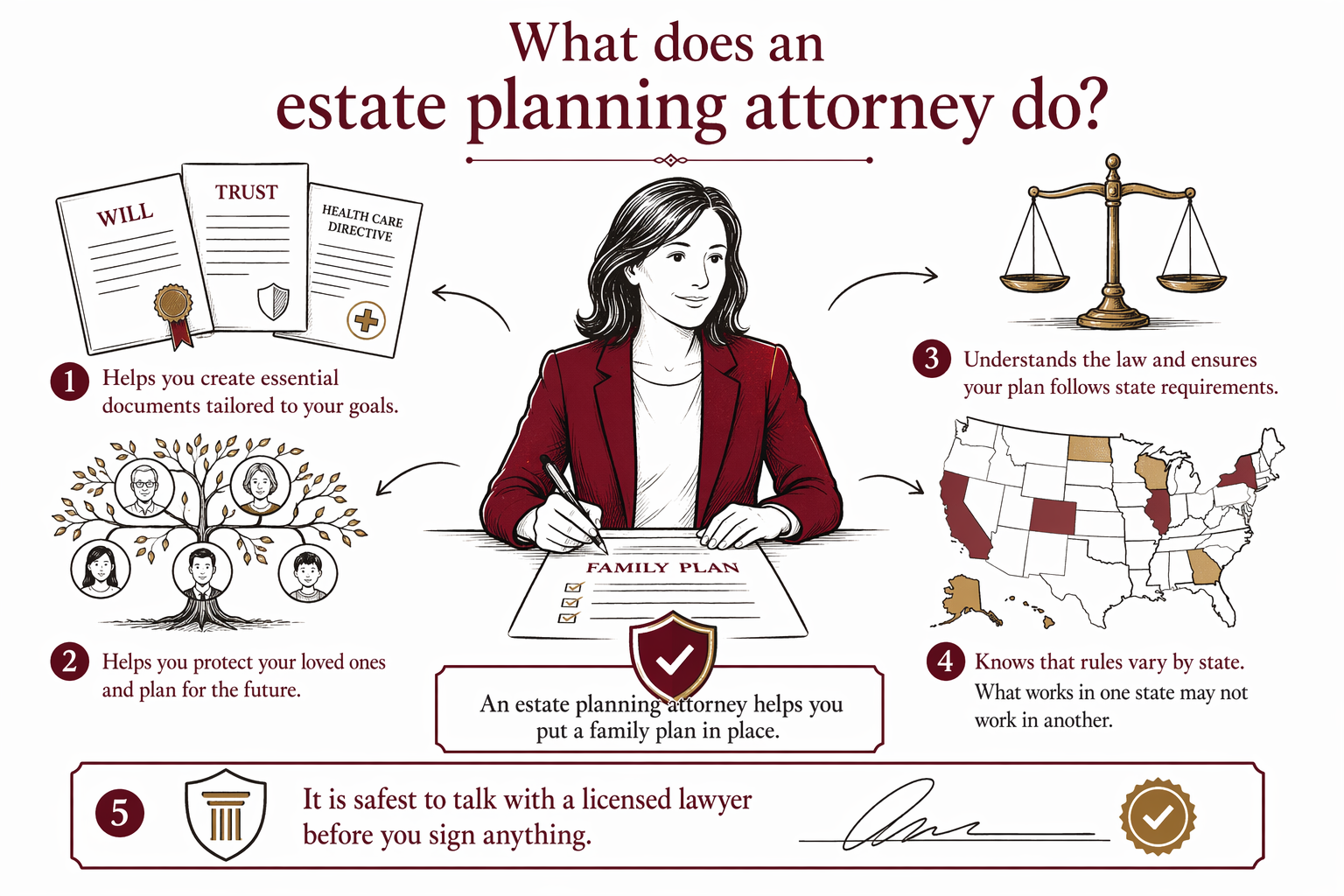
What an estate planning attorney does
An estate planning attorney helps you put your wishes into legal documents that fit your state’s rules. That may include a will, a living trust, a power of attorney, and an advance directive or living will.
They also help you think through practical family questions: Who should care for minor children? Who should manage money if you cannot? Who should receive your home, bank accounts, or other property after your death?
A good attorney explains the choices in plain words, helps you compare options, and makes sure the documents are signed and witnessed the right way for your state. WillArbor is a free matching service, not a law firm and not your lawyer, so we do not draft documents or give legal advice.
Why families hire one
Many families look for help after a life change: marriage, divorce, a new baby, buying a home, moving to a new state, starting a business, or caring for aging parents. Others want to prevent probate, name guardians, or make things simpler for the people they love.
An attorney can help you avoid common problems like dying without a will (intestacy), using out-of-date beneficiary forms, signing DIY forms that are not valid in your state, or creating a trust and never funding it.
For many people, the goal is not complicated planning. It is a clear, signed plan that matches their family, their language, and their state law.
What they usually help with
Estate planning attorneys often help with:
- wills and who inherits
- living trusts and how property passes
- powers of attorney for money and legal matters
- advance directives / living wills for health care choices
- guardian nominations for minor children
- probate planning and, after a death, probate or estate settlement steps
They may also review beneficiary designations and titles so your plan works in real life, not just on paper. In many cases, the family keeps control: you decide whether to hire the attorney, what to sign, and whether the flat fee makes sense for you.
How the process usually works
- You share basic contact details and your planning intent, such as "I need a will" or "I want to set up a trust."
- You talk with a licensed estate planning attorney in your state.
- The attorney explains your options, asks about your family goals, and gives a flat-fee quote in writing before work starts.
- You review the documents, ask questions, and sign if you decide to move forward.
Estate planning is often quoted as a flat fee, not hourly, but the real number depends on the documents you need, how complex your situation is, and the state you live in. A simple will-based plan may cost less than a trust-based plan with more documents, and probate work after a death can vary widely.
What to look for in an attorney
You do not need the fanciest office. You need a licensed estate planning attorney who practices in your state and can explain things clearly.
Check that the attorney is active and licensed with your state bar. Ask whether the fee is flat, what documents are included, and what happens if you need changes later. Ask how they handle your preferred language if English is not your first language.
WillArbor can help you get matched for free with a licensed estate planning attorney near you. You compare attorneys, choose who to contact, and confirm the fee and scope in writing before any work begins.
Common pitfalls to avoid
Many family problems come from a few preventable mistakes:
- no will, so state intestacy law decides who inherits
- no named guardian for minor children
- beneficiary forms that do not match the rest of the plan
- a trust that is never funded with property
- old documents after marriage, divorce, birth, death, or a move to another state
- DIY forms that are not valid where you live
Because estate planning rules vary by state and change over time, it is wise to have a licensed attorney review your plan, especially if you own a home, have children, have a blended family, or are settling a parent’s estate.
An estate planning attorney helps you put a family plan in place, but the rules vary by state, so it is safest to talk with a licensed lawyer before you sign anything.
Common questions
Do I need an estate planning attorney, or can I use a form online?
Some people start with forms, but forms can fail if they are not valid in your state or do not fit your family situation. A licensed estate planning attorney can help make sure the plan matches state law and your goals.
Is WillArbor a law firm?
No. WillArbor is a free matching service, not a law firm and not your lawyer. We connect families with licensed estate planning attorneys, but we do not draft documents or create an attorney-client relationship.
How much does an estate planning attorney cost?
Most estate planning work is quoted as a flat fee, but the amount depends on the documents, the complexity, and the state. A simple plan may cost less than a trust-based plan, and probate or estate settlement work can vary; ask the attorney for a written flat-fee quote.
What information should I bring to the first conversation?
Usually you only need basic contact details and your planning goals, such as whether you want a will, trust, powers of attorney, or help with probate. You should not need to share account numbers, asset values, SSNs, or other sensitive details just to get matched.
Related help
The difference between a will and a living trust, when each makes sense, and why many families use both.
Open → How to Avoid ProbatePlain-language ways families reduce or avoid probate — trusts, beneficiary designations, and joint ownership.
Open → What Happens If You Die Without a WillIntestacy explained: how your state decides who inherits when there is no will — and why that may not match your wishes.
Open →