How we've helped
A young family sets up a first will and guardians
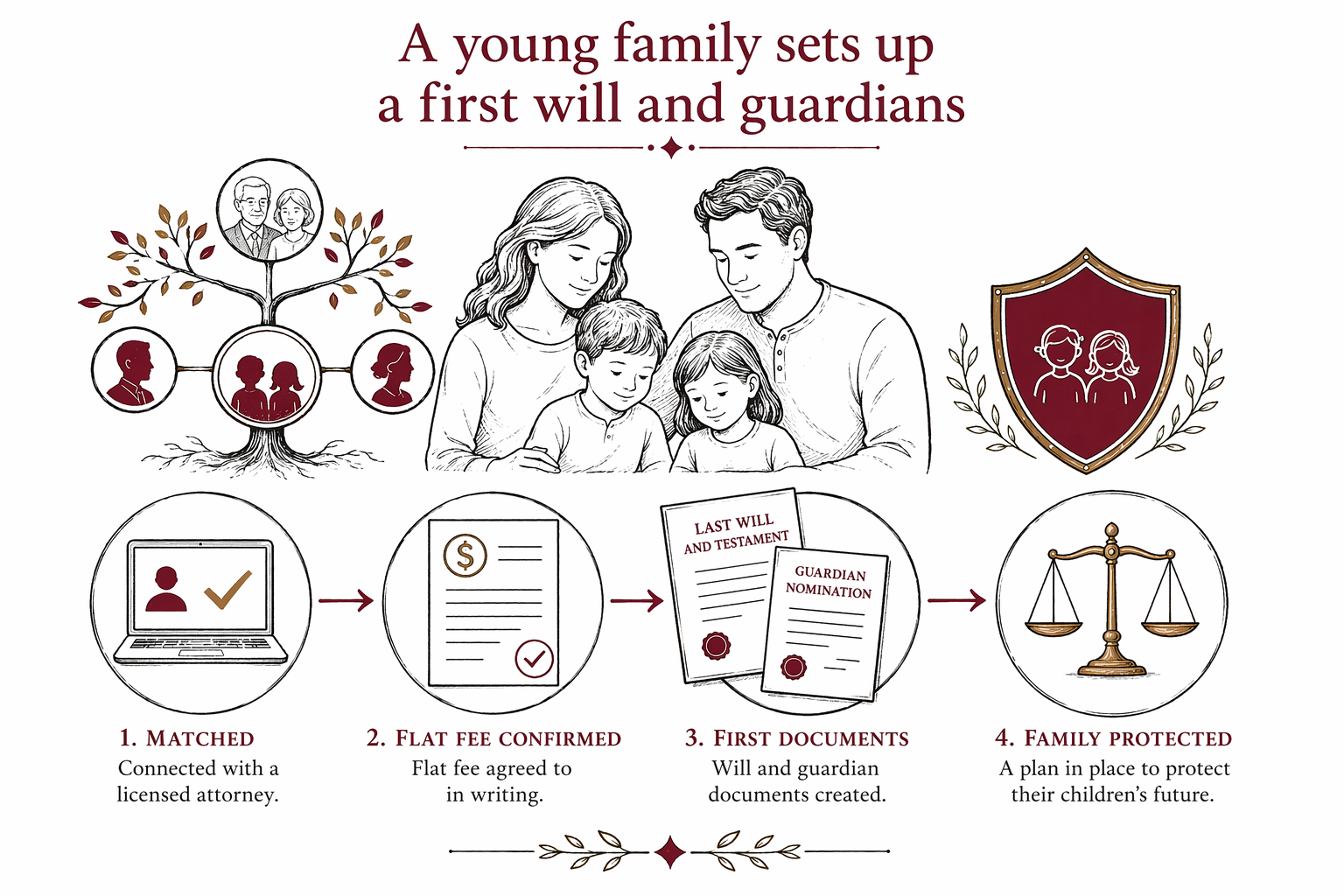
This is an anonymized, illustrative story about how one young family used WillArbor to get matched with a licensed estate planning attorney for a first will and guardian nominations. It’s educational—not a real client case or legal advice.
A quiet worry they couldn’t ignore
They were a young couple with two small children, doing their best to build a safe, stable life. But after a scare—nothing legal, just a “what if?” moment—the fear started to grow: What would happen to their kids if something happened to both parents?
They realized they needed more than good intentions. In the United States, estate planning usually means putting wishes in writing with documents created under their state’s rules—especially decisions like guardianship for children.
This story is illustrative and anonymized. It shows one common path families take, but laws and probate rules vary by state and can change over time.
They figured out what they needed (before calling anyone)
First, they made a simple list of decisions they cared about most:
- Who would care for their two children if both parents couldn’t?
- How would they handle signing authority if one parent became unable to manage decisions?
- How could they reduce confusion for family members after a death?
They also learned that “estate planning” can mean several different document types—wills, powers of attorney, and advance directives (living wills). A will can name guardians, while powers of attorney can help with decisions during life. These are general educational differences, not legal advice.
Because they were new to the US and some terms felt unfamiliar, they wanted a licensed professional to explain what applied in their state and what didn’t.
Using WillArbor to get matched (for free)
Instead of searching endlessly, they used WillArbor to get connected with a licensed estate planning attorney near them. The service is FREE for the family.
They entered only basic contact and planning intent—things like their state and what they wanted to plan (a will and guardian nominations, plus planning documents to help during life). They did not share sensitive details like account numbers, SSNs, or asset values.
They chose a preferred language for communication, because understanding every step mattered to them.
What the attorney helped them confirm
After the match, the attorney discussed their goals in plain language and explained which documents made sense for their situation. For a young family with children, the conversation often centers on:
- Guardian nominations for minor children
- A will that reflects their wishes
- A power of attorney for healthcare or finances (depending on what their state and situation require)
- An advance directive (living will) for healthcare preferences
They were careful about paperwork that looks “simple” online. They understood that DIY forms can be missing required state language, signed incorrectly, or outdated—leading to delays, confusion, or worse outcomes.
They also confirmed that the attorney would explain next steps and help them prepare documents correctly under their state’s rules. WillArbor doesn’t draft documents and doesn’t provide legal advice—it helps families find the right kind of licensed attorney.
Confirming the flat fee before work started
The couple asked about cost early and clearly. In many practices, estate planning is quoted as a flat fee (not hourly). They learned that the real number depends on the documents needed, the complexity of the family’s situation, and the state.
A helpful way they managed expectations: they looked for a flat-fee range and asked what exactly would be included. While ranges vary widely by location and documents, a common pattern families may see for basic planning can fall roughly in the ballpark of:
- First will (with guardian nominations): often around $1,500–$3,500+
- Adding powers of attorney and advance directives: often adds roughly $300–$1,500+
- More complex updates or multiple documents: can be higher
These are broad educational ranges, not quotes. Their final price was confirmed in writing before any work began, which helped them feel confident and in control.
Protecting their wishes—and reducing future stress
By the end of the process, their documents reflected the people they trusted to care for their children and make certain decisions if something happened. More importantly, they had clarity: their family would have guidance rather than guesswork.
They also left with reminders that are easy to overlook:
- Keep beneficiary designations and related choices current when life changes (not only at will time)
- Store documents safely and let a trusted person know where they are
- Revisit plans after major events (new children, moves, changes in relationships)
Even with good planning, no one can control every future outcome. But they could control what was written clearly and legally in their state.
If you’re feeling that same “what if” worry, you don’t have to handle it alone. You can get matched through get-matched with a licensed estate planning attorney, for free, and confirm the flat fee in writing before anything starts.
This anonymized story shows how a young family used WillArbor to get matched with a licensed attorney, confirmed a flat fee in writing, and created first-time documents to protect their kids—without relying on DIY forms.
Common questions
Is WillArbor a law firm or will it draft the will for my family?
No. WillArbor is a FREE matching service, not a law firm, and it does not draft legal documents or provide legal advice. It helps you connect with a licensed estate planning attorney near you.
Do we really need more than a will if we have young children?
Often, families want documents that work both during life (like powers of attorney and advance directives) and after death (like a will and guardian nominations). What you need depends on your state and situation, so a licensed attorney can explain the best set of documents.
What does a flat fee usually cover for first-time estate planning?
Flat-fee packages vary, but they commonly include attorney guidance, drafting and reviewing the agreed documents, and instructions on proper signing and updates. The exact scope should be confirmed in writing before work begins.
Are DIY forms safe if they look “similar” to what an attorney would make?
DIY forms can fail in your state if required language, signatures, or witnessing rules aren’t met. Estate planning laws and probate rules vary by state and change over time, so it’s usually safer to have a licensed attorney review and prepare your documents.
What information will we need to provide to get matched?
WillArbor generally collects contact details and planning intent only (for example, your state and what you want to plan). You should not share sensitive details like account numbers, SSNs, or detailed asset information through a matching form.
Related help
How a single homeowner moved a house into a living trust to keep it out of probate.
Open → Adult children get help settling a parent's estateHow siblings found a probate attorney to settle their late mother's estate without conflict.
Open → A new arrival plans a will in their own languageHow someone new to the US found a bilingual attorney to write a will covering US and overseas wishes.
Open →