Guides
What Estate Planning Really Costs
Most estate planning is priced as a flat fee, not by the hour. Simple plans may cost a few hundred dollars, while more complete or complex plans often cost more depending on the documents, your state, and your situation.
Short answer: what people usually pay
In many parts of the United States, a simple will may cost about $300 to $1,200. A durable power of attorney or health care directive often costs about $100 to $500 each when done alone, though they are often included in a package.
A revocable living trust-based plan often costs about $1,500 to $5,000 or more for an individual or couple. A more complete estate plan for a married couple with a will or trust, powers of attorney, and advance directives may fall anywhere from about $800 to $6,000+, depending on the state and the complexity.
These are general educational ranges, not quotes. Estate planning laws and probate rules vary by state and change over time, so the real cost depends on where you live, what documents you need, and how simple or complicated your family and property situation is.
Flat fee vs hourly billing
Most estate planning attorneys charge a flat fee for common planning work. That means you are quoted one price for a defined set of documents and meetings, instead of watching a clock. For families, this is often easier to understand and budget for.
Hourly billing is more common when the work is unusual, disputed, or open-ended. For example, settling a probate after a death, fixing an old trust, handling family conflict, or planning for a business, blended family, or tax issues may be billed hourly in some states and practices.
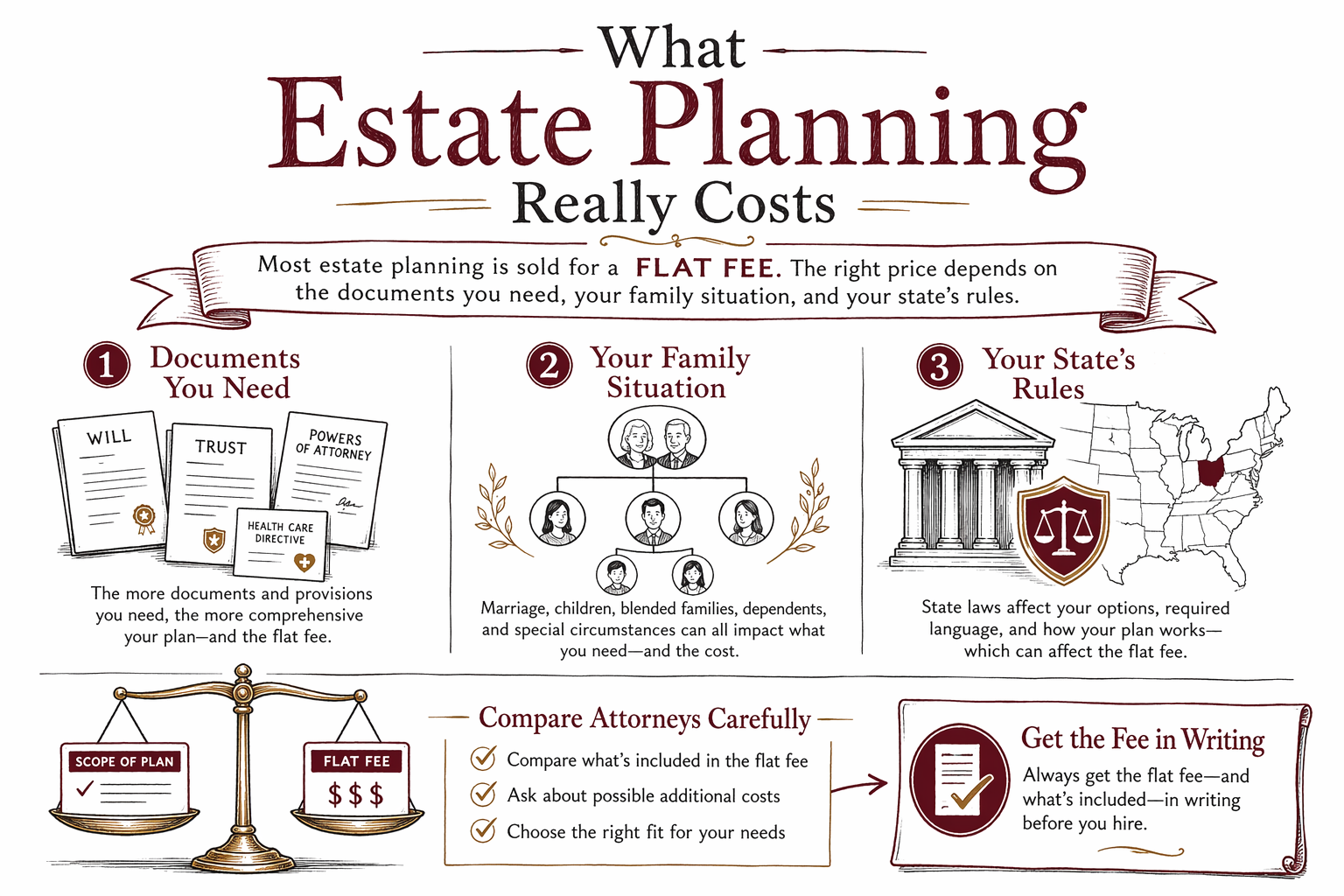
Before any work starts, ask for the flat fee in writing and ask exactly what it includes. The family stays in control: you can compare attorneys, choose who to hire, and decide only after you understand the scope and price.
Typical price ranges by document
These ranges are common examples only. They are not legal advice, not tax or financial advice, and not a promise of what any attorney will charge.
- Simple will: about $300 to $1,200
- Couple's wills: about $600 to $2,000
- Durable financial power of attorney: about $100 to $500
- Health care power of attorney / medical directive: about $100 to $500
- Advance directive or living will: about $100 to $500
- Will-based estate plan package: about $800 to $2,500
- Revocable living trust: about $1,500 to $5,000+
- Trust-based estate plan for a couple: about $2,000 to $6,000+
- Probate after a death: varies widely; may be a flat fee in some cases or hourly in others
If you are not sure what you need, it can help to start with plain-language reading in our guides or learn about common planning options in services. Then speak with a licensed estate planning attorney in your state to confirm what fits your family.
What makes the price go up or down
The biggest cost drivers are usually the number of documents, the complexity of your family, and your state's rules. A single adult with one child and one home may need a much simpler plan than a couple with children from prior relationships, property in more than one state, a family business, or a child with special needs.
Trusts usually cost more than wills because they take more work to draft and explain, and they must also be properly funded. An unfunded trust is a common pitfall: people pay for the trust, but never retitle the right assets into it, so it may not work as intended.
Prices may also rise if you need custom planning, deed work for real estate, business documents, tax-focused planning, or probate help after someone has died. Some attorneys also charge extra for signing ceremonies, notarization, asset transfer help, or later updates, so ask what is included.
How to avoid overpaying — and underbuying
The cheapest option is not always the safest. DIY forms can fail if they do not meet your state's signing rules, witness rules, or required language. A low-cost document that does not work when your family needs it can be far more expensive later.
At the same time, not every family needs a trust. Some people are sold more than they need. A good attorney should explain, in plain language, why they recommend a will-based plan or a trust-based plan, what problem it solves, and what the flat fee includes.
Use this simple checklist when you compare attorneys:
1. Ask whether the quoted price is a flat fee.
2. Ask which documents are included.
3. Ask whether funding help for a trust is included.
4. Ask whether deed preparation, notarization, and follow-up changes cost extra.
5. Ask how they handle beneficiary reviews for retirement accounts and life insurance.
6. Ask whether they are licensed in your state and confirm the bar license yourself.
A few common pitfalls to ask about: dying without a will, which is called intestacy; out-of-date beneficiary designations; no named guardian for minor children; DIY forms that do not work in your state; and trusts that are never funded.
What WillArbor does, and what we do not do
WillArbor is a free matching service for families. We are not a law firm, not a lawyer, and we do not draft documents or create an attorney-client relationship. We provide general educational information and help you connect with a licensed estate planning attorney near you.
It is always free for the family to use WillArbor. If you want, you can get matched and compare attorneys, ask about language support, and confirm the flat fee in writing before you hire anyone.
We only collect contact and planning intent: your name, phone, optional email, state, what you want to plan, and your preferred language. We do not ask for asset values, account numbers, document contents, Social Security numbers, income, or private estate details.
Most estate planning is sold for a flat fee, and the right price depends on the documents you need, your family situation, and your state's rules — so compare attorneys carefully and get the fee in writing.
Common questions
Is estate planning usually a one-time flat fee?
Usually, yes for standard planning. Many attorneys charge a flat fee for a will package or trust package, but unusual or contested work may be billed hourly.
Why is a trust more expensive than a will?
A trust-based plan usually takes more drafting, more explanation, and often more follow-up work to transfer assets correctly. If the trust is not funded, it may not avoid probate the way people expect.
Can I save money by using online forms?
Sometimes the upfront price is lower, but the risk is that the forms may not meet your state's rules or fit your family's needs. A document that fails later can create delay, probate problems, or family conflict.
Do both spouses need separate plans?
Often spouses plan together, but each person usually signs their own documents. The total cost depends on whether the attorney offers a combined flat-fee package and how complex the couple's planning is.
What should I ask before hiring an attorney?
Ask what documents are included, whether the fee is flat, what costs extra, whether trust funding help is included, and whether the attorney is licensed in your state. Confirm the fee and scope in writing before work starts.
Can WillArbor tell me exactly what my plan will cost?
No. WillArbor is a free matching service, not a law firm and not your lawyer, so we do not quote legal fees or give legal advice. We can help you connect with a licensed estate planning attorney so you can compare options and prices.
Related help
The difference between a will and a living trust, when each makes sense, and why many families use both.
Open → How to Avoid ProbatePlain-language ways families reduce or avoid probate — trusts, beneficiary designations, and joint ownership.
Open → What Happens If You Die Without a WillIntestacy explained: how your state decides who inherits when there is no will — and why that may not match your wishes.
Open →