Guides
How to talk to parents about estate planning?
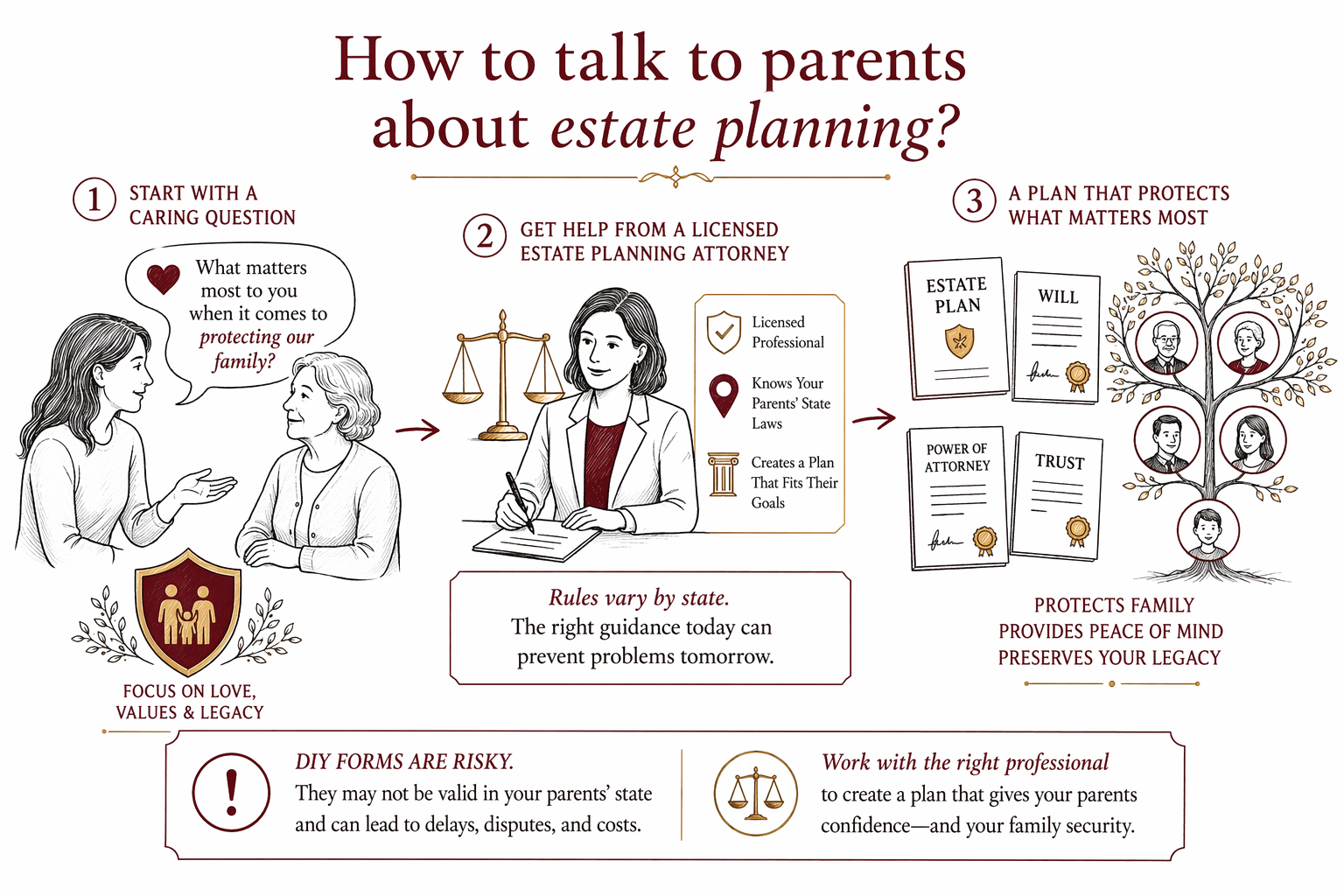
Start by asking your parents what they want for their family—not by talking about death. This guide gives calm, practical words and steps to begin estate planning conversations and find a licensed attorney if needed.
Answer first: what should you say to start the conversation?
A good first step is a caring, practical question: “Mom/Dad, I want to make sure you have a plan so your wishes are clear and our family isn’t stuck later. Would you be open to talking about wills, health decisions, and who should help if you can’t?”
If they shut down, try a softer angle: “I’m not asking you to think about anything scary—just to protect us and make things simpler for everyone.”
Estate planning terms vary, but the goal is consistent: clear instructions for your parents’ wishes, and fewer surprises for their loved ones. Rules for what documents are needed and how probate works vary by state, so it’s smart to involve a licensed estate planning attorney for their state.
WillArbor is a FREE matching service, not a law firm and not your parents’ lawyer. We help you connect with a licensed estate planning attorney near you who can explain the options for your state.
Plan the talk: choose the right time, tone, and “why”
Pick a calm time when everyone is fed, not rushed, and not already stressed—often after a regular family event or during a weekday evening.
Lead with your “why” in plain language. Examples: “I love you and I want to protect our family,” “I don’t want us guessing about your wishes,” or “Planning now can prevent confusion later.”
If your parents are worried about cost, reassure them that estate planning is usually quoted as a FLAT FEE (not hourly). The exact number depends on the documents, your state, and complexity—ranges vary—but you can get clear, written pricing before any work starts.
If your parents are new to the US or prefer another language, you can ask an attorney about language support and communicate in a way that feels respectful and clear.
Use simple questions that don’t trigger fear
Try questions that focus on choices, not on “death.” For example:
- “If something happened and you couldn’t speak for yourself, who should make medical decisions?”
- “If you have minor children or want to name someone important, who should be their guardian?”
- “Who should receive your belongings and family items?”
- “Is there someone you trust to handle your affairs if you’re unable?”
If they worry about “taking care of taxes” or legal details, you can say: “You don’t have to know how it works. A lawyer can explain the options. My job is to help us start.”
You can also offer a next step that feels low-pressure: “Would you be open to a one-time consultation just to understand what you might want?”
What to cover (without jargon): will vs. living trust, plus key documents
Many families start with a will, but a living trust is sometimes part of an estate plan. A will generally explains who should inherit after death and can name guardians for minor children.
A living trust is often used to help manage property during incapacity and can help a family avoid some probate steps—though the details depend on your state. Many plans include a mix of documents.
Common “starter” documents families discuss with an attorney include:
- A will (and possibly updates over time)
- A living trust (optional, depending on the situation)
- Powers of attorney for finances (in case someone can’t manage decisions)
- An advance directive / living will for medical wishes
Rules vary by state for what forms are required, how probate works, and how to handle updates. That’s one reason it’s worth getting matched with a licensed estate planning attorney.
Common pitfalls to mention gently (so they understand the stakes)
If your parents are hesitant, you can share the “what goes wrong” in a calm, non-accusatory way. These are common pitfalls:
- Dying without a will (called “intestacy”), which can send decisions to state default rules instead of your parents’ wishes
- Not naming a guardian for minor children
- Out-of-date documents or inconsistent instructions across documents
- DIY forms that don’t fit your state’s requirements
- A trust that’s not “funded” (meaning the right assets weren’t moved or titled into the trust, depending on the plan)
- Failing to update after major life events (moves, marriage/divorce, births, deaths)
You don’t have to say “You should fix this right away.” You can say: “I learned that planning can prevent unnecessary confusion. Could we at least review what’s needed for your state?”
This is also where an attorney can explain your state’s probate process and how different documents work together for your family’s specific situation.
After the conversation: make a “next step” plan and get matched for free
If they seem open, propose a practical next step instead of asking them to do everything at once. For example: “Let’s find a licensed estate planning attorney for your state, explain your options, and then decide.”
You can use WillArbor to get matched with a licensed estate planning attorney near you. The service is FREE for families. We collect contact and planning intent only (like your state and preferred language)—not sensitive details like account numbers or SSNs.
To get started, visit How to talk to a lawyer / what to expect and then get matched. If you want to compare learning resources and service options, see estate planning services.
Remember: estate planning law and probate vary by state, so your attorney should confirm the approach for your parents’ state. And before signing anything, confirm the attorney’s bar license and confirm the FLAT-FEE price in writing.
Cost basics: what families can expect (and what changes the price)
Estate planning costs vary a lot by state and by what documents your parents need, but many attorneys quote estate plans as FLAT FEES rather than hourly rates.
Typical flat-fee ranges families often see include:
- Simple will-only plan: often around $300–$900
- Will + basic incapacity planning (like powers of attorney and advance directives): often around $800–$1,800
- More complete plans that may include a living trust and additional documents: often around $1,500–$4,000+
- Plans for more complex situations (for example, blended families or additional legal complexity): can be higher
These are broad ranges, not quotes. The final number depends on the specific documents, how complicated the family structure is, the attorney’s review time, and local requirements. A licensed attorney can explain the options and provide a clear written fee before any work starts.
If you’re worried about affordability, ask the attorney about package options or simplified document sets that still meet your parents’ goals—without cutting corners that could be risky in your state.
Start with a caring question about protecting your family, then get help from a licensed estate planning attorney for your parents’ state—rules vary, so don’t rely on DIY forms alone.
Common questions
My parents say “We don’t have enough to need estate planning.” How do I respond?
It’s a common belief, but estate planning is often about decision-making and clarity for your family, not only about “how much.” You can say: “Even with modest assets, having a will, health decisions, and powers of attorney can prevent confusion and delays. Rules and requirements vary by state, so a lawyer can explain what’s appropriate for your situation.”
What if they refuse to talk about it?
You can respect their boundary and still offer a practical, low-pressure approach: ask if they’d consider a general information call with an attorney, or ask one person they trust to bring it up gently. If they continue to refuse, keep the conversation focused on your role—being ready to help once decisions are needed—rather than arguing about details.
Should we bring up probate when we talk to them?
You can mention it in a reassuring way: “Planning can make things simpler for our family after a death.” But keep it calm and brief—avoid scare tactics. Your attorney can explain how probate works in your parents’ state and what documents can reduce uncertainty.
Do we need a will if we already have a trust?
Many families still use multiple documents. In general, estate plans often include a will even when a living trust is part of the plan, but the exact setup depends on the state and how the trust is designed and funded. A licensed estate planning attorney can explain the right combination for your situation.
How do we find a trustworthy attorney?
Look for a licensed estate planning attorney in your parents’ state and confirm the bar license. It also helps to ask about flat-fee packages, what documents are included, and how the process works. WillArbor is free for families and can connect you with options near you; it’s not a law firm and doesn’t draft documents.
Related help
The difference between a will and a living trust, when each makes sense, and why many families use both.
Open → How to Avoid ProbatePlain-language ways families reduce or avoid probate — trusts, beneficiary designations, and joint ownership.
Open → What Happens If You Die Without a WillIntestacy explained: how your state decides who inherits when there is no will — and why that may not match your wishes.
Open →