Guides
How long does probate take?
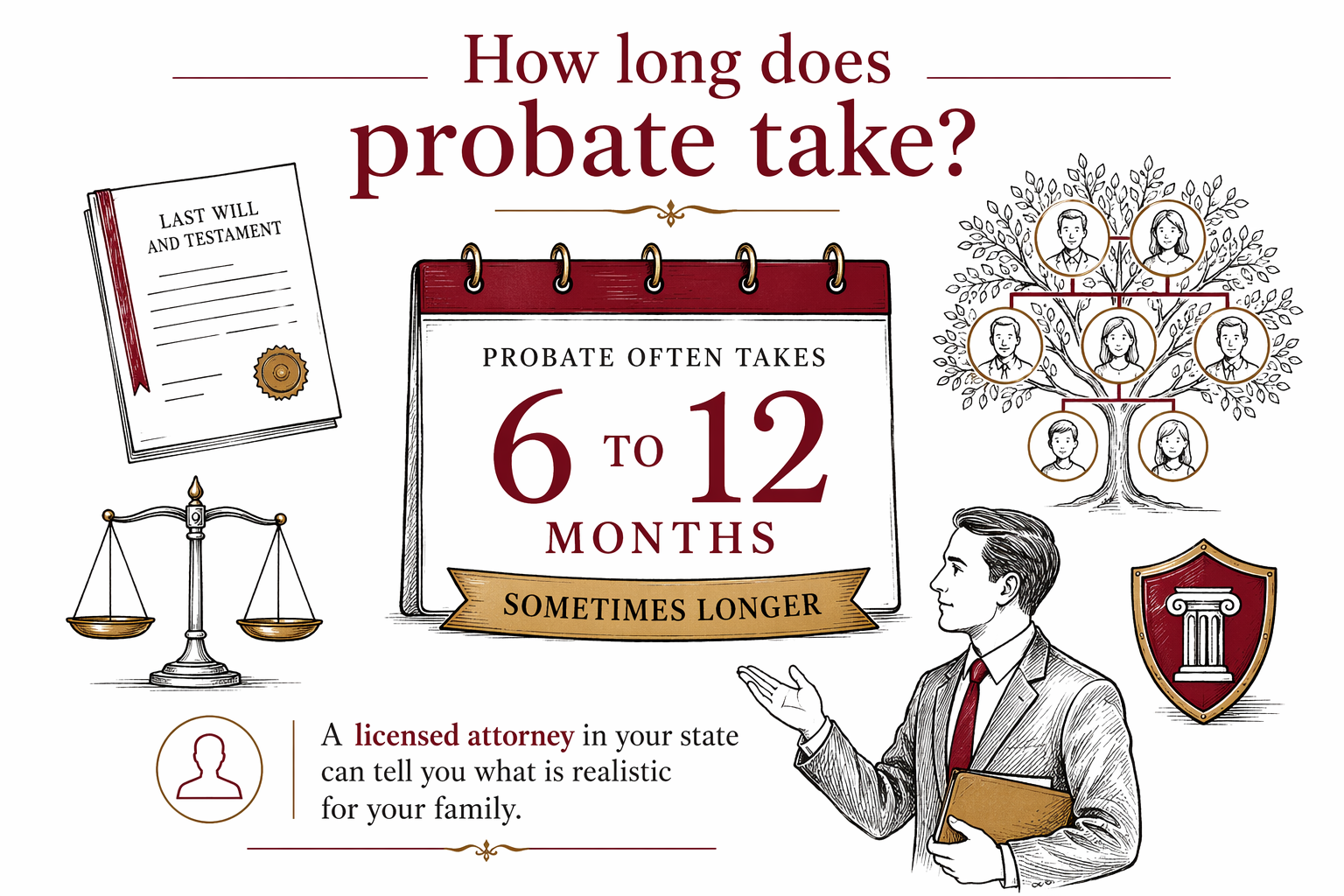
Probate often takes several months, and many estates take about 6 to 12 months. Some finish faster, while others can take a year or more if there are delays, disputes, or complicated property.
The short answer
Probate is the court process used to settle a person's estate after death. In many states, a simple probate may take around 6 to 12 months, but there is no one timeline that fits every family.
Some estates move in a few months if everything is small, organized, and uncontested. Others take much longer — sometimes more than a year — because creditors must be notified, property must be valued or sold, taxes may need attention, and the court may require waiting periods.
The biggest thing to know is this: probate rules vary by state, and timelines do too. This page is general educational information, not legal advice. A licensed estate planning or probate attorney in your state can tell you what is typical where you live.
What makes probate take longer or shorter
A few things usually control the timeline. If the person left a valid will, named the right people, and kept records in order, the process is often smoother. If there is no will, the estate usually follows intestacy rules, which can add confusion and delay.
The kind of property matters too. One bank account and a car is different from a house, business interests, multiple accounts, or property in more than one state. If assets are hard to find, hard to value, or need to be sold, probate often takes longer.
Family conflict can slow everything down. Challenges to the will, questions about who should serve, disagreements among heirs, or missing beneficiaries can stretch the process out significantly. Court backlogs also matter — some counties simply move faster than others.
Common pitfalls include dying without a will, using DIY forms that do not meet your state's rules, and leaving outdated beneficiary designations that do not match the rest of the plan. These problems can create extra steps, confusion, and expense.
- A clear, valid will can help the process go more smoothly
- No will usually means intestacy rules decide who inherits
- Real estate, businesses, and out-of-state property often add time
- Court schedules and family disputes can cause major delays
Typical stages of probate
Although details differ by state, probate usually follows a similar path. The court opens the estate, appoints the personal representative or executor, and gives that person authority to act. Then the estate's property is gathered, notices are sent, debts and bills are reviewed, and taxes may be handled before the remaining property is distributed.
Even when no one is fighting, some of these steps take time by law. Creditors may have a set period to come forward. Financial institutions may require paperwork. Real estate may need to be appraised or sold. Beneficiaries may need to sign documents before the estate can close.
A simple way to think about it is this:
1. File the probate case and ask the court to appoint the executor or administrator.
2. Gather and list estate assets and important records.
3. Notify heirs, beneficiaries, and creditors as required by state law.
4. Pay valid debts, expenses, and any taxes that apply.
5. Distribute what remains and ask the court to close the estate.
If you are just starting to learn, our guides can help you understand the basic terms before you speak with a lawyer.
Can probate be avoided?
Sometimes, yes — but not always. Some assets pass outside probate by beneficiary designation, joint ownership, or a properly funded living trust. Small-estate procedures may also be available in some states when the estate meets certain limits. The exact rules vary by state.
A common misunderstanding is that signing a trust automatically avoids probate. In reality, an unfunded trust may not help much. If property was never retitled into the trust, those assets may still need to go through probate. Out-of-date beneficiary designations can create problems too, especially if they conflict with the person's current wishes.
For families planning ahead, a will, trust, powers of attorney, and advance directive can work together. Which documents make sense depends on the state, the family, and what property the person owns. A licensed estate planning attorney can explain what may help reduce probate in your situation.
What probate usually costs
Probate costs depend on the state, the size and type of the estate, whether there is a dispute, and whether real estate must be sold. Many probate attorneys charge a flat fee for a straightforward estate, while more complex matters may involve phased flat fees or another billing structure depending on the work required.
As a very general educational range, a simpler probate may cost roughly $2,500 to $6,000 in legal fees in some areas, while more involved estates can be much higher. Court costs, filing fees, appraisals, publication costs, accounting help, and other case expenses may be separate. These are not quotes, and the real number depends on the documents, complexity, and the state.
If you are hiring a lawyer, ask for the flat fee or fee structure in writing before work begins. You should also ask what is included, what is not included, and whether extra costs may come up if there is a will contest, missing assets, tax issues, or property that must be sold.
WillArbor is a free matching service for families — not a law firm, not a lawyer, and it does not draft documents or create an attorney-client relationship. If you want help finding someone local, you can get matched with a licensed estate planning attorney and compare your options.
What to do if you are dealing with a possible probate now
If someone has died and you are not sure what to do, try not to panic. Start by gathering the death certificate, any will or trust documents, recent mail, deed records, insurance information, and a basic list of known accounts and debts. You do not need to know every detail on day one.
Then speak with a licensed estate planning or probate attorney in the state where the person lived. Confirm the lawyer's bar license and ask whether probate is required, whether a small-estate option may exist, how long it usually takes in that county, and what the likely flat-fee range is for your case.
When families use WillArbor, we collect contact and planning intent only — such as your name, phone, optional email, state, what you want to plan, and preferred language. We do not ask for asset values, account numbers, document contents, Social Security numbers, income, or other sensitive estate details.
If you are ready to take the next step, you can review our services or get matched for free with a licensed estate planning attorney near you.
Probate often takes 6 to 12 months, sometimes longer, and a licensed attorney in your state can tell you what is realistic for your family.
Common questions
Can probate be finished in 30 days?
Usually no. In most cases, probate takes longer because courts, notice requirements, creditor periods, and paperwork all take time. Some small-estate procedures may move faster, but the rules vary by state.
Does having a will mean there is no probate?
Not necessarily. A will gives instructions and names an executor, but many wills still need to go through probate. Assets with beneficiary designations, joint ownership, or a properly funded trust may pass outside probate.
What if there is no will?
The estate may still go through probate, but state intestacy law usually decides who inherits. This can create extra delay, especially if family members disagree or records are incomplete.
Can a living trust avoid probate?
It can help, but only if it is properly created and funded. An unfunded trust is a common problem — if assets were never moved into the trust, probate may still be needed for those assets.
How do I find the right lawyer for probate or planning ahead?
Look for a licensed estate planning or probate attorney in your state, confirm the bar license, and ask for the fee structure in writing before work starts. WillArbor can help you get matched for free, but it is not a law firm and not your lawyer.
Related help
The difference between a will and a living trust, when each makes sense, and why many families use both.
Open → How to Avoid ProbatePlain-language ways families reduce or avoid probate — trusts, beneficiary designations, and joint ownership.
Open → What Happens If You Die Without a WillIntestacy explained: how your state decides who inherits when there is no will — and why that may not match your wishes.
Open →