Guides
Can a will be contested?
Yes — a will can be contested, which means someone asks a court to reject it or change how it is carried out. Whether that succeeds depends on the facts and the laws in your state.
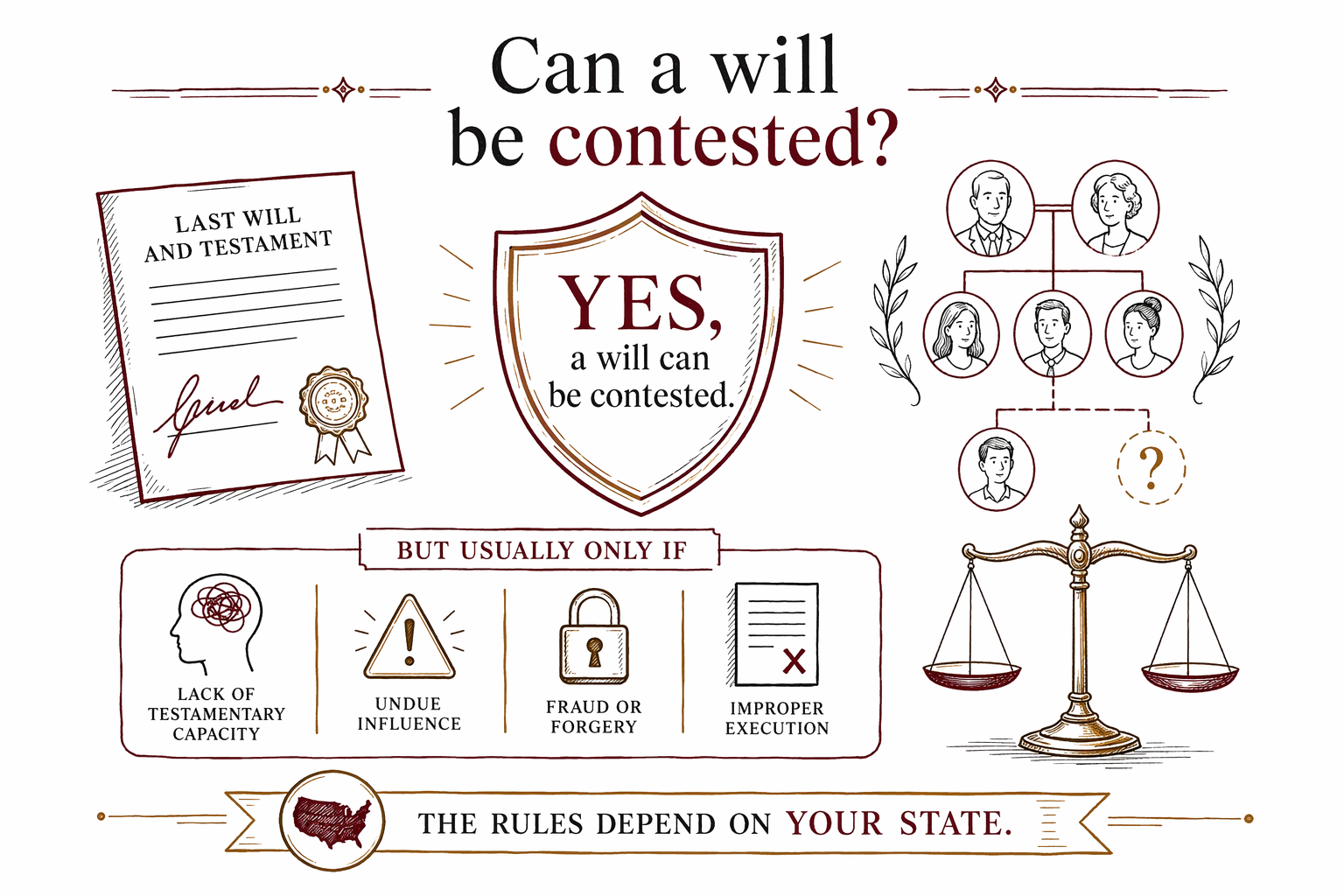
Short answer: yes, but not just because someone is unhappy
A family member can be upset about a will and still have no legal reason to challenge it. In most states, a contest needs a real legal ground, such as claims that the person who made the will lacked mental capacity, was pressured, or did not sign it correctly.
This is one reason clear planning matters. A properly signed will, with the right witnesses and a clear plan, is usually harder to challenge. But the rules vary by state, and probate courts look closely at the facts in each case.
WillArbor is a free matching service, not a law firm and not your lawyer. We do not draft documents or give legal advice, but we can help connect you with a licensed estate planning attorney near you.
Common reasons a will is contested
Here are some of the most common reasons families end up in court:
- The person who made the will may not have understood what they were signing.
- Someone may claim pressure, manipulation, or fraud.
- The will may not have been signed or witnessed correctly under state law.
- A newer will may exist.
- The document may be unclear, incomplete, or inconsistent with other estate documents.
A contest is not the same as a disagreement. People may dislike the outcome, but probate judges usually need evidence, not just hurt feelings.
What makes a contest more likely
Certain situations often lead to disputes. For example, a will made during serious illness, memory problems, isolation from family, or conflict around caregiving may draw more attention. A will that was written with DIY forms but not done correctly for that state can also create problems.
Another common issue is when beneficiary forms were never updated. Even if a will says one thing, retirement accounts, life insurance, and some bank accounts may pass by beneficiary designation instead. That can surprise families and cause conflict.
A trust can also be challenged, especially if it was never funded or if the paperwork is incomplete. And if there is no will at all, state intestacy law decides who inherits, which can create its own disputes.
How to reduce the chance of a challenge
You cannot eliminate every risk, but careful planning can help:
- Work with a licensed estate planning attorney in your state.
- Make sure the will is signed and witnessed correctly.
- Keep the plan consistent across wills, trusts, and beneficiary forms.
- Name a guardian for minor children if you have them.
- Review documents after marriage, divorce, birth, death, or a move to another state.
- Keep records of the planning process, especially if there may be concerns about capacity or family conflict.
Most estate planning attorneys charge a flat fee for common planning work, not hourly billing. The exact amount depends on the documents, the complexity, and the state. For a simple will, a flat fee may be a few hundred dollars to around $1,000 or more; a fuller plan with a trust is often higher. These are only general ranges, not quotes.
What happens if someone contests a will
If a contest is filed, the estate usually goes through the probate court process while the judge reviews the claim. That can take time, add stress, and increase costs for the family.
Sometimes a case settles. Sometimes the court upholds the will. Sometimes the court finds a problem and changes how the estate is handled. The result depends on state law, the document, and the evidence.
If you are dealing with a parent’s estate or planning ahead for your own family, a calm review with a licensed attorney can help you understand what is likely to hold up in your state. You can start with our guides or get matched with a licensed estate planning attorney near you for free.
When to get help soon
It is wise to speak with an attorney soon if there is:
- A blended family
- A family member with special needs
- A recent move to a new state
- A serious illness or memory concern
- A fight over inheritance
- An old will that has not been reviewed in years
WillArbor can help you connect with a licensed estate planning attorney. You stay in control, compare attorneys, and confirm the flat fee in writing before any work starts. We collect only contact and planning intent, such as name, phone, optional email, state, what you want to plan, and preferred language — never account numbers or asset details.
Yes, a will can be contested, but usually only if there is a real legal reason, and the rules depend on your state.
Common questions
Can anyone contest a will?
Usually no. A person generally needs a legal reason and standing, which often means they are directly affected by the will or the estate. State rules vary, so a local attorney can explain who may have the right to challenge it.
Does a contest mean the will is automatically invalid?
No. A contest is only a claim. The court decides whether the will is valid after looking at the law and the evidence.
Can a trust be contested too?
Yes. Trusts can also face challenges, especially if they were not set up correctly or were never funded. The rules vary by state and by document type.
How can I make my will harder to challenge?
Use a licensed estate planning attorney, follow your state’s signing rules, keep beneficiary forms updated, and review the plan after major life changes. That does not guarantee no dispute, but it can reduce risk.
Related help
The difference between a will and a living trust, when each makes sense, and why many families use both.
Open → How to Avoid ProbatePlain-language ways families reduce or avoid probate — trusts, beneficiary designations, and joint ownership.
Open → What Happens If You Die Without a WillIntestacy explained: how your state decides who inherits when there is no will — and why that may not match your wishes.
Open →