Guides
What is elder law?
Elder law is the area of law that helps older adults and their families plan for health, money, care, and decision-making as life changes. It often includes estate planning, long-term care planning, powers of attorney, and help after a crisis.
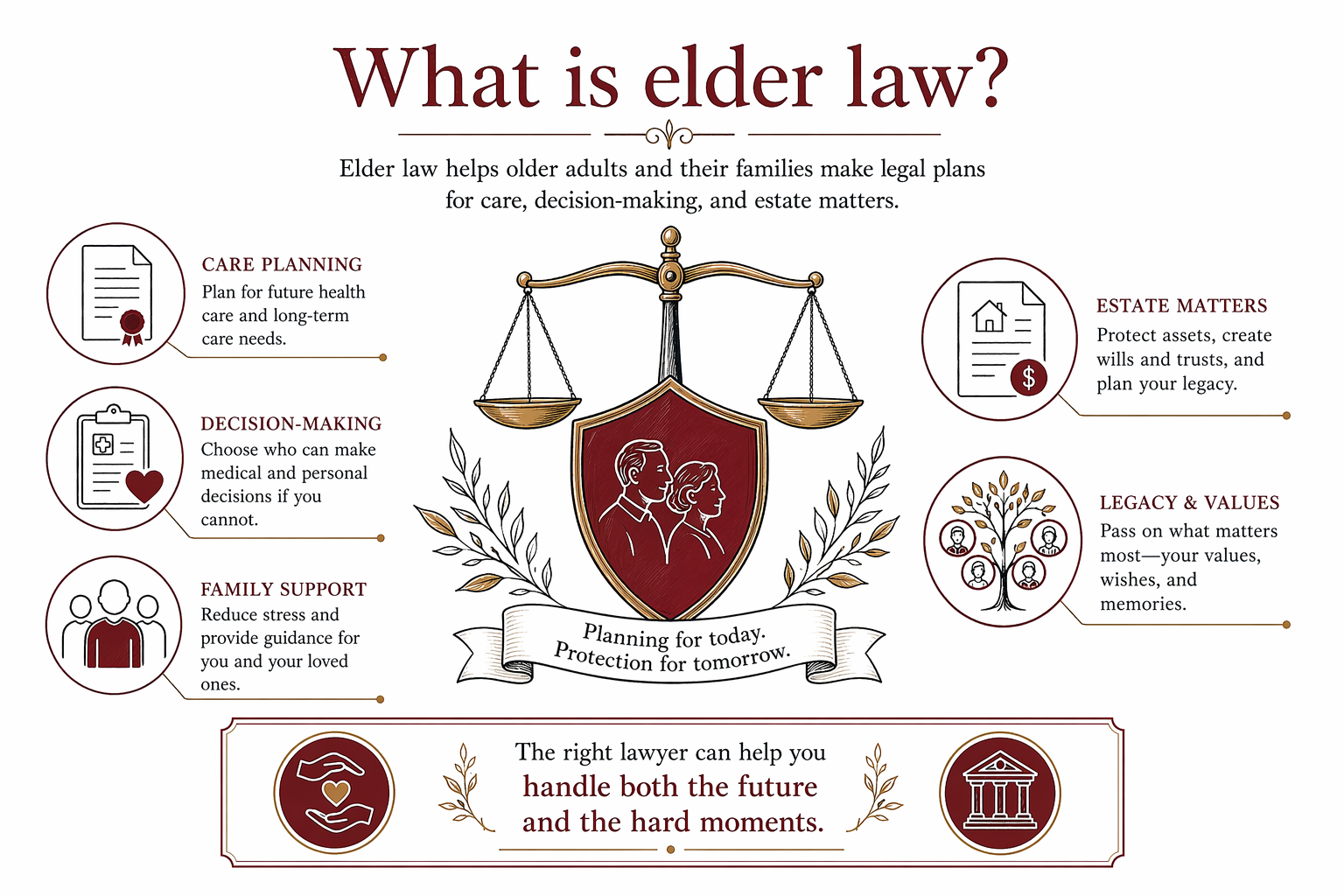
What elder law means
Elder law is a broad area of legal planning for older adults. It often covers wills, living trusts, powers of attorney, advance directives, planning for incapacity, questions about long-term care, and sometimes probate after a death.
In simple terms, it helps a family answer practical questions: Who can make medical decisions if Mom cannot speak for herself? Who can manage bills if Dad develops memory problems? How can someone leave clear instructions and protect the people they love?
Not every elder law matter is the same as estate planning, but there is a lot of overlap. Estate planning focuses on what happens to property, who makes decisions, and how to protect family members. Elder law often adds age-related planning, like future care needs and decision-making during illness or disability.
The rules for these documents and processes vary by state, and they can change over time. This page is general educational information only, not legal, tax, or financial advice.
What an elder law attorney may help with
An elder law attorney may help an older adult plan ahead before a problem starts, or help a family respond to a crisis. That can include creating or updating a will, setting up a living trust, preparing financial and medical powers of attorney, and signing an advance directive or living will.
They may also help with questions about incapacity, guardianship or conservatorship, and how to manage property if someone can no longer handle their own affairs. In some situations, they help families understand options for long-term care planning and the legal paperwork connected to it.
After a death, a lawyer may also help a family understand probate, settle an estate, and transfer property. If you are trying to understand the basics first, our guides and services pages can help you see where estate planning and elder law overlap.
Because state rules differ, it is smart to speak with a licensed attorney in the state where the older adult lives or owns property.
How elder law is different from estate planning
Estate planning is usually about putting legal documents in place so your wishes are clear. That often means a will, maybe a living trust, powers of attorney, health care documents, and beneficiary review.
Elder law can include all of that, but it also looks at problems that become more common with age. Examples include planning for dementia or other incapacity, understanding who can step in to help, reviewing care decisions, and handling family issues around aging and disability.
A simple way to think about it is this: estate planning prepares for the future, including after death; elder law often prepares for the later years of life as well as after death. Many attorneys do both, but not all do. When you speak with a lawyer, ask what kinds of matters they handle most often.
If you are unsure what kind of help you need, that is normal. A licensed estate planning attorney can tell you whether your situation also calls for elder law planning.
Common situations where families look for elder law help
Families often start looking when something changes quickly. A parent may be forgetting to pay bills, a hospital may ask who has authority to make decisions, or siblings may disagree about care. Sometimes the need is less urgent: a grandparent wants to update an old will, name the right decision-makers, or avoid confusion later.
Here are common reasons people seek elder law help:
- A parent has no power of attorney and is starting to lose capacity
- Health care decisions need to be documented clearly
- A will or trust is old and no longer fits the family
- Beneficiary designations are outdated
- There is no named guardian or backup decision-maker where one is needed
- The family used DIY forms that may not meet state rules
- A trust exists on paper but was never funded
- Someone died without a will, so intestacy rules may control who inherits
These problems are common and fixable in many cases, but delays can make things harder. If there is any sign of declining capacity, it is important to speak with a licensed attorney promptly because the person may need legal capacity to sign new documents.
What it may cost
Many elder law and estate planning matters are priced as a flat fee, not hourly. The real cost depends on the state, the documents needed, and how complex the situation is. These ranges are general information only, not quotes.
A basic estate plan for one person may run about $300 to $1,200 in some areas. A plan for a couple may be around $600 to $2,500. A living trust-based plan is often higher, sometimes about $1,500 to $5,000 or more. Powers of attorney and advance directives on their own may sometimes be a few hundred dollars each or bundled into a package.
If the matter involves crisis planning, guardianship, probate, or more complicated family or property issues, the cost may be much higher. Complexity usually goes up when there are blended families, special needs concerns, business interests, multiple states, real estate transfers, or urgent health issues.
Before any work starts, ask for the flat fee in writing, what documents are included, what is not included, and whether future updates cost extra. No one should feel rushed. You stay in control and choose who to hire.
How to choose help safely
A good first step is to write down the main concern in plain language: "My mother has no power of attorney," or "My father wants a will and health care papers," or "We may need help after a death." You do not need to gather asset values, account numbers, or private financial details just to get started.
Then talk with a licensed attorney in your state and ask practical questions:
- Are you licensed in my state, and can I confirm your bar license?
- Do you regularly handle estate planning, elder law, or both?
- What documents or services do you think this situation may need?
- Do you charge a flat fee, and what does that fee include?
- Are there state-specific signing or witness rules we should know about?
WillArbor can help you get matched for free with a licensed estate planning attorney near you. WillArbor is a free matching service, not a law firm, not a lawyer, and does not draft documents or create an attorney-client relationship.
We only collect basic contact and planning intent information such as your name, phone, optional email, state, what you want to plan, and preferred language. We do not ask for asset values, account numbers, Social Security numbers, income, or the contents of your documents.
Elder law helps older adults and their families make legal plans for care, decision-making, and estate matters, and the right lawyer can help you handle both the future and the hard moments.
Common questions
Is elder law the same as estate planning?
Not exactly. Estate planning is part of elder law for many families, but elder law can also include planning for incapacity, care decisions, and other issues that come up with aging.
Do I need an elder law attorney or an estate planning attorney?
It depends on the situation. If you need a will, trust, power of attorney, or advance directive, an estate planning attorney may be the right place to start; if there are age-related care or capacity issues, elder law experience may also matter.
Can we use online forms for an older parent?
Be careful. DIY forms can fail if they do not follow your state's rules or do not fit the person's situation, especially when capacity may be changing.
What if my parent already has a will from years ago?
It may still be valid, but it may no longer match the family's wishes, property, or state law. Old documents, outdated beneficiary designations, and missing powers of attorney are common problems worth reviewing.
How much information do I need to share to get matched?
Only basic contact and planning intent information is needed: your name, phone, optional email, state, what you want to plan, and preferred language. WillArbor does not ask for account numbers, asset values, SSNs, income, or sensitive estate details.
Is WillArbor a law firm?
No. WillArbor is a free matching service, not a law firm and not your lawyer. It provides general educational information and can help you connect with a licensed estate planning attorney.
Related help
The difference between a will and a living trust, when each makes sense, and why many families use both.
Open → How to Avoid ProbatePlain-language ways families reduce or avoid probate — trusts, beneficiary designations, and joint ownership.
Open → What Happens If You Die Without a WillIntestacy explained: how your state decides who inherits when there is no will — and why that may not match your wishes.
Open →