Guides
What is a letter of instruction?
A letter of instruction is a personal note that helps your family find information and follow your wishes. It’s not a legal document like a will or power of attorney, but it can prevent confusion during a stressful time.
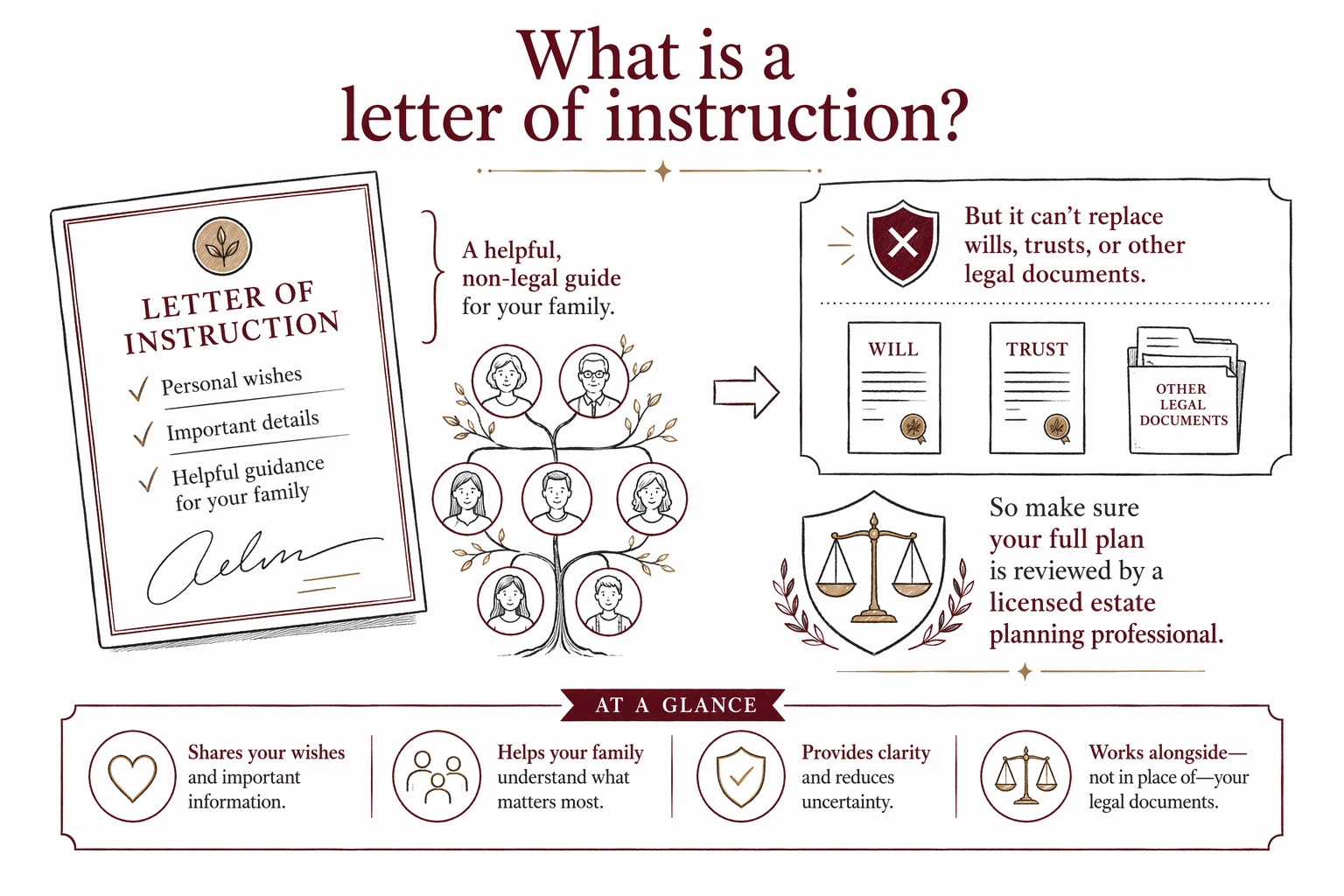
A letter of instruction, in plain terms: what it is (and what it isn’t)
A letter of instruction is a simple written document you create for the people handling your affairs after you pass away or become unable to manage things.
It usually includes practical guidance, like who to contact, where to find important papers, and which bills or services need attention.
It is not the same thing as a will, trust, power of attorney, or advance directive. Those documents control legal decisions. A letter of instruction is meant to help your chosen decision-makers do their job.
Because estate-planning rules and how probate works can vary by state, it’s smart to ask a licensed estate planning attorney in your state how a letter fits into your full plan.
What families typically include in a letter of instruction
Think of it as “what you wish someone would know right away.” You can write it in your own words, in the language your family understands best.
Common sections include contacts, locations, and step-by-step guidance. Here are practical ideas that many families find helpful:
- step: List key people (for example, your executor or trustee, your primary point of contact, and any backup contacts)
- step: Tell your family where to find important documents (such as your will or trust papers, insurance info, ID documents, and funeral/burial preferences)
- step: Provide contact details for companies your family may need (health insurance, life insurance, utilities, internet/phone, and major subscriptions)
- step: Note where to find account “gateways” your decision-makers will need (for example, login instructions stored safely with a trusted person)
- step: Explain any preferences that aren’t legal requirements (like obituary wishes, personal items, or communication preferences)
- step: Give a short timeline of “first steps” and “next steps” after a death or after incapacity
If you have specific questions about access to records, a lawyer can explain the safest approach for your state.
Will vs. trust vs. instruction letter: what controls the law?
A will is a legal document that describes who should receive your property and who should handle your estate through probate. Without a will, state law decides how assets are handled.
A living trust is another legal tool families use to manage assets—often to help reduce delays and court involvement. Trusts must be set up correctly and, in many cases, “funded” (assets titled or transferred properly) to work as intended.
A letter of instruction is supportive, not controlling. It does not usually replace legal documents. Even a very detailed letter cannot substitute for a properly executed will, trust, power of attorney, and advance directives where those are needed.
If you’re planning ahead, a licensed estate planning attorney can help you decide which legal documents you need, then you can create a letter of instruction to make life easier for your family.
Common pitfalls: why letters of instruction sometimes don’t help as much as families expect
A letter of instruction can be very helpful, but a few common issues reduce its value.
- Leaving out “where to look” details (or writing them only in a hard-to-find place)
- Creating the letter but not reviewing it when life changes (marriage, divorce, new guardians, moving states, new accounts)
- Relying on a letter instead of legal documents (for example, no will when needed)
- Using DIY templates that don’t match your state’s requirements for legal paperwork (templates for instruction letters are usually fine, but legal documents must follow your state’s rules)
- Not clearly naming who should be contacted first and what you want them to do
Also remember: estate-planning and probate rules vary by state. What works well in one state may not work the same way in another, so it’s best to confirm your overall plan with a licensed attorney in your state.
How a letter of instruction fits into a full estate plan
Most families find it easiest to think in layers:
- Legal layer: wills, trusts (if used), powers of attorney, and advance directives
- Practical layer: your letter of instruction to guide your family and decision-makers
- Ongoing upkeep: updates after major life events or changes in accounts, contacts, and preferences
A lawyer can help you align your legal choices—who inherits, who makes decisions, and how guardianship works if you have children—with your practical guidance.
If you want a starting point, explore our guides and services, then get matched to a licensed estate planning attorney through get matched. The service is free for families.
Getting started: a calm, simple checklist for your first draft
You don’t need a perfect letter on day one. Start with a clear, safe, readable draft—then update it over time.
- Choose who should receive the letter (for example, the person you trust to help during a crisis)
- Write your “first steps” section (what to do in the first 24–72 hours)
- List where to find key documents (paper and digital) and who has access
- Include decision-maker contacts (executor/trustee and backups)
- Add personal preferences that your family will appreciate
After you write your draft, consider reviewing it with a licensed estate planning attorney. They can’t turn a letter into legal authority, but they can help you avoid gaps in your overall plan.
WillArbor is a FREE matching service, not a law firm and not your lawyer. We help you connect with a licensed estate planning attorney near you. You stay in control—compare options, ask questions, and confirm the attorney’s flat fee in writing before any work begins. Cost depends on your documents, complexity, and state, and ranges (not quotes) are common.
A letter of instruction is a helpful, non-legal guide for your family, but it can’t replace wills, trusts, or other legal documents—so make sure your full plan is reviewed by a licensed estate planning attorney in your state.
Common questions
Is a letter of instruction legally binding?
Usually, no. A letter of instruction is typically practical guidance, not a legal document that controls inheritance or decision-making. Your will, trust, power of attorney, and advance directives are the documents that carry legal weight. Rules and how documents are treated can vary by state.
Do I need a letter of instruction if I already have a will or trust?
Many families find it helpful, even if they already have legal documents. A letter can reduce confusion by pointing your family to where things are and what to do first. It cannot replace missing legal documents, though.
Where should I keep the letter so my family can find it?
Keep it somewhere accessible to the people you name, following any safety and access needs for your situation. Some families store it with their estate-planning documents; others provide the letter to a trusted person with clear instructions. An attorney can suggest a safe approach for your state and circumstances.
Can I write my letter in English and another language?
Yes—many families do. Writing in the language your decision-makers understand best can make a big difference during a stressful time. If your plan involves translation needs, a licensed attorney can advise on practical options.
How does a letter of instruction relate to probate after a death?
A letter of instruction can help the people handling your estate during probate by offering clear guidance and locations for documents. But it doesn’t replace legal duties under your will (or state law if there is no will). Probate steps and requirements vary by state.
Related help
The difference between a will and a living trust, when each makes sense, and why many families use both.
Open → How to Avoid ProbatePlain-language ways families reduce or avoid probate — trusts, beneficiary designations, and joint ownership.
Open → What Happens If You Die Without a WillIntestacy explained: how your state decides who inherits when there is no will — and why that may not match your wishes.
Open →