Guides
What is a guardian for minor children?
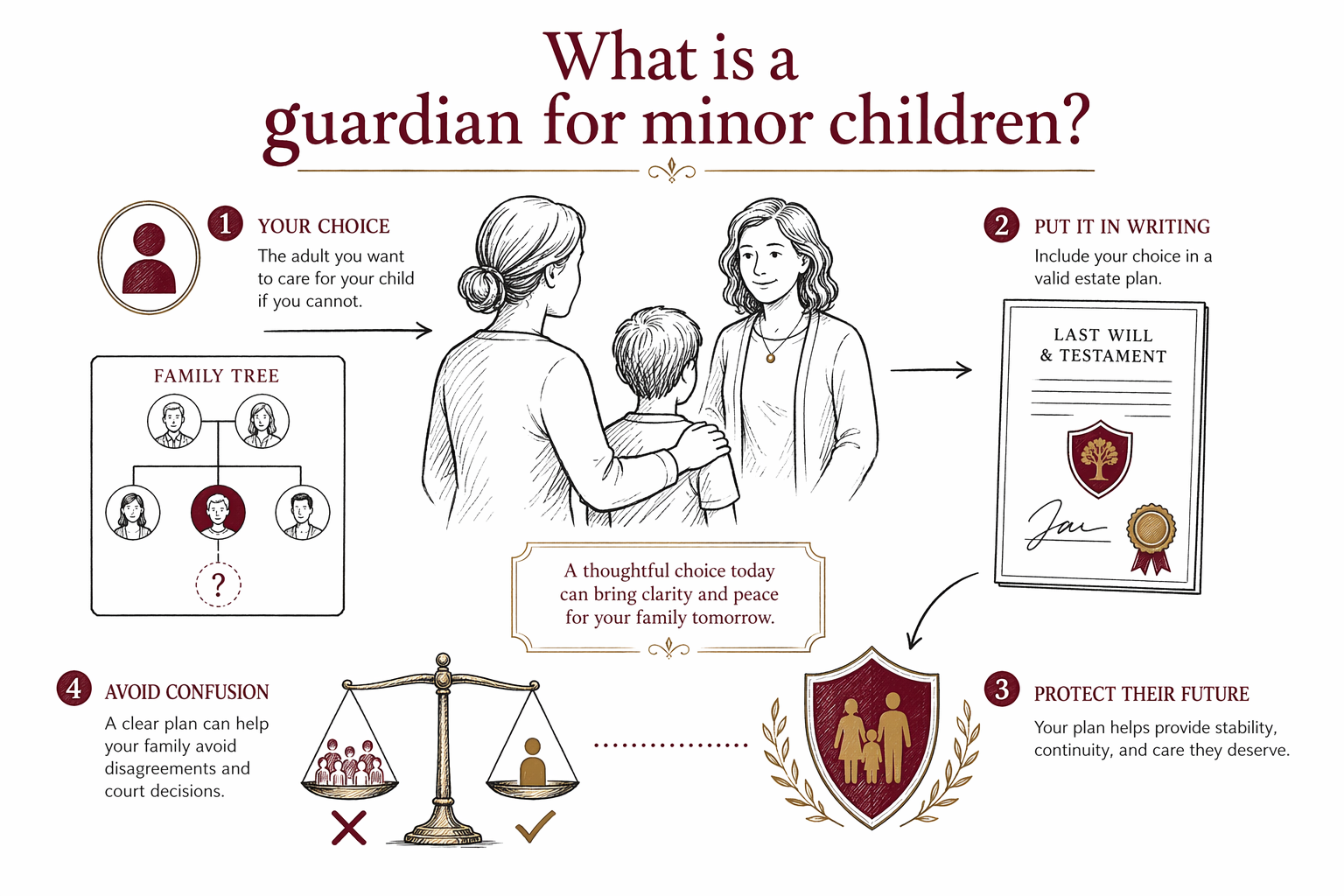
A guardian for minor children is the adult you want to care for your child if you die or cannot care for them. Naming one in your estate plan can give your family guidance, but the final process and court rules vary by state.
What a guardian for minor children means
A guardian for minor children is the person you want to step in and care for your child if both parents die, or in some situations if a parent cannot care for the child. In plain words, this is the adult who would raise your child, make day-to-day decisions, and provide a stable home.
Many parents name a guardian in a will. That does not always mean the change happens automatically in every situation. A court may still need to confirm the appointment, and the exact process depends on state law and the family circumstances.
This is one reason estate planning matters even for young parents. If you do not name anyone, a court may have to decide who should care for your child without your written guidance. That can create stress, delay, and conflict at a time when your family is already grieving.
Why naming a guardian matters
Naming a guardian lets you say clearly who you trust to care for your child. It can help reduce confusion among relatives and make your wishes easier for a court to understand.
It is also your chance to think about practical questions now, while you are calm: Who shares your values? Who has a safe and stable home? Who can handle school, medical appointments, and daily routines? Who would help your child stay connected to family, language, culture, or religion?
For many families, especially immigrants or families with relatives in more than one state or country, this choice is deeply personal. It is not only about love. It is also about who can realistically care for a child in the United States, and who is willing and able to do it.
If you are just starting, our guides can help you understand the basics before you talk with a lawyer.
Guardian of the child vs. the person managing money
The person who raises your child is not always the same person who manages money left for your child. In many estate plans, these are two different jobs.
A guardian usually handles the child's care and daily life. A trustee or another financial decision-maker may manage money you leave for the child, especially if you set up a trust. Some parents choose the same person for both roles, but others prefer checks and balances.
This distinction matters because being loving with a child and being careful with money are different responsibilities. A licensed estate planning attorney can explain how your state handles guardians, trusts, and property for minors.
WillArbor is a free matching service, not a law firm and not your lawyer. We give general educational information and can help you get matched with a licensed estate planning attorney in your state.
How parents usually choose a guardian
There is no perfect choice, but there is often a thoughtful one. Parents commonly choose someone who is trustworthy, emotionally steady, and genuinely willing to take on the responsibility.
Useful questions to ask yourself include:
- Does this person truly want to do this?
- Does my child know and feel safe with them?
- Can they handle the daily work of parenting?
- Will they respect our family's culture, language, religion, or traditions?
- Do they live nearby, or would a move be likely?
- Are they healthy and stable enough for the long term?
- Could they work well with other relatives, or would conflict be likely?
It is wise to name at least one backup guardian too. Life changes. People move, age, become ill, or may simply be unable to serve when the time comes.
After you choose, talk with that person. Do not surprise them later. A calm conversation now can prevent confusion and heartache.
Common mistakes families make
One common mistake is dying without a will, also called intestacy. If you never name a guardian in your estate plan, the court may decide who will care for your child based on state law and the facts at the time.
Another mistake is naming a guardian once and never updating the document. Divorce, remarriage, a move to a new state, a serious illness, family conflict, or a big change in the proposed guardian's life can all make an old choice less suitable.
Families also run into problems with DIY forms that are not valid in their state or are not signed and witnessed correctly. Estate planning and probate rules vary by state and can change over time. A form that looks simple online may fail when your family needs it most.
Other planning gaps matter too. Parents sometimes name a guardian but forget to update beneficiary designations, fail to create a workable plan for money, or set up a trust and never fund it. Incomplete planning can leave a child protected in one way but exposed in another.
If you want to understand your options first, visit our services page for a simple overview of wills, trusts, powers of attorney, advance directives, and probate.
What it may cost to put this in a plan
In many states, naming a guardian is part of a will or a broader estate plan. Most estate planning attorneys charge a flat fee, not hourly, for this kind of work. The total cost depends on the documents you need, the complexity of your situation, and your state.
As a general educational range, a simple will-based estate plan for an individual may cost about $300 to $1,000, and for a couple often about $600 to $2,000. A more complete plan with a revocable living trust may range from about $1,500 to $5,000 or more in some states. These are not quotes.
The cost may be higher if you want a trust, have a blended family, own property in more than one state, want detailed planning for children with special needs, or need more complex backup arrangements. The right lawyer should explain the flat fee in writing before any work starts.
WillArbor is always free for the family. Participating attorneys pay a flat fee to take part, and you stay in control: compare attorneys, choose who to hire, and confirm the flat fee directly with the attorney before moving forward.
If you are ready, you can get matched for free with a licensed estate planning attorney. We only collect contact information and planning intent — such as your name, phone, optional email, state, what you want to plan, and preferred language — not asset values, account numbers, or sensitive estate details.
A guardian for minor children is the adult you want to care for your child if you cannot, and putting that choice in a valid estate plan can help your family avoid confusion.
Common questions
Does naming a guardian in a will guarantee that person will raise my child?
Not always. A court may still need to approve the appointment, and the rules vary by state. Naming a guardian gives important guidance, but it is not a guarantee of a specific legal outcome.
Should I name more than one guardian?
Many parents name one first choice and at least one backup. That helps in case the first person is unable or unwilling to serve when needed.
Can the guardian also manage my child's inheritance?
Sometimes, but it does not have to be the same person. Many families prefer one person to raise the child and another person, such as a trustee, to manage money.
What if I move to another state after making a will?
Your documents may still matter, but estate planning rules vary by state. It is smart to have a licensed estate planning attorney in your new state review your plan.
Can WillArbor make my will or choose the guardian for me?
No. WillArbor is a free matching service, not a law firm and not your lawyer. We do not draft documents or give legal advice, but we can help you connect with a licensed estate planning attorney.
How do I know the attorney is properly licensed?
Ask for the attorney's full name and state bar information, and verify the license with the state bar or attorney licensing authority. You should also confirm the flat fee and scope of work in writing before any work begins.
Related help
The difference between a will and a living trust, when each makes sense, and why many families use both.
Open → How to Avoid ProbatePlain-language ways families reduce or avoid probate — trusts, beneficiary designations, and joint ownership.
Open → What Happens If You Die Without a WillIntestacy explained: how your state decides who inherits when there is no will — and why that may not match your wishes.
Open →