Guides
What happens if there is no executor?
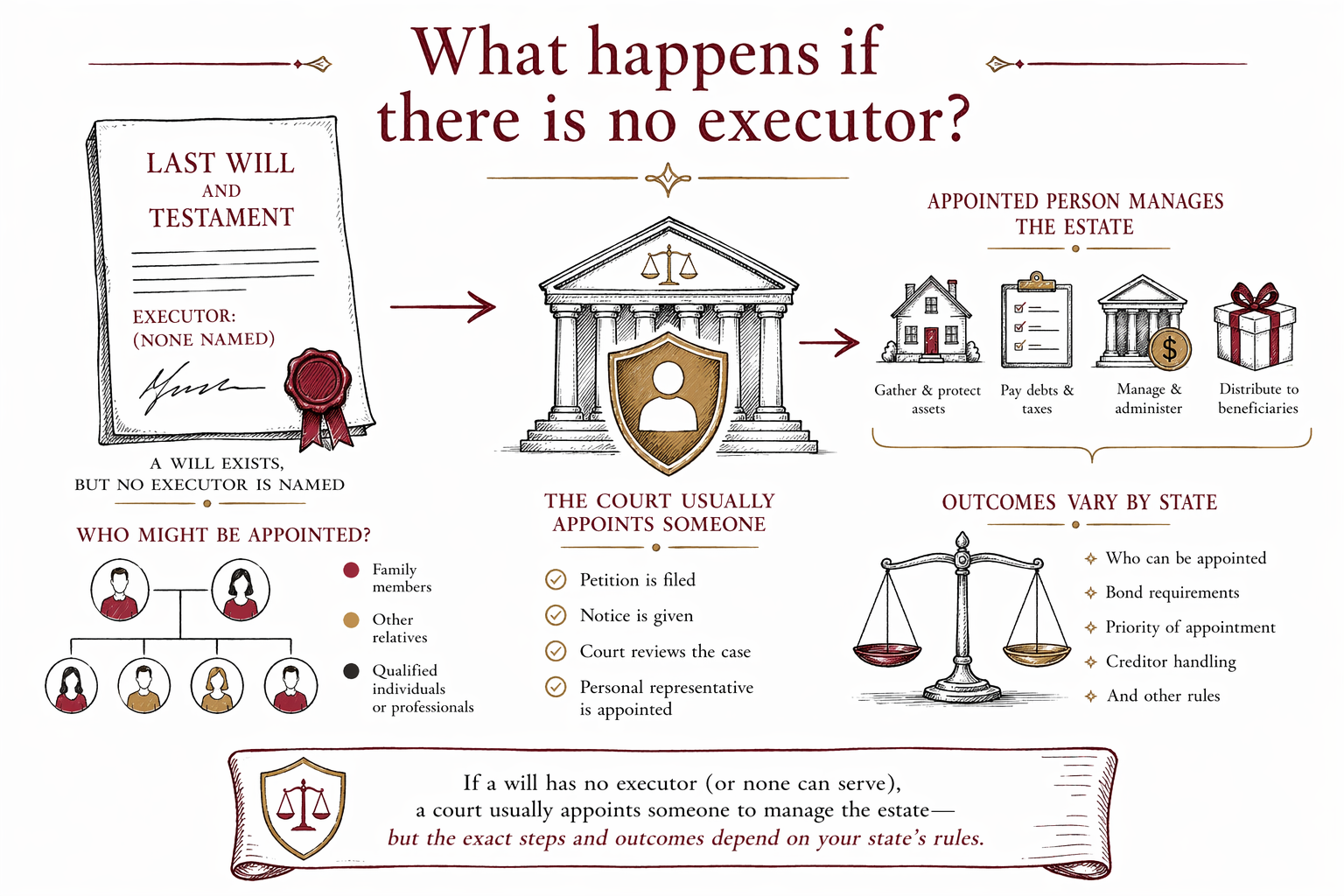
If a will doesn’t name an executor (or the executor can’t serve), the court usually appoints someone to handle the estate. The exact process depends on your state’s rules—so it’s important to talk with a licensed estate planning attorney.
First: what happens when there’s no executor?
In most situations, if there’s no executor named in a will (or that person is unable or unwilling to act), the estate goes through a court process to choose someone to manage it.
That person is often called the “personal representative” or “administrator,” but the name and steps vary by state. If there’s no valid will at all, the state’s “intestacy” rules decide who gets appointed and who inherits.
Estate rules also differ based on whether someone has a will, whether it is valid, and whether it includes other key instructions like guardianship for minor children.
Because rules vary by state, the best next step is to ask a licensed estate planning attorney in the state where the person lived.
- If no executor is named, a court may appoint someone (often an administrator/personal representative).
- If there is no valid will, state intestacy rules may apply.
Why this can become stressful for families
When there’s no executor, families can face delays while the court decides who can step in. Even when everyone agrees, paperwork and legal standards still have to be met.
Disagreements are also more likely. Without an executor chosen in advance, relatives may argue about who should manage the estate or which instructions should be followed.
If the deceased had minor children, the urgency can feel even heavier—because guardianship decisions may still need court involvement depending on the documents and state rules.
This is exactly the kind of problem that good planning can prevent—without having to predict every future detail.
- Potential court delays are common when the executor question is open.
- Family conflict can increase when no one is clearly named to manage the estate.
What the court will typically look at (general, not state-specific)
Courts generally prefer someone who can act responsibly and follow the law. That can include a close relative, a trusted person, or sometimes a professional.
Common questions include whether the person is able to serve, whether they can meet state requirements, and whether there are documents or debts that need to be handled properly. The court may also consider whether there are instructions in a will and whether the will itself appears valid.
If more than one family member asks to be appointed, the court may weigh factors like family relationships and the ability to manage tasks.
To understand what usually happens in your specific situation, use a trusted legal resource or talk with a licensed estate planning attorney in your state.
- The court may appoint a personal representative/administrator if no executor can serve.
- Requirements and names differ by state.
Common pitfalls that lead to “no executor” situations
Some families run into this issue because the will was never finished, was outdated, or was created using DIY forms that don’t fit the state’s rules. Other times, the named executor is no longer able to serve—because of death, relocation, conflict of interest, or unwillingness.
Another common pitfall: people forget to include a backup (often called a successor executor). Even if the primary executor is named, a backup can prevent the estate from getting stuck.
Also consider this: if the will isn’t properly signed or witnessed according to your state’s requirements, the document may not work the way the family expected.
These are general patterns. State rules vary, so confirming the requirements with a licensed estate planning attorney is the safest way to avoid surprises.
- DIY forms may not match your state’s execution rules.
- Out-of-date wills can fail to cover who will serve now.
- No successor executor can leave the court choosing later.
How to reduce risk going forward (what to include in planning)
When you update or create a will, naming an executor (and a successor executor) can help families know exactly who should manage the estate.
It also helps to think about whether the person you name is likely to be willing and able to serve. Some people may need clear expectations about responsibilities—like gathering documents, paying debts, handling filings, and distributing assets according to the plan.
If you are also planning for minors, make sure guardianship instructions are clear and consistent with state requirements.
Because rules vary by state and estate planning can involve multiple document types (wills, powers of attorney, and advance directives), you may want to start with a broad overview in guides or explore estate planning options in services.
- Name a primary executor and a backup/successor executor.
- Confirm your will is executed properly under your state’s rules.
Get matched to a licensed estate planning attorney (free for families)
WillArbor is a free matching service. We do not provide legal advice, we do not draft documents, and we are not a law firm—so you stay in control of who you hire.
To get matched, you share contact details and your planning intent (like “I want to name an executor and successor,” or “I’m worried about what happens if an executor is missing”), plus your state and preferred language. We only collect planning intent—not asset numbers, account details, SSNs, or sensitive estate specifics.
After you’re matched, you can compare attorneys. Always confirm they are licensed in your state and that any flat-fee quote is confirmed in writing before work starts.
Start here: get matched.
- Free matching service (not a law firm or your lawyer).
- Confirm the attorney is licensed in your state and that the flat fee is in writing.
If a will has no executor (or none can serve), a court usually appoints someone to manage the estate—but the exact steps and outcomes depend on your state’s rules.
Common questions
If there is a will but it doesn’t name an executor, do family members still get to follow the will?
Often, yes—but the estate usually still needs a court-appointed person to manage things. The court may appoint an administrator/personal representative, and that person generally carries out the will’s instructions if the will is valid. Rules vary by state, so confirm with a licensed estate planning attorney.
Can someone act as executor without being named in the will?
Usually, not in the way a court-authorized executor does. If there’s no executor named (or they can’t serve), courts typically appoint someone instead. The process and who can be appointed varies by state.
What if the named executor died or moved and can’t serve?
That’s why successor executors are so important. If there’s a backup named in the will, the successor may step in; if not, the court may need to appoint someone. State rules vary, so get state-specific guidance.
Related help
The difference between a will and a living trust, when each makes sense, and why many families use both.
Open → How to Avoid ProbatePlain-language ways families reduce or avoid probate — trusts, beneficiary designations, and joint ownership.
Open → What Happens If You Die Without a WillIntestacy explained: how your state decides who inherits when there is no will — and why that may not match your wishes.
Open →