Guides
How to name a power of attorney?
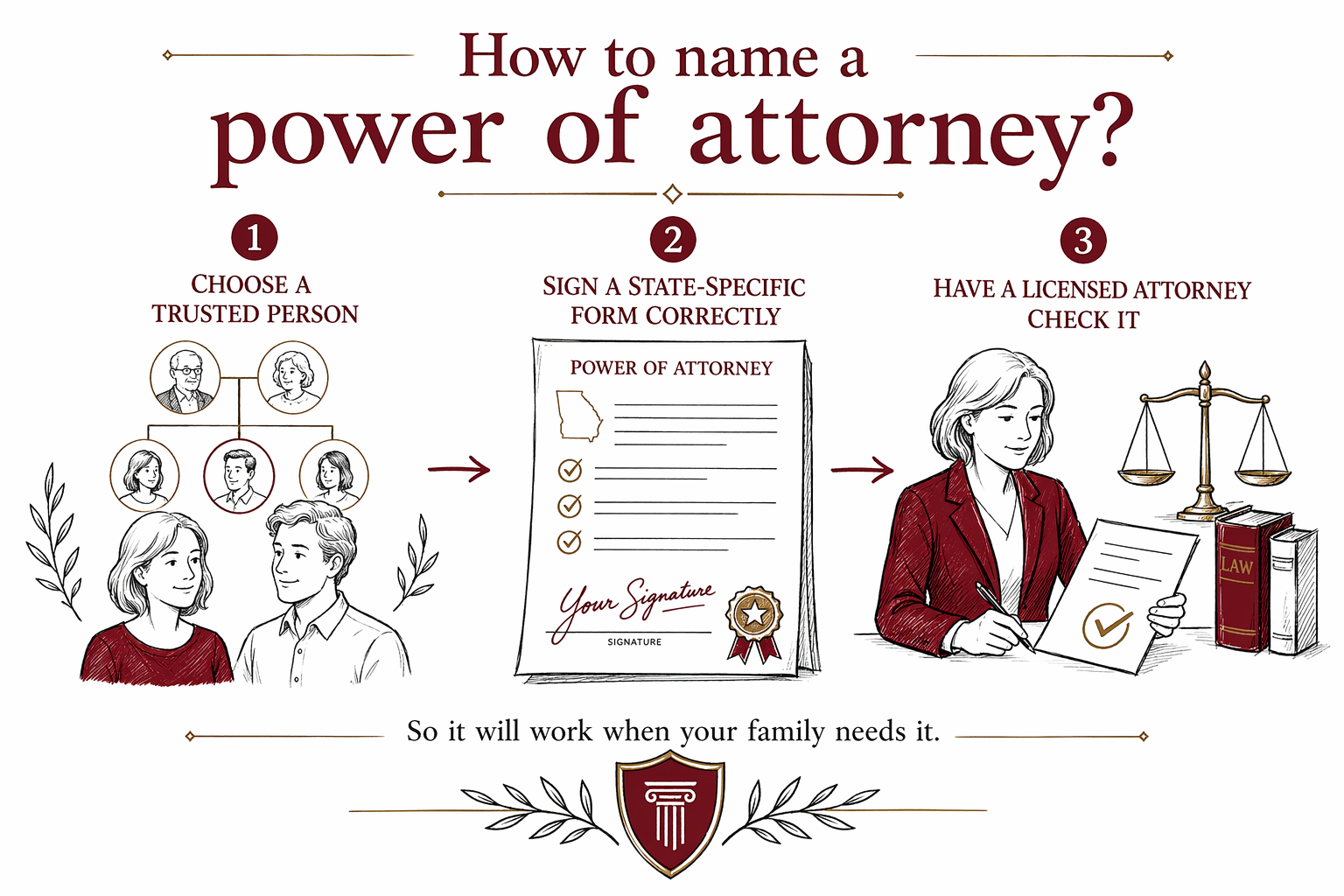
To name a power of attorney, you usually choose a trusted adult and sign a state-specific form that clearly gives that person authority to act for you. Because the rules vary by state, a licensed estate planning attorney can help make sure it is done correctly.
What “naming a power of attorney” means
A power of attorney (often called a POA) is a legal document that lets you choose someone to act for you in certain matters. That person is sometimes called your “agent” or “attorney-in-fact,” even though they do not have to be a lawyer.
Most families use a POA to plan ahead in case of illness, travel, aging, or an emergency. It can help someone pay bills, handle paperwork, or make decisions if you cannot do those things yourself.
The most important point is simple: you do not “name a power of attorney” in a casual note or verbal promise. You usually sign a proper document that follows your state’s rules. Learn more about estate planning basics.
How the process usually works
- Choose a person you trust completely.
- Decide what powers they should have and when those powers begin.
- Use the right form for your state.
- Sign it the way your state requires, which may include witnesses and/or notarization.
- Give copies to the right people, such as family members, doctors, banks, or your attorney.
Some people name one agent. Others name a primary agent and a backup agent. You can also limit the powers so your agent can do only certain tasks. A licensed attorney can explain what is common in your state and what may be safer for your family.
What to think about before you choose an agent
Choose someone who is responsible, available, and calm under pressure. The person should be willing to follow your instructions, keep records, and act in your best interests.
Think carefully about whether the person lives nearby, understands your language or family situation, and can handle money and paperwork without confusion. If your first choice may not be available, name a backup.
A POA is powerful. It can help a family a great deal, but it can also create problems if the wrong person is chosen. That is one reason many people review this decision with a lawyer before signing.
Common mistakes families make
These are some of the most common problems:
- Using a DIY form that is not valid in your state
- Signing without the required witnesses or notary
- Naming someone who is not reliable or cannot be reached when needed
- Not saying clearly when the POA starts or ends
- Forgetting to update the document after divorce, death, moving states, or a major life change
- Assuming a POA covers everything, when some documents need different planning
A POA also does not replace a will or trust. It is one part of a larger plan. If you are helping a parent settle an estate, see our services for related estate-planning help and attorney matching.
How WillArbor can help
WillArbor is a FREE matching service, not a law firm, not a lawyer, and not your attorney. We do not draft documents or give legal advice.
We help you share only basic contact and planning intent — like your name, phone number, optional email, state, what you want to plan, and your preferred language — so you can connect with a licensed estate planning attorney near you. You stay in control, compare attorneys, and confirm the flat fee in writing before any work starts.
Estate planning attorneys often charge a flat fee for a POA or a small group of documents, but the real number depends on the state, the documents, and how complex your situation is. A simple document may cost less than a full plan, but ranges are not quotes. To get connected, get matched here.
To name a power of attorney, choose a trusted person and sign a state-specific form correctly, then have a licensed attorney check it so it will work when your family needs it.
Common questions
Is a power of attorney the same as a guardian?
No. A POA is a document you sign to choose someone to act for you while you are alive. A guardian is usually appointed by a court, often for a child or an adult who cannot care for themselves.
Do I need a lawyer to name a power of attorney?
Not always, but it is wise to speak with a licensed estate planning attorney because state rules vary and small mistakes can make the document unusable. WillArbor can help you find one for free.
When should I update my power of attorney?
Review it after a move, marriage, divorce, death of your chosen agent, or any major change in your family or finances. If you are unsure, ask an attorney in your state to review it.
Related help
The difference between a will and a living trust, when each makes sense, and why many families use both.
Open → How to Avoid ProbatePlain-language ways families reduce or avoid probate — trusts, beneficiary designations, and joint ownership.
Open → What Happens If You Die Without a WillIntestacy explained: how your state decides who inherits when there is no will — and why that may not match your wishes.
Open →